Fractured Victory: How WWII Memory Shapes a New Global Order
Feature • Analysis • September 2025
Introduction: When Remembrance Becomes a Battlefield
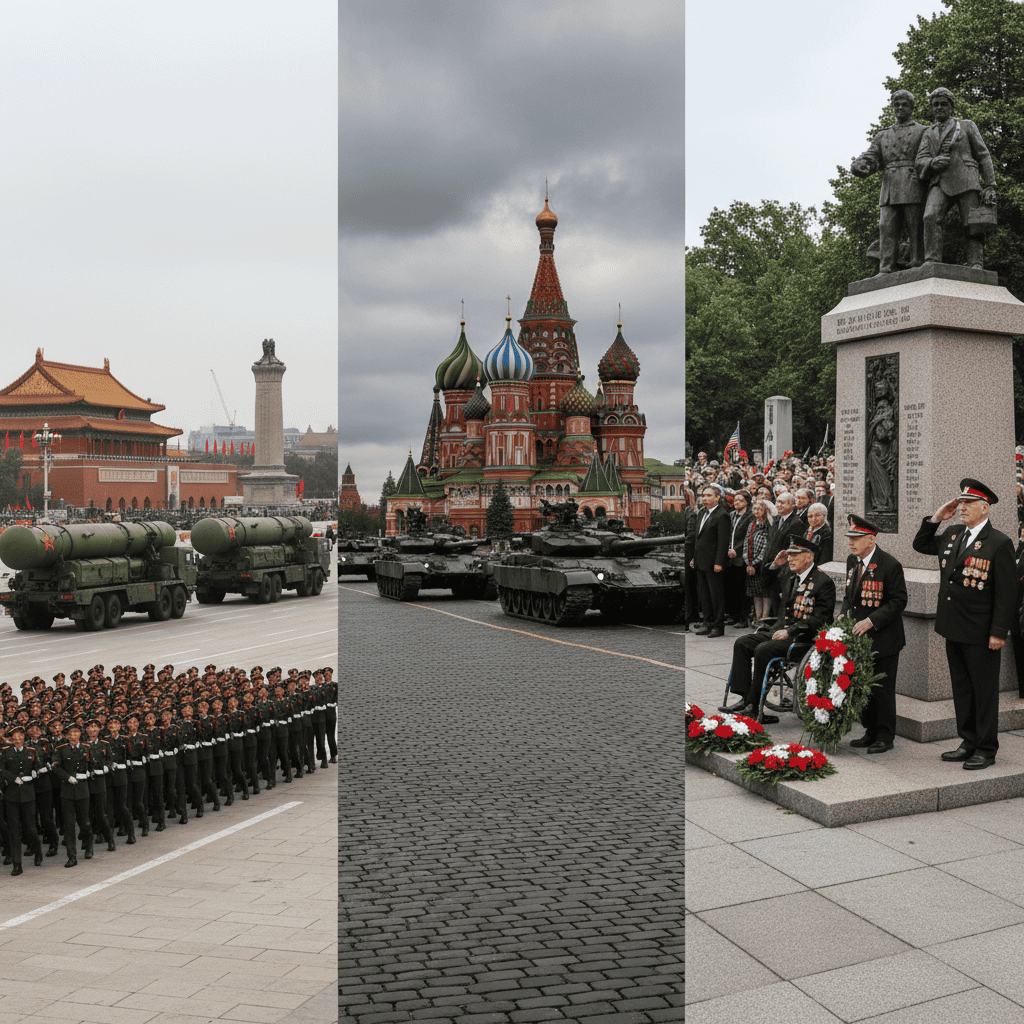
Eighty years after the guns fell silent in 1945, the world is no longer united in memory of World War II. What once stood as a shared global lesson against tyranny has splintered into competing national myths. The 80th anniversary in 2025 made that clear: solemn tributes in Western capitals contrasted with grandiose military parades in Moscow and Beijing. These commemorations were not just about honoring the dead; they were deliberate performances of power, identity, and ideology.
Today, WWII has become less a history lesson than a political weapon. Nations use it to legitimize regimes, justify wars, and rally support for competing visions of the international order. To understand the stakes of this “memory war,” we need to examine how the United States, Russia, and China each tell their own story of victory—and why those stories now clash so fiercely.
Part I: The Contested Canons of Victory
The Western Story: “The Good War” and the American Century
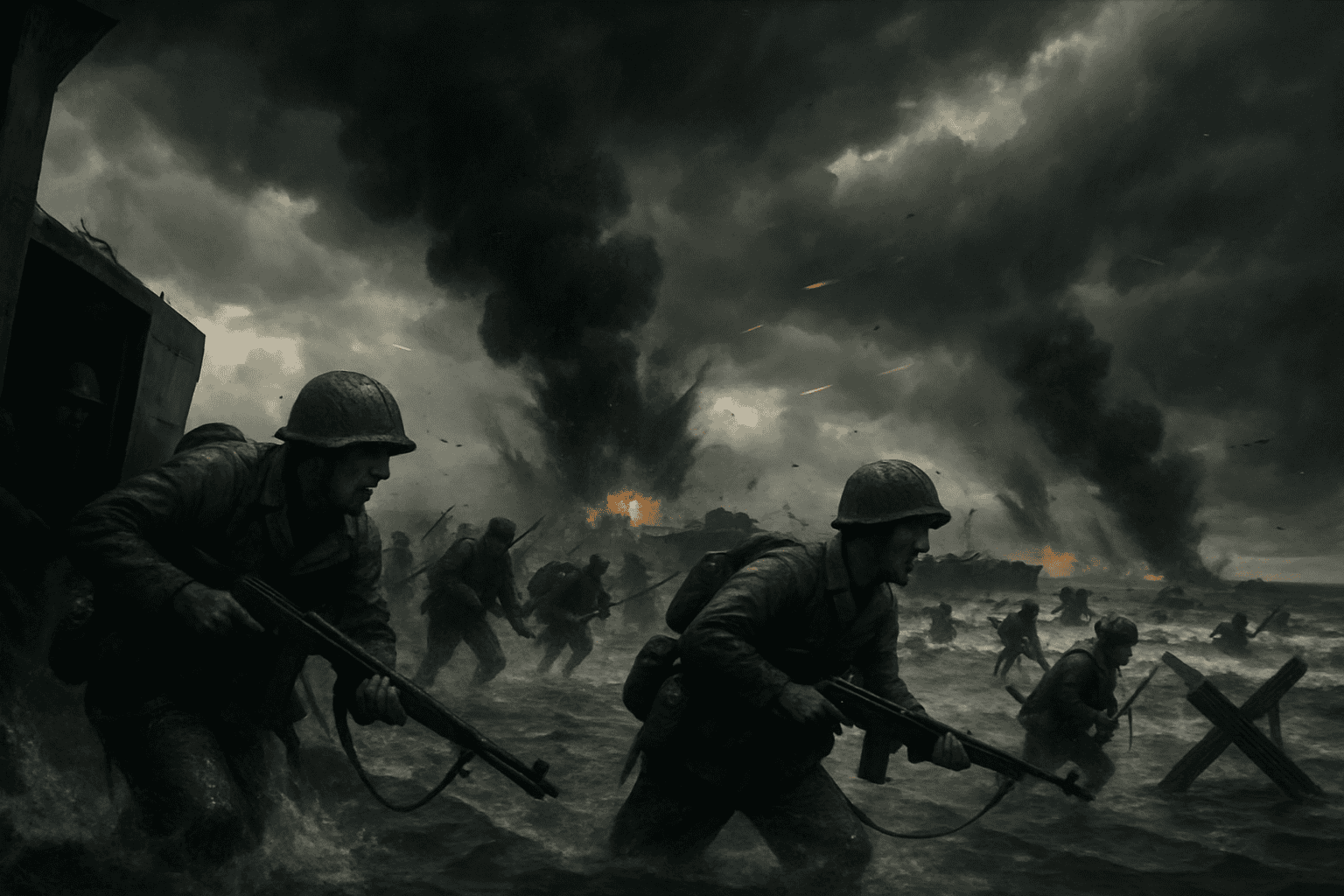
In the West, World War II is remembered as the ultimate battle of good versus evil—a morally clear struggle where democracy triumphed over fascism. For the United States, the war began with Pearl Harbor, “a date which will live in infamy,” and transformed a reluctant nation into the “arsenal of democracy.”
Hollywood films, iconic posters of Rosie the Riveter, and the memory of D-Day all reinforce this narrative: America stepped up, liberated Europe, defeated Japan, and emerged as the world’s leading power. The war, in this view, not only crushed fascism but also cemented the liberal international order—the so-called “American Century.”
Yet, contradictions lurk beneath the surface. Segregated Black troops fought for freedom abroad while being denied rights at home; Japanese Americans were interned by the very government claiming to defend liberty. Still, in popular culture, these are treated as tragic footnotes in an otherwise heroic story.
For decades, this narrative allowed the U.S. to frame new conflicts—from Korea to Iraq—as battles of freedom against tyranny, using the moral clarity of WWII as a template.
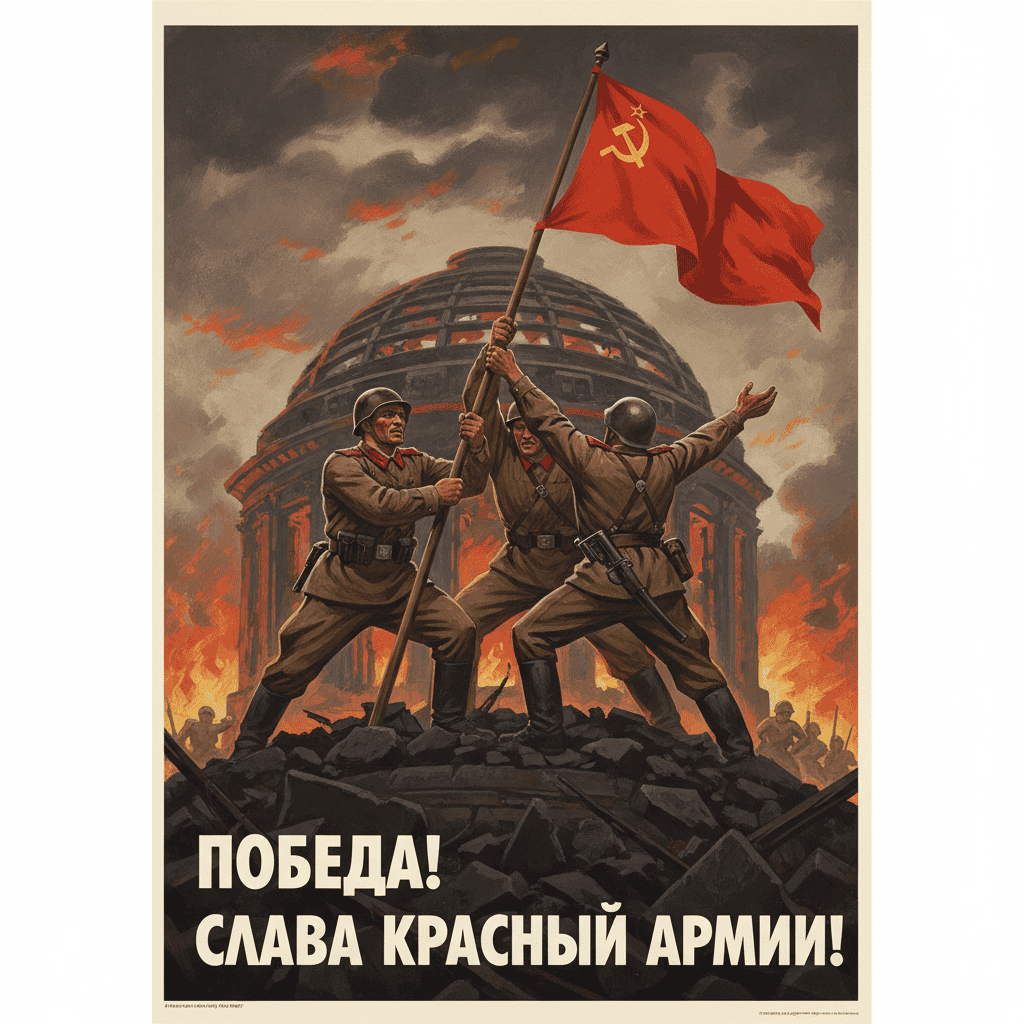
Russia’s memory is very different. There, the conflict is not “World War II” but the “Great Patriotic War” (GPW)—a sacred, almost religious story of survival and sacrifice. It begins not in 1939 but in June 1941, with Hitler’s invasion. Left out is the awkward detail that, under the Molotov-Ribbentrop Pact, the Soviet Union had earlier joined Nazi Germany in dividing up Poland.
The GPW narrative focuses on unimaginable suffering—27 million Soviet lives lost. Every family was touched. This sacrifice becomes Russia’s claim to moral authority: it alone bore the brunt of fascism, it liberated Europe, and it earned its status as a superpower.
But this version of history is tightly controlled. Soviet atrocities, like the Katyn massacre, are erased. Eastern European nations remember Soviet “liberation” as the start of decades of domination. Under Vladimir Putin, this myth has been sacralized into law—questioning it risks criminal charges. The GPW is no longer just history; it is the cornerstone of Russian state legitimacy.
For China, World War II is remembered as the “Chinese People’s War of Resistance Against Japanese Aggression.” Officially, it began in 1931 with Japan’s seizure of Manchuria, making China the first nation to resist fascism.
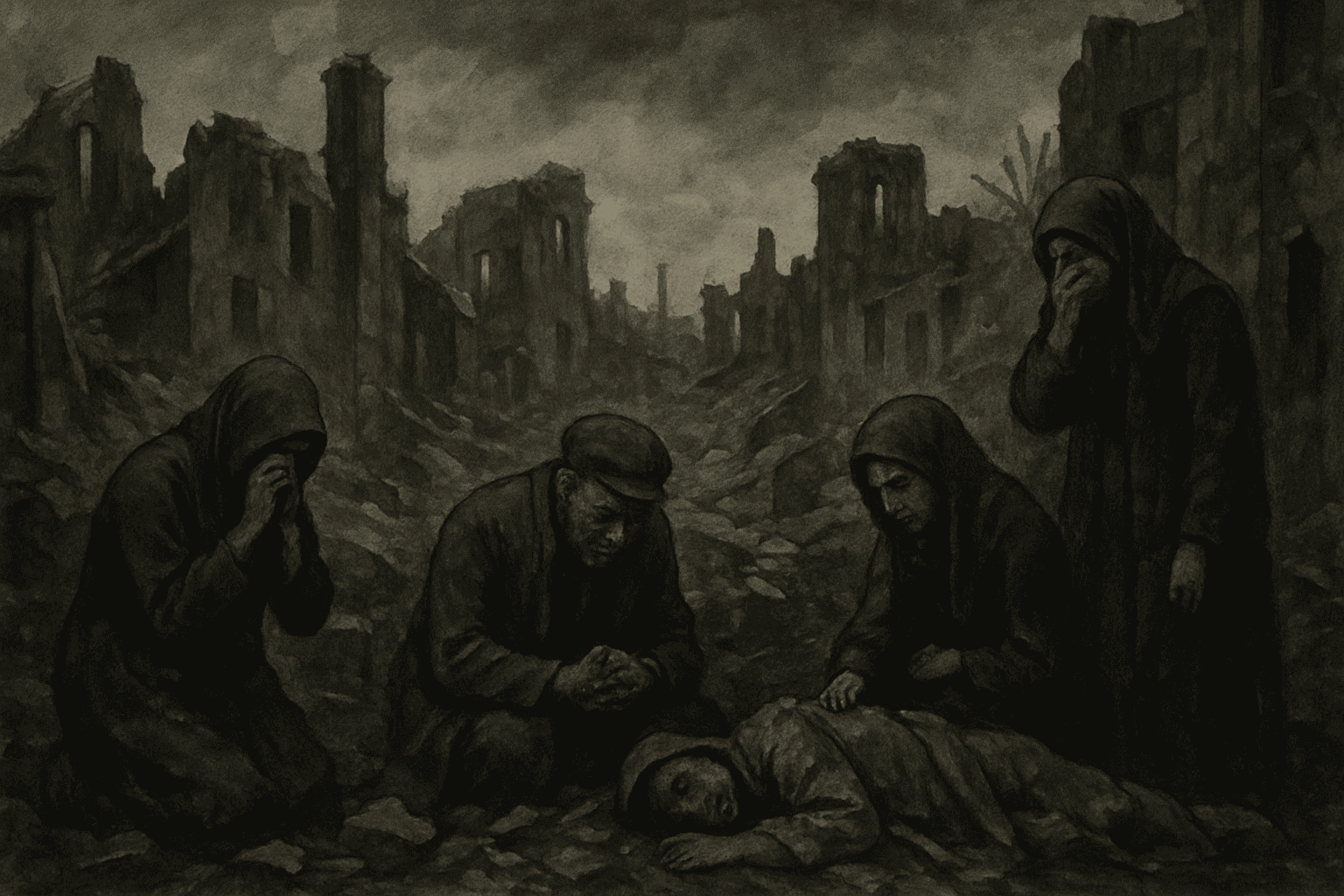
Here too, sacrifice defines the narrative: 35 million casualties, the Nanjing Massacre, and fourteen years of brutal occupation. China presents itself as the forgotten ally that tied down Japan’s army, preventing it from fighting the U.S. or the USSR.
Most importantly, Beijing’s narrative gives the starring role not to the Nationalist government (which actually fought most of the battles) but to the Communist Party. CCP guerrilla fighters, it claims, mobilized the people and ultimately delivered victory. This reframing transforms a messy civil war into a clean story of national salvation—and legitimizes CCP rule today.
China’s WWII memory is both victimhood and triumph: the victim of foreign aggression, yet also a victorious great power. It links directly to Xi Jinping’s promise of “national rejuvenation” and China’s rising role on the global stage.
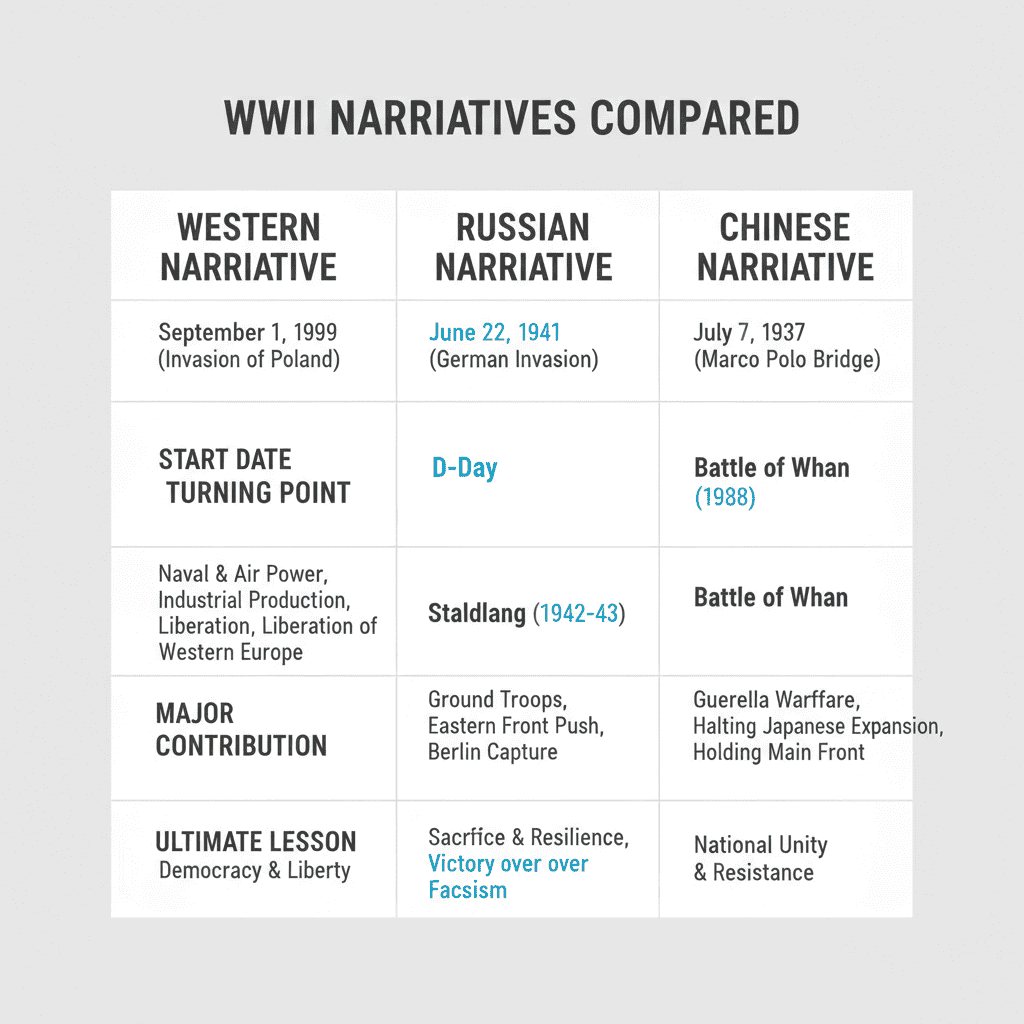
Part II: Commemoration as Geopolitical Theater
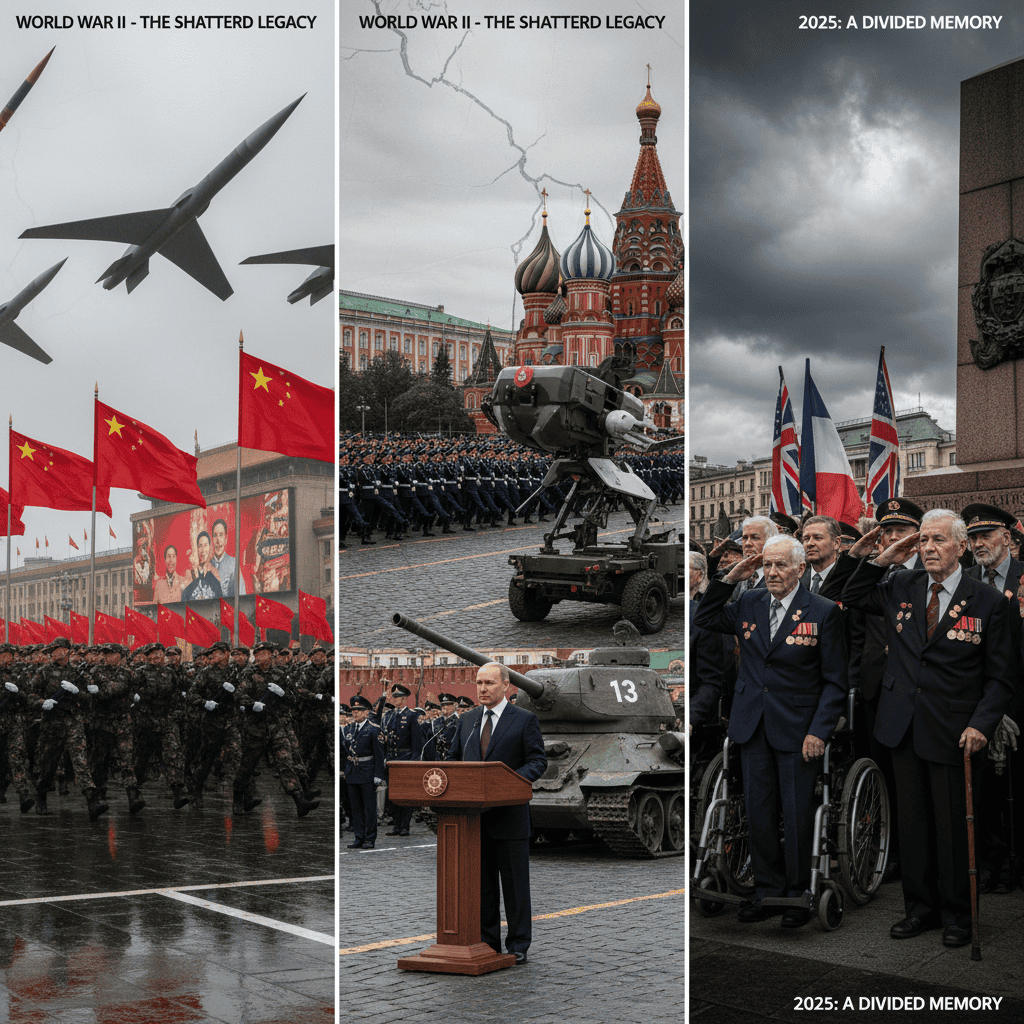
Commemorations in 2025 revealed memory as choreography: China’s precision-tooled parades, Russia’s fusion of past and present wars, and the West’s restrained solemnity.
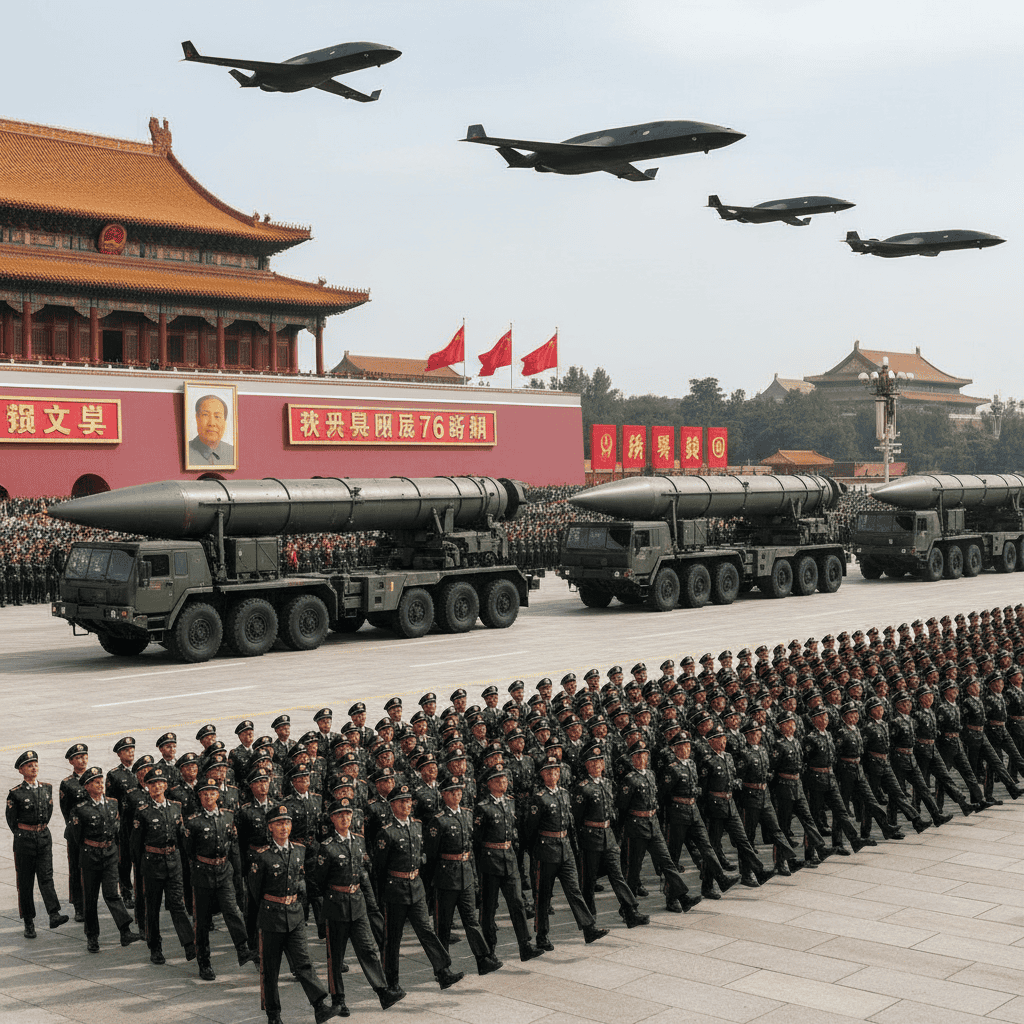
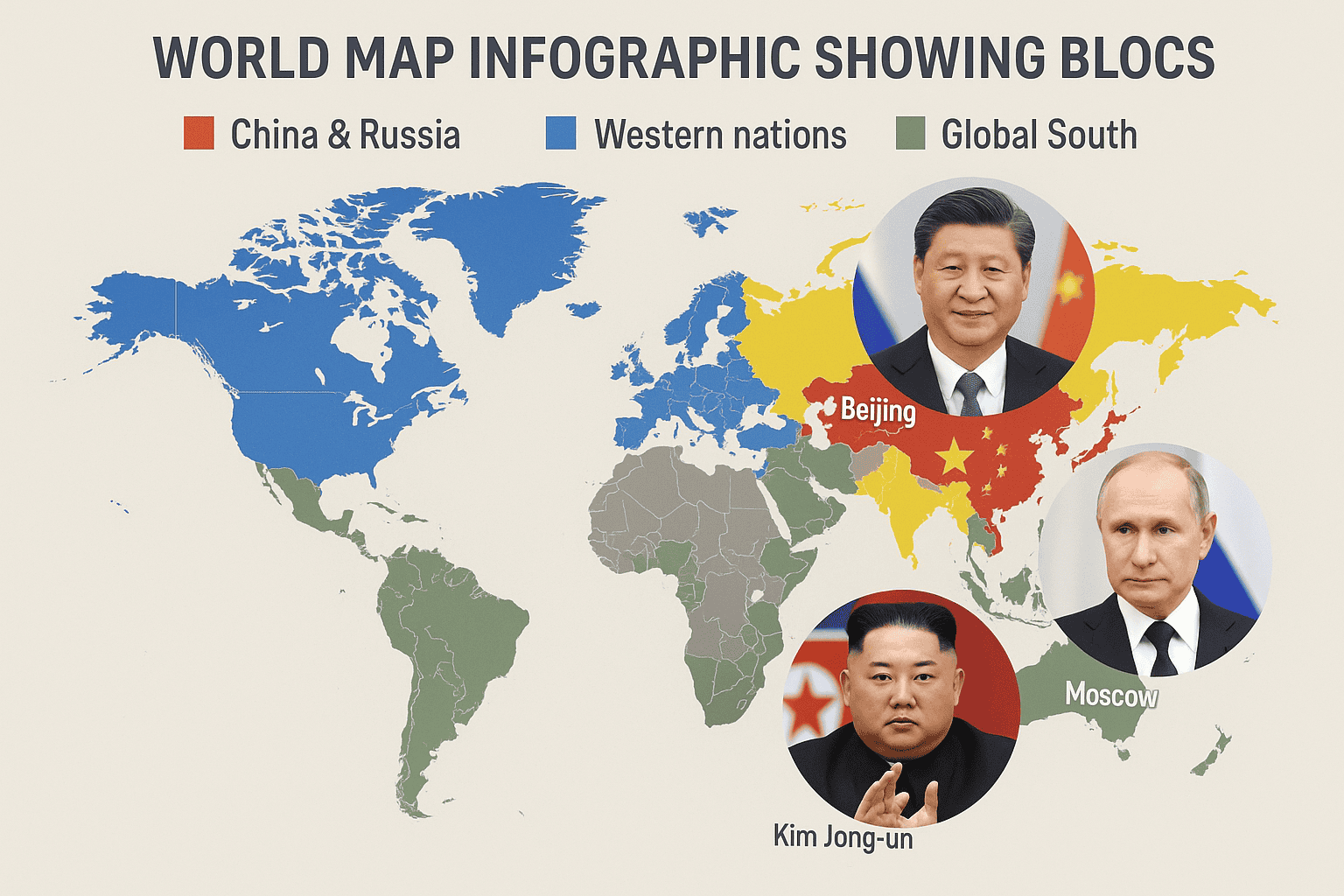
On September 3, 2025, Beijing staged a colossal parade in Tiananmen Square. Officially, it was about “honoring heroes and cherishing peace.” In reality, it was a showcase of cutting-edge missiles, drones, and stealth aircraft—much of it unveiled for the first time. Hypersonic “carrier-killer” missiles, nuclear submarines, and AI-driven combat drones rolled past, sending a blunt message: China has the power to confront the U.S. in Asia. Seated beside Xi Jinping were Vladimir Putin and North Korea’s Kim Jong Un—a carefully staged picture of anti-Western solidarity. Xi warned that “China will never be intimidated by bullies.”
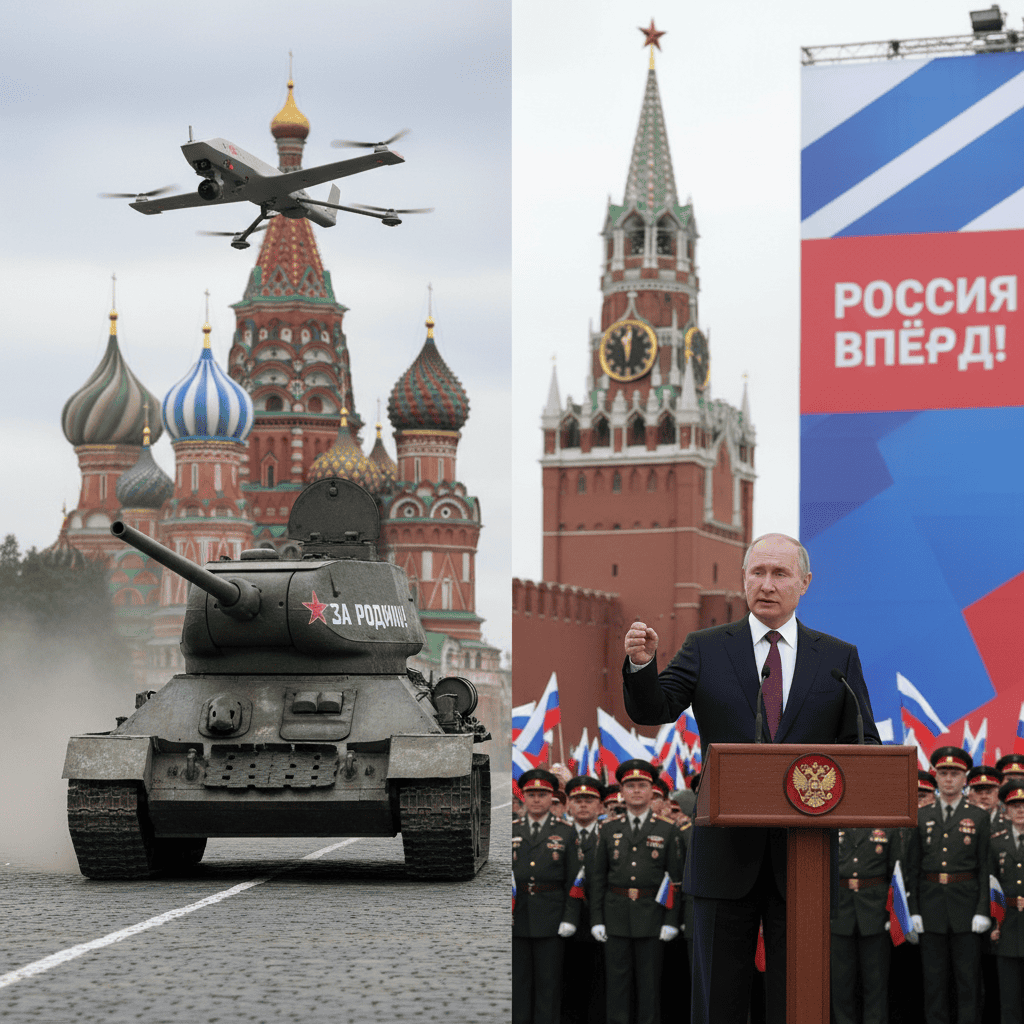
In Red Square on May 9, 2025, Moscow paraded tanks and missiles alongside WWII relics like the T-34. Soldiers fresh from Ukraine marched as heirs to the Red Army. Putin fused past and present: the fight in Ukraine, he declared, continues the Great Patriotic War; the West are today’s Nazis. Guests from China and Latin America underlined a claim to lead an anti-Western bloc. For the domestic audience, the message was simple: the war is sacred and existential.
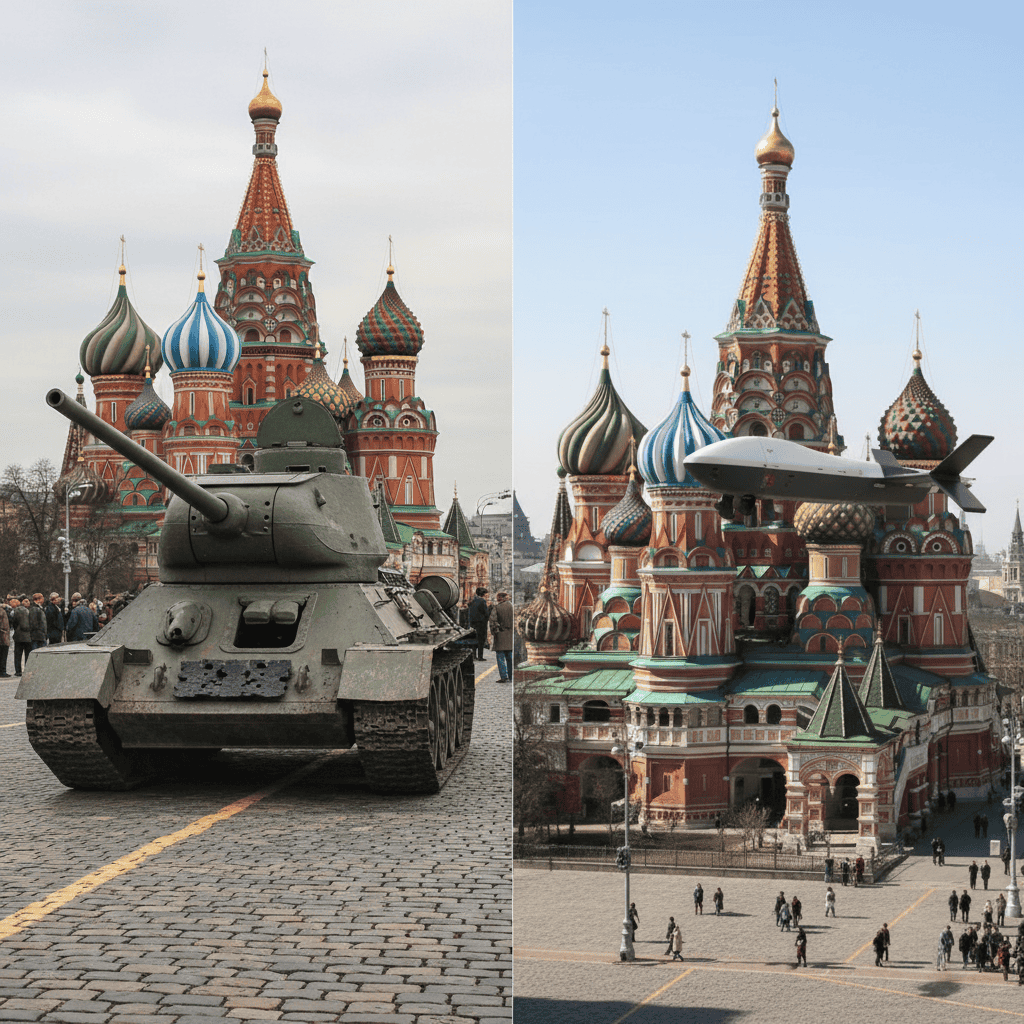
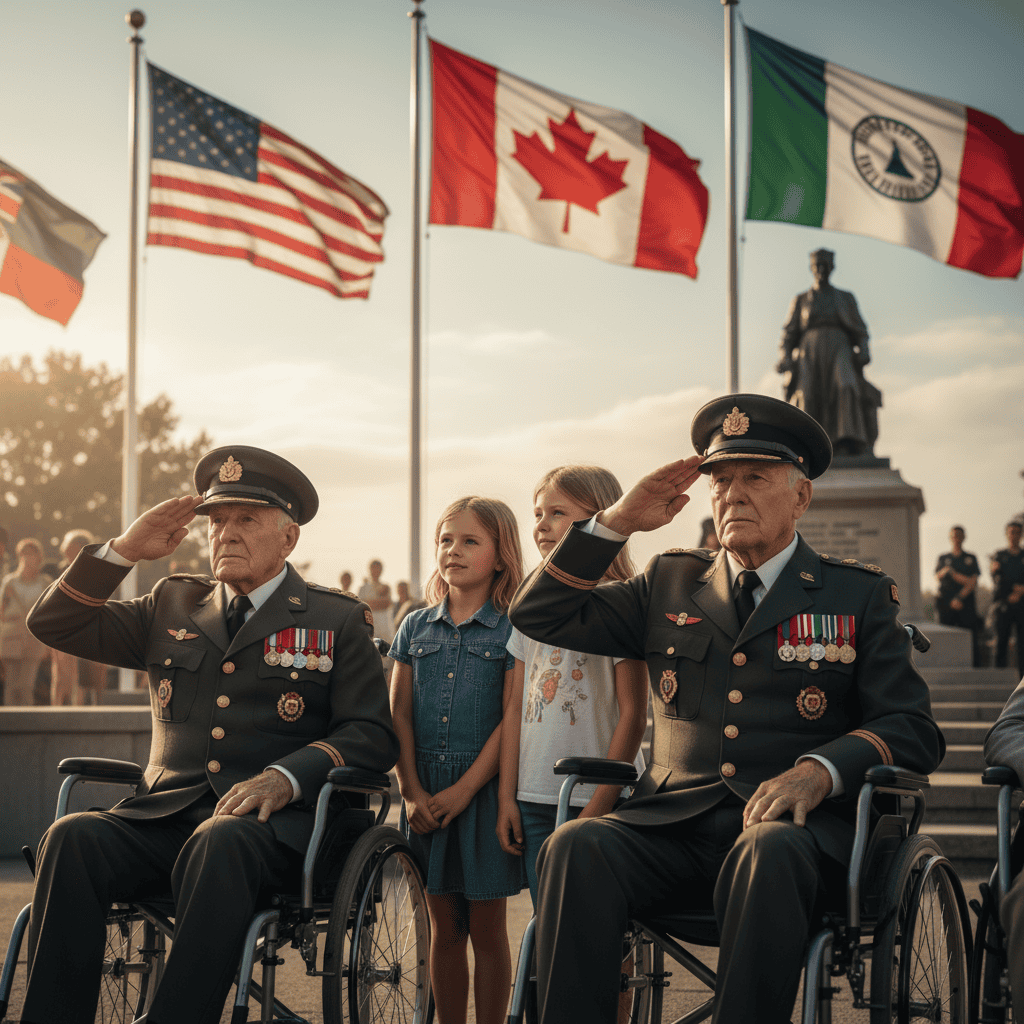
Memorials in Washington, London, and Paris were restrained: wreaths and tributes to dwindling numbers of veterans. Speeches linked 1945 sacrifices to present dangers from Russia’s war in Ukraine, while doubts about U.S. reliability nudged Europe toward self-reliance—signaling the fade of the “post-war order” birthed in 1945.
Part III: History as a Weapon
Russia and China accuse the West of rewriting history to downplay their sacrifices; the West notes that Moscow erases the 1939 pact with Hitler and Beijing minimizes the Nationalists’ role. In all three, memory is curated. Propaganda, censorship, and “memory laws” enforce official truths.
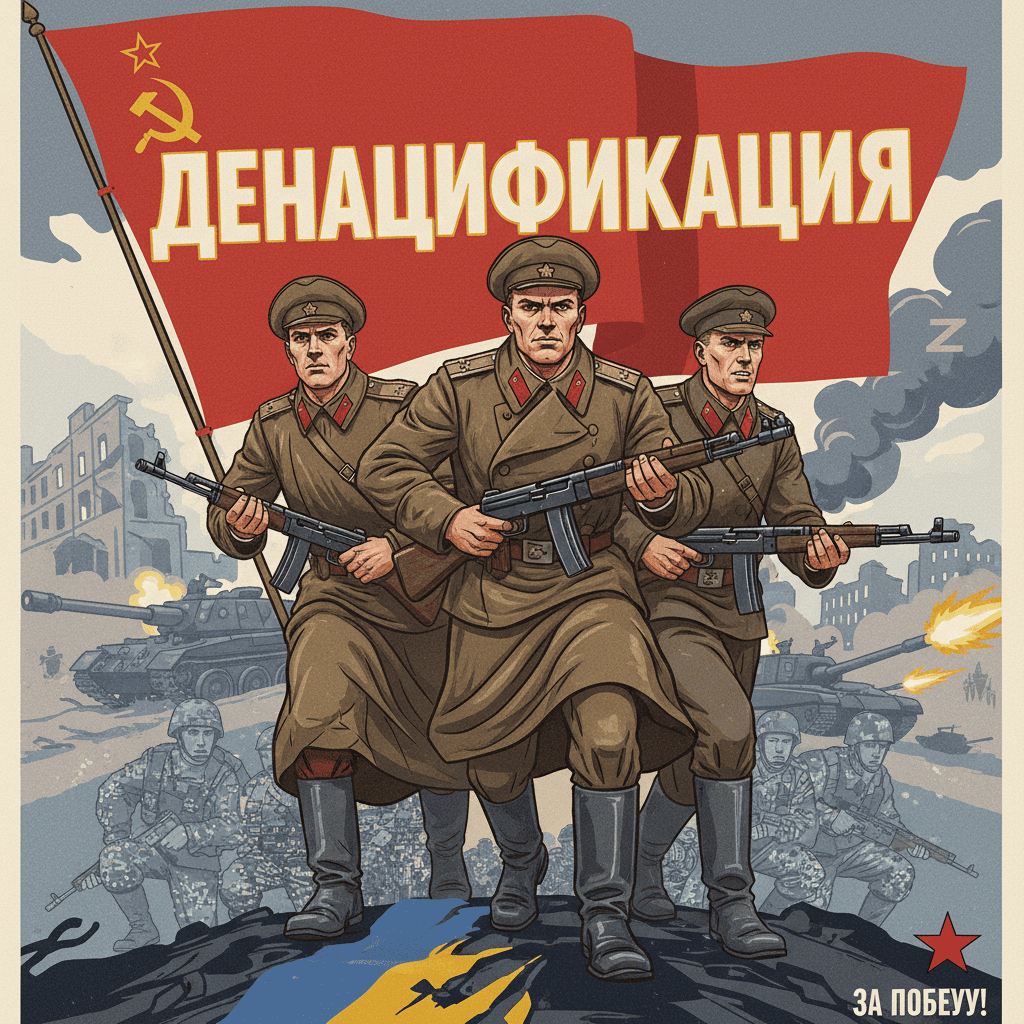
These myths aren’t just academic. Putin’s “denazification” narrative underwrites the invasion of Ukraine. Xi’s “war of resistance” frames U.S. alliances as echoes of Japanese aggression. Both aim to woo the Global South by casting themselves as heirs of anti-fascism and anti-colonialism.
Part IV: Memory and the Future
Russia’s Trap in Ukraine
By equating Ukraine with Nazi Germany, Putin has raised the stakes to existential levels. He cannot easily de-escalate without appearing to “lose the sacred war.” The narrative hardens the conflict and prolongs confrontation with the West.
The Sino-Russian “Memory Alliance”
Together, Moscow and Beijing present their partnership as a continuation of the anti-fascist struggle, justifying a multipolar order free of U.S. dominance. The pitch resonates in parts of the Global South—but both powers also act imperially. Beneath the unity, old fractures persist: China recalls Tsarist land grabs; Russia fears junior-partner status. The alliance is potent against the U.S., but brittle as a long-term project.
Optional: Relative “Narrative Intensity” Over Time
(If your WordPress blocks scripts, skip this chart or embed via a trusted plugin.)
Conclusion: A Fractured Memory for a Fractured World
The 80th anniversary of WWII revealed not a shared global memory, but a battlefield of narratives. For Russia and China, memory is a weapon—used to justify wars, legitimize regimes, and build alliances. For the West, memory is more cautious, haunted by doubts about the durability of the order victory once created.
World War II was once “the Good War,” a unifying lesson for humanity. Today, it has become a fractured memory in a fractured world—used not to prevent future wars, but to justify them.
Similar Posts
The Hallyu Hegemony: How South Korea Rewired Global Culture
The Hallyu Hegemony –The Truth Beyond The Fog NebulaReports Feature • Analysis • September 2025
The Last Freedom: Anonymous Sacrifice and the Enduring Light of Humanity, 80 Years After World War II
The Last Freedom: Anonymous Sacrifice and the Enduring Light of Humanity — The Truth Beyond The Fog NebulaReports Feature •…
The Gilded Archipelago: Power, Profit, and Prowess in Pre-Colonial Southeast Asia
The Gilded Archipelago – The Truth Beyond The Fog NebulaReports Feature • History & Culture • September 2025
The Atomization of Fame: Deconstructing Celebrity in the Age of the Creator Economy
The Atomization of Fame – The Truth Beyond The Fog NebulaReports Feature • Analysis • October 2025