The Gilded Archipelago: Power, Profit, and Prowess in Pre-Colonial Southeast Asia
Feature • History & Culture • September 2025
Introduction: The Lands Below the Winds, A World Rediscovered
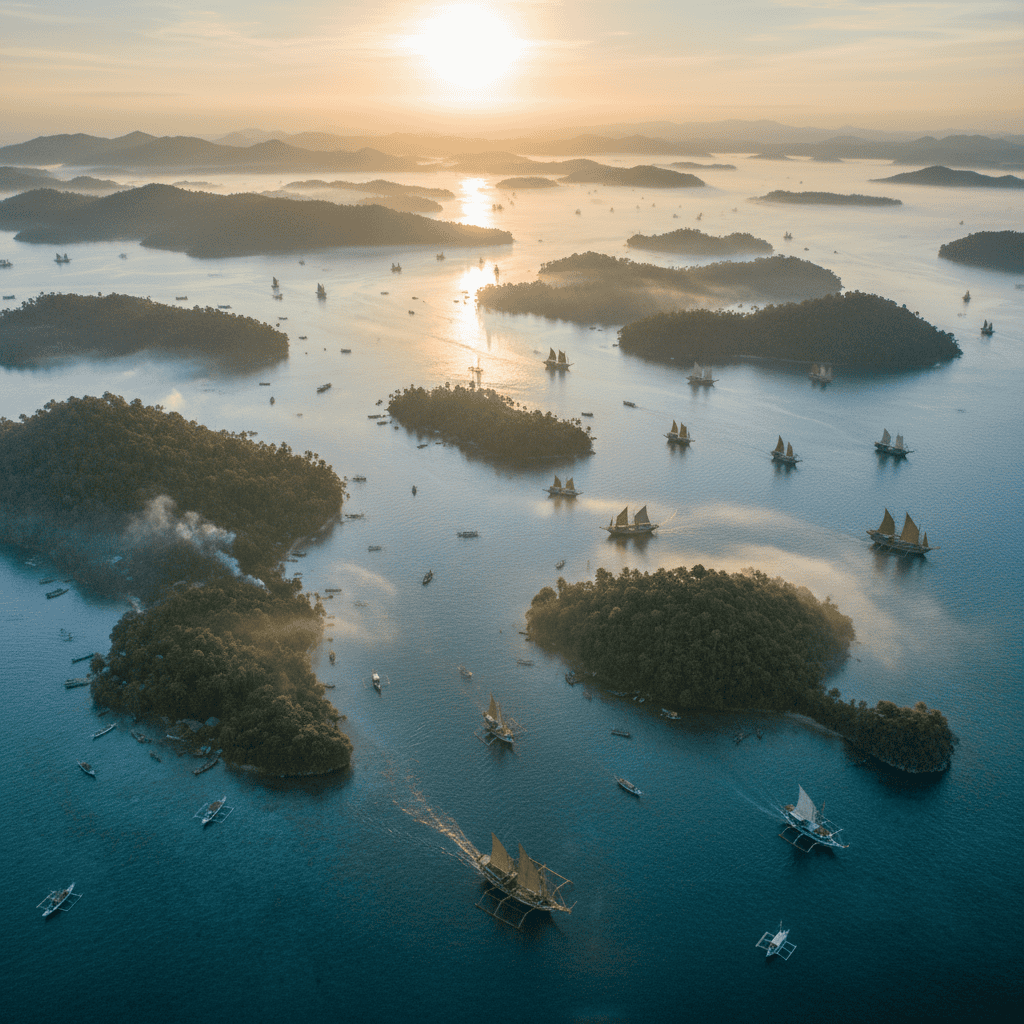
History has long been written with Europe at its center. The voyages of Columbus, the spice trade, the rise of maritime empires—these are often told as the moment Asia was “discovered” and thrust onto the world stage. But this framing is misleading. For centuries before European sails pierced the horizon, Southeast Asia—known to Chinese chroniclers as the “lands below the winds”—was already a thriving world of its own: wealthy, urbanized, and deeply interconnected.
Here was a region where cities like Malacca and Ayutthaya rivaled the size and sophistication of Paris or London. Where power was not anchored by strict borders on maps but radiated outward from centers of charisma and prestige. Where pirates could be kings one day and outlaws the next. And where foreign adventurers—Japanese rōnin, Indian priests, Chinese merchants—wove themselves into local politics with startling consequences.
To explore this world is to challenge the Eurocentric lens that still frames much of global history. It is to uncover a saga of empires, mercenaries, god-kings, and cosmopolitan port cities—a world in full flower long before colonialism.
Chapter 1: Empires of the Center – The Mandala States
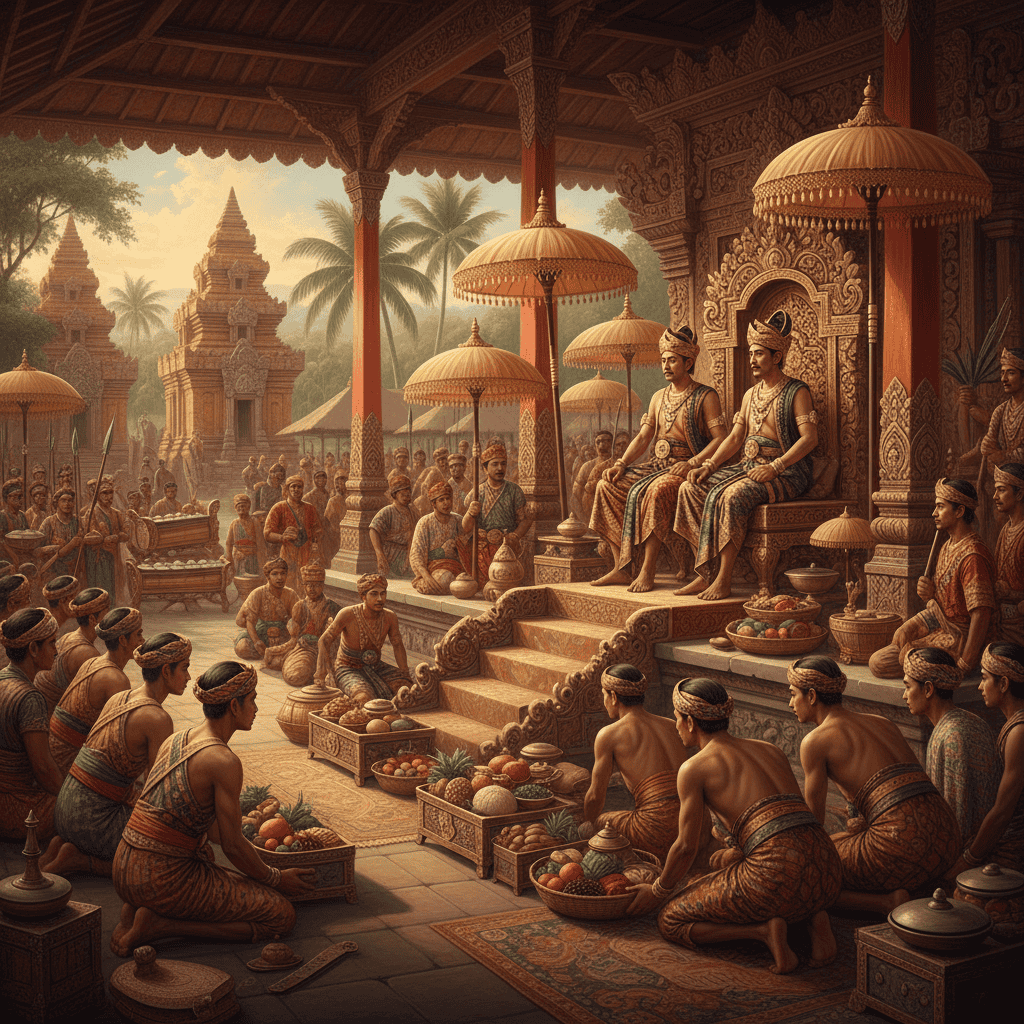
Unlike Europe’s nation-states, Southeast Asian empires operated according to a radically different model of power: the mandala. This Sanskrit concept, meaning “circle,” described power not as rigid territorial control but as influence radiating outward from a core. Authority weakened with distance, overlapped with rivals, and was constantly renegotiated through personal loyalty, marriage alliances, and ritual displays.
1.1 Srivijaya: Masters of the Maritime Crossroads
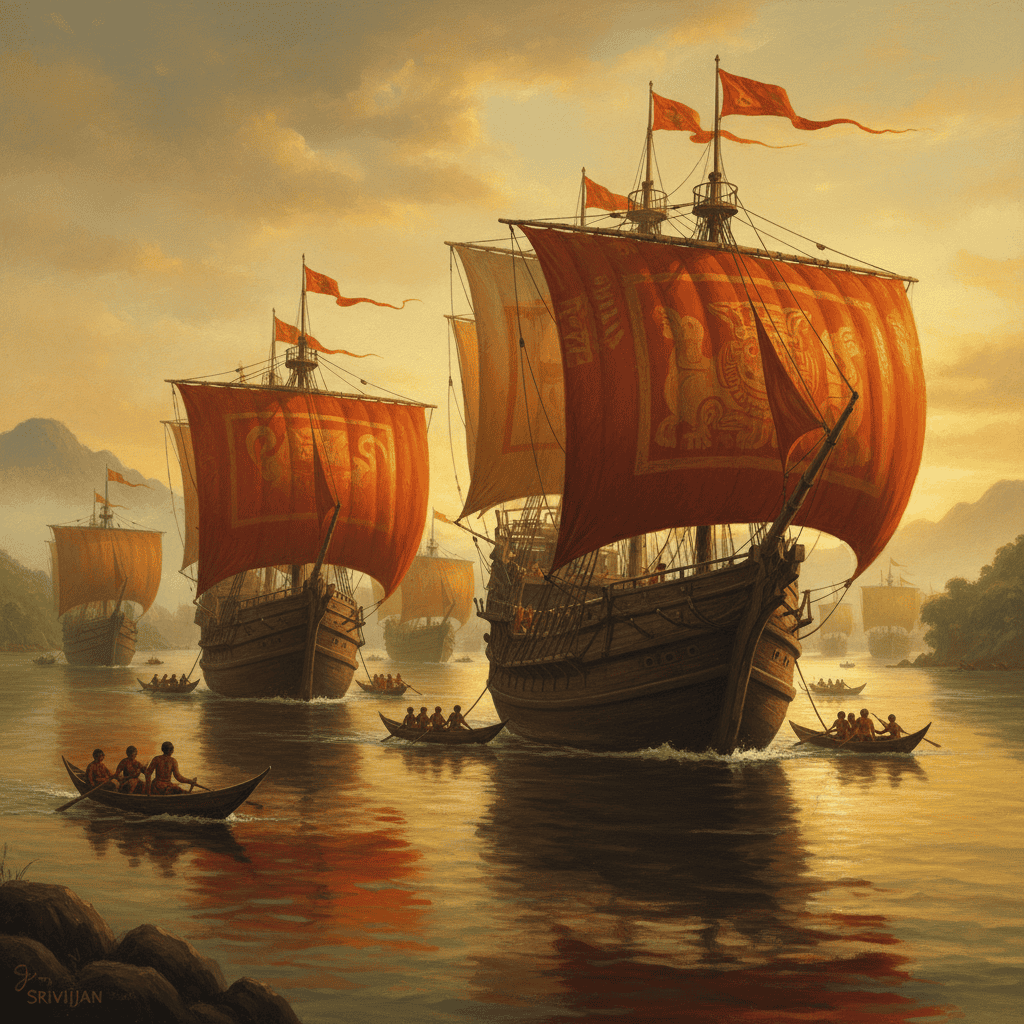
In the 7th century, the port city of Palembang on Sumatra transformed itself into Srivijaya, the great thalassocracy of Southeast Asia. Its genius lay not in conquering vast inland territories but in controlling the two great chokepoints of global commerce: the Strait of Malacca and the Sunda Strait. Every ship sailing between India, the Islamic caliphates, and China passed through Srivijaya’s grasp.
Its navy, powered by alliances with the Orang Laut sea nomads, made the seas safe—while compelling ships to dock and pay taxes. In this way, piracy and statecraft blurred together. Srivijaya was less a static empire than a delicate balancing act: as long as the Orang Laut remained loyal to the maharaja, the state thrived; once patronage faltered, its “navy” dissolved into pirate fleets.
1.2 Majapahit: The Mandala Perfected
By the 14th century, the island of Java gave rise to the Majapahit Empire, remembered in the epic court poem Nagarakretagama as ruling over nearly the entire Indonesian archipelago. Under King Hayam Wuruk and his formidable prime minister Gajah Mada, Majapahit fused land and sea into a concentric mandala system:
- Negara Agung (Grand State): the royal heartland in East Java
- Manca Negara (Outer States): nearby provinces, ruled by royal kin
- Nusantara (Other Islands): far-flung tributaries acknowledging suzerainty
Majapahit’s cohesion rested not just on tribute or arms but on ideology. The king was seen as a chakravartin, a universal monarch embodying cosmic order. Monumental temples like Prambanan and elaborate rituals projected prestige that kept vassals in orbit.
1.3 Angkor: Engineering Divinity
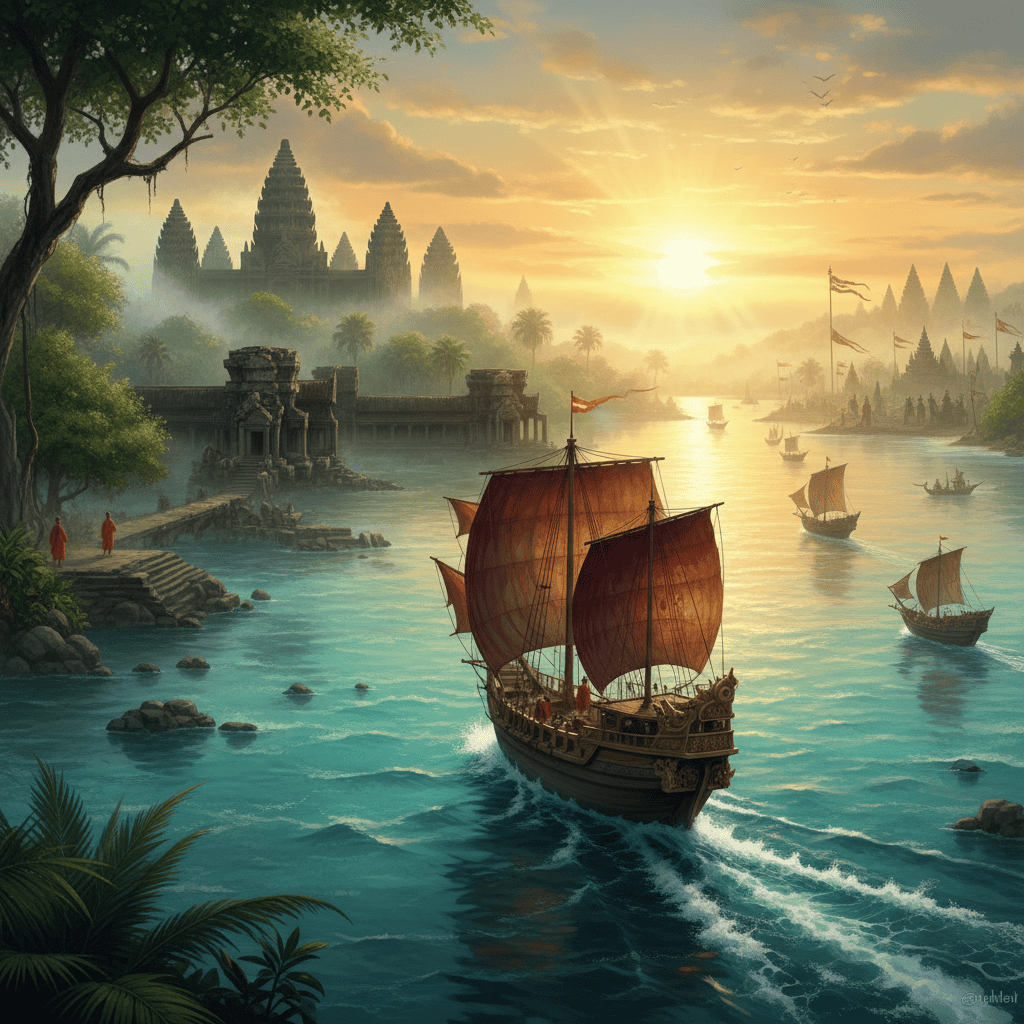
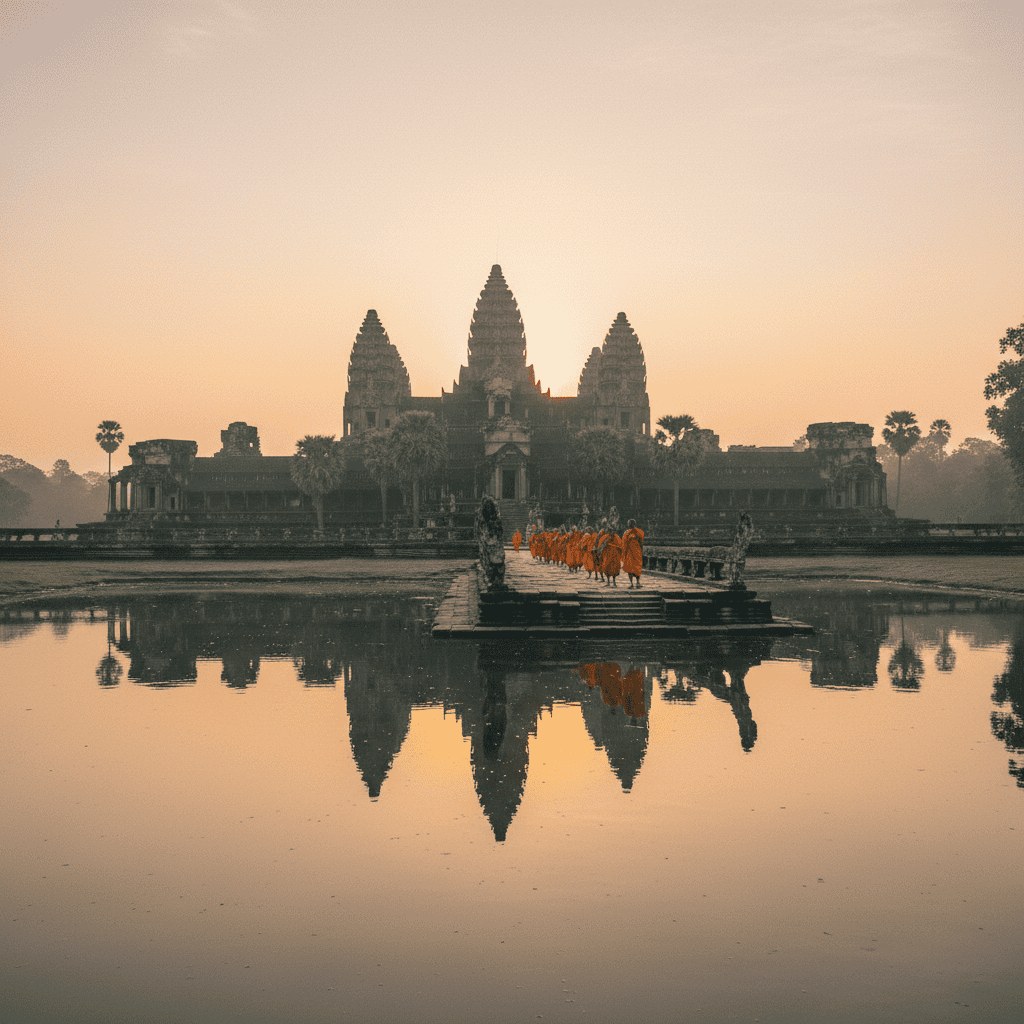
On the mainland, the Khmer Empire (9th–15th centuries) built one of the largest pre-industrial cities in history. At its peak, Greater Angkor housed nearly a million people—fed by a vast hydraulic system of canals, reservoirs, and moats that allowed multiple rice harvests a year.
This engineering marvel was bound to ideology. The Khmer king was a devaraja, a god-king, whose divine essence was enshrined in sacred temples. The ultimate expression was Angkor Wat, a colossal stone mandala representing the Hindu cosmos itself. For Khmer farmers, building canals or temples was not simply labor—it was devotion, an act of sustaining cosmic balance.
Chapter 2: The Foreign Element – Samurai, Pirates, and Preachers
Southeast Asia was never an isolated backwater. Its wealth drew in foreigners—some as allies, others as predators—who reshaped its politics in surprising ways.
2.1 Samurai in Siam
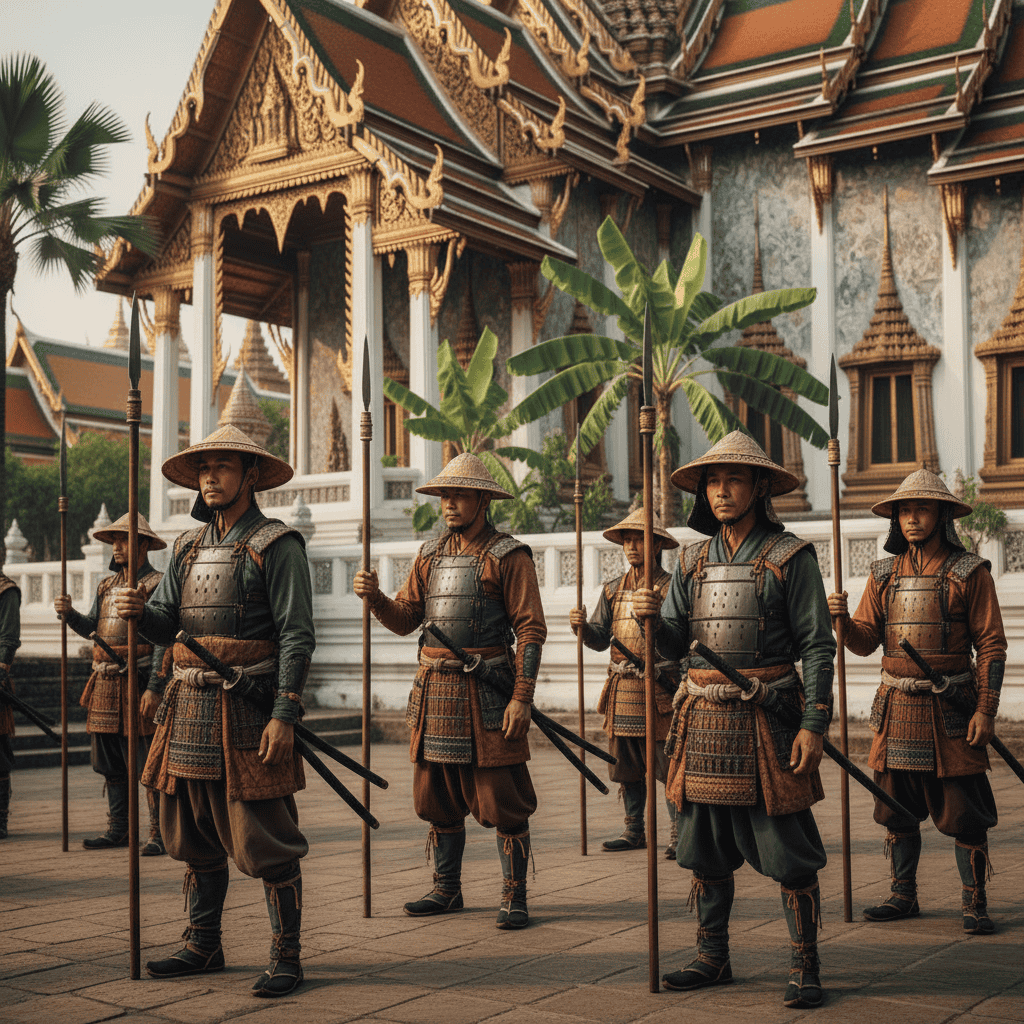
In the 16th and 17th centuries, Japan’s wars left many masterless rōnin adrift. Some found new purpose in the cosmopolitan capital of Ayutthaya (Siam), where kings valued them as mercenaries free from local aristocratic factions. The most famous, Yamada Nagamasa, rose from humble origins to become a general, governor, and power broker before being assassinated in court intrigue. His story reveals both the usefulness and the danger of foreign mercenaries who could, in time, rival the throne itself.
2.2 The Wokou Pirates
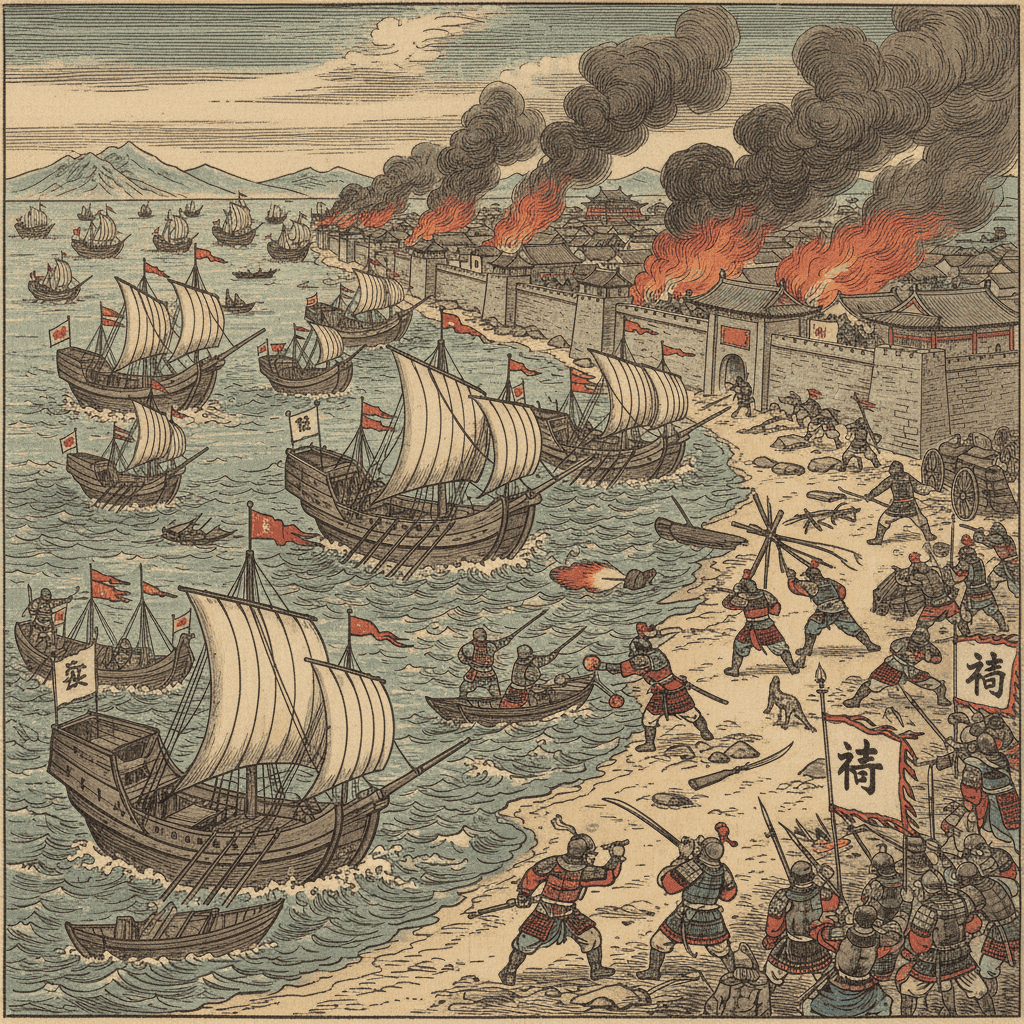
China’s Ming dynasty inadvertently fueled piracy by outlawing private trade. Coastal merchants, fishermen, and smugglers—pushed into illegality—joined multinational pirate fleets known as wokou (“Japanese pirates”), though most were Chinese. These pirate syndicates, armed with Japanese rōnin and Portuguese adventurers, ravaged the Chinese coast and even established bases in Taiwan and the Philippines. They embodied a violent but rational resistance to state monopolies on trade.
2.3 The Indianization Wave
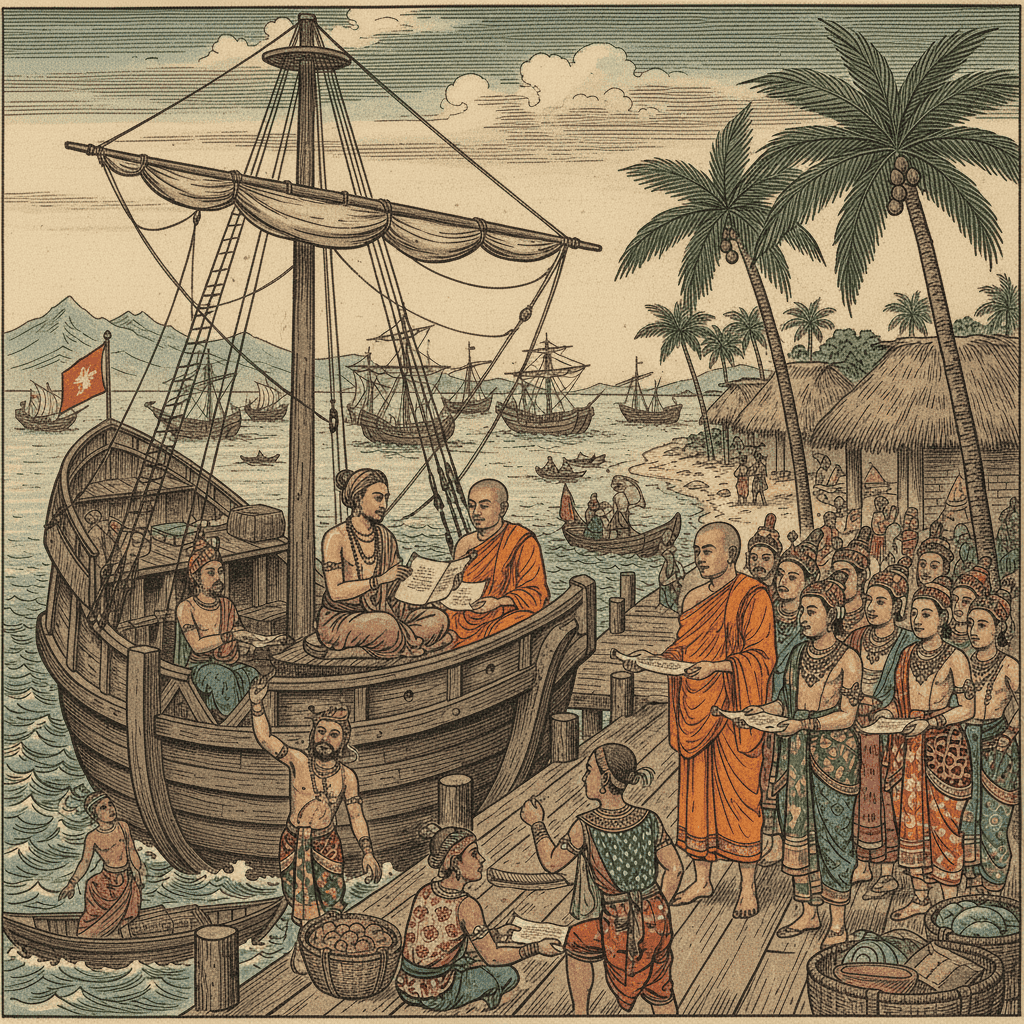
From the early centuries CE, Southeast Asian rulers voluntarily absorbed Indian religions, scripts, and political ideas. Sanskrit became the language of courts, Brahmin priests introduced divine kingship, and the Pallava script seeded nearly every major Southeast Asian writing system. Yet this was no passive borrowing: rulers selectively localized Indian ideas, rejecting rigid caste hierarchies while embracing divine kingship as a tool of authority.
Chapter 3: The Age of Commerce – Cosmopolitan Cities and Perilous Seas
Between 1450 and 1680, Southeast Asia entered its own Age of Commerce, integrating more deeply into a global system stretching from Japan to Europe.
3.1 Cosmopolitan Entrepôts
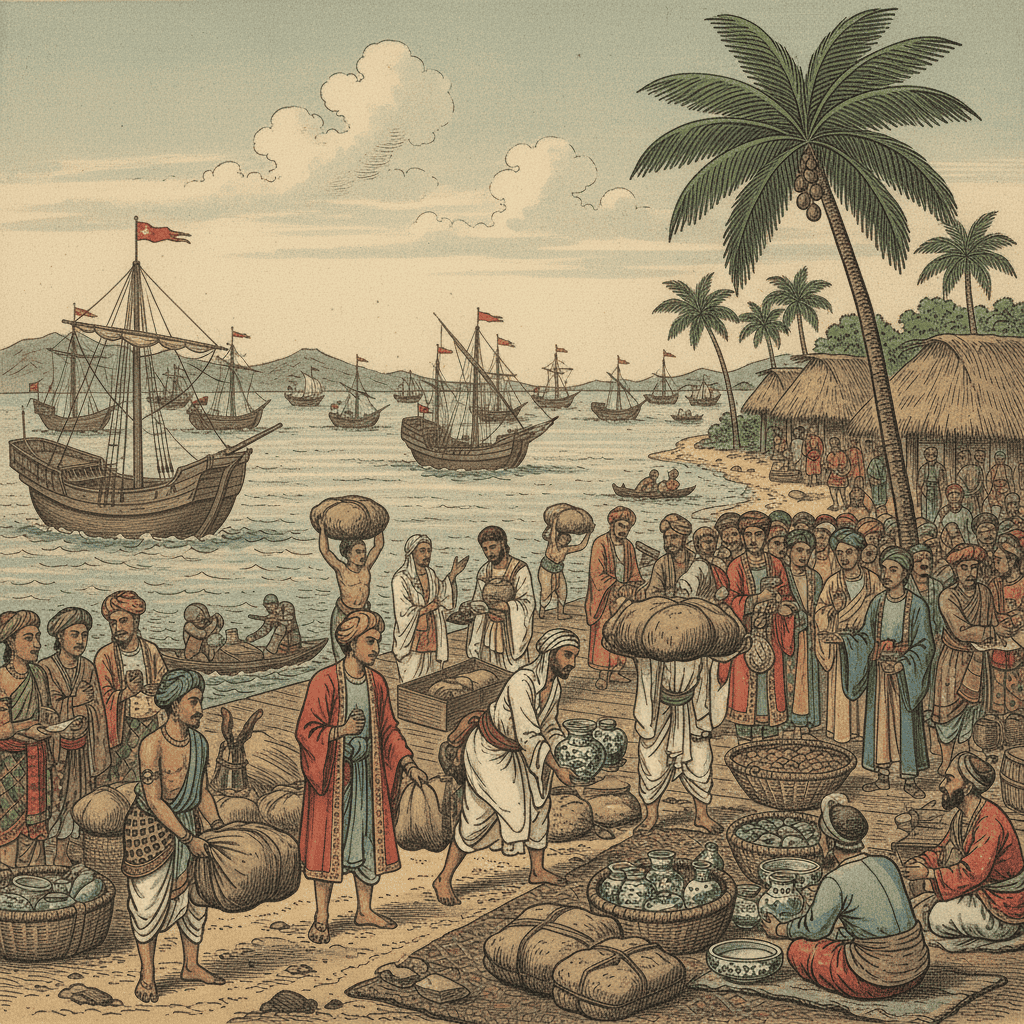
Port cities like Malacca and Ayutthaya swelled into global megacities, larger than Lisbon or Amsterdam. Merchants from “forty nations” filled their quarters—Chinese, Indians, Arabs, Persians, later Portuguese and Dutch—each community governed by its own headman under the ruler’s eye. These cities were not agricultural capitals but entrepôts—their wealth tied directly to maritime trade in spices, textiles, ceramics, and silver. They were, in many ways, the world’s first “global cities.”
3.2 The Sea Peoples’ Domain: Navy vs. Piracy
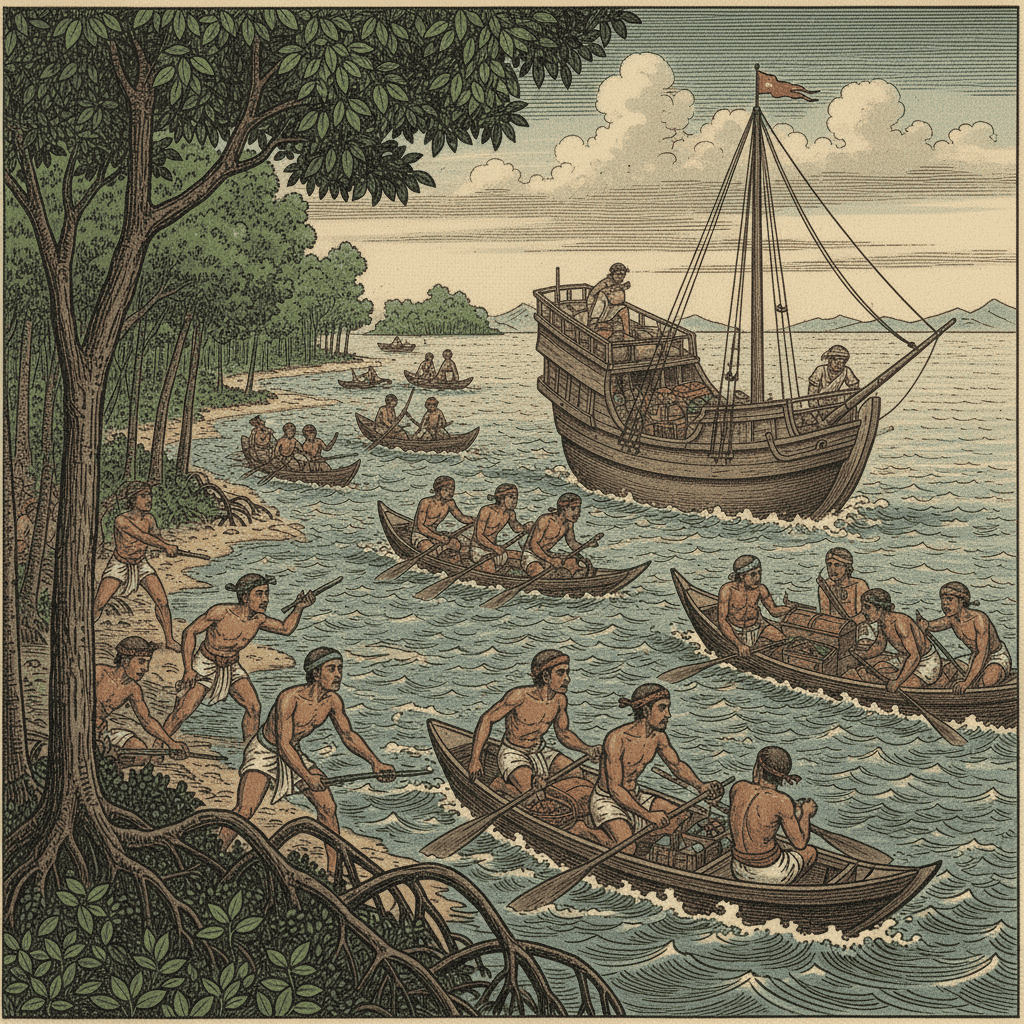
Prosperity came with peril. Pirates thrived in the labyrinth of islands and straits. For sea peoples like the Orang Laut, raiding was not criminal but part of survival and politics: loyal navies when allied to a king, feared raiders when left adrift. Even Europeans blurred this line—Portuguese fleets sold “protection passes” (cartazes) to merchants, a legalized form of piracy cloaked as empire. In this world, piracy was not an aberration but a structural feature of trade, a reminder that commerce and violence often sailed together.
Optional: Key Events Timeline
(If your WordPress installation blocks scripts, skip this chart or embed via a trusted plugin.)
Conclusion: Reclaiming the Narrative
The saga of pre-colonial Southeast Asia challenges us to rethink what power, empire, and globalization look like. Here were civilizations that flourished without fixed borders, cities that thrived on global connectivity, and political models where charisma and ritual outweighed bureaucracy.
This was not a region waiting for Europeans to bring it into history—it was a world already central to global exchange. By reclaiming this narrative, we uncover not only the brilliance of Srivijaya, Majapahit, and Angkor, but also a more plural vision of world history: one where multiple paths to power and prosperity coexist, and where the seas of Southeast Asia—crowded with god-kings, rōnin, pirates, and traders—were as central to shaping the modern world as any palace in Europe.
Similar Posts
The Atomization of Fame: Deconstructing Celebrity in the Age of the Creator Economy
The Atomization of Fame – The Truth Beyond The Fog NebulaReports Feature • Analysis • October 2025
The Hallyu Hegemony: How South Korea Rewired Global Culture
The Hallyu Hegemony –The Truth Beyond The Fog NebulaReports Feature • Analysis • September 2025
The Last Freedom: Anonymous Sacrifice and the Enduring Light of Humanity, 80 Years After World War II
The Last Freedom: Anonymous Sacrifice and the Enduring Light of Humanity — The Truth Beyond The Fog NebulaReports Feature •…
Fractured Victory: How WWII Memory Shapes a New Global Order
Fractured Victory: How WWII Memory Shapes a New Global Order – The Truth Beyond The Fog NebulaReports Feature • Analysis…