The Hallyu Hegemony: How South Korea Rewired Global Culture
Feature • Analysis • September 2025
Introduction
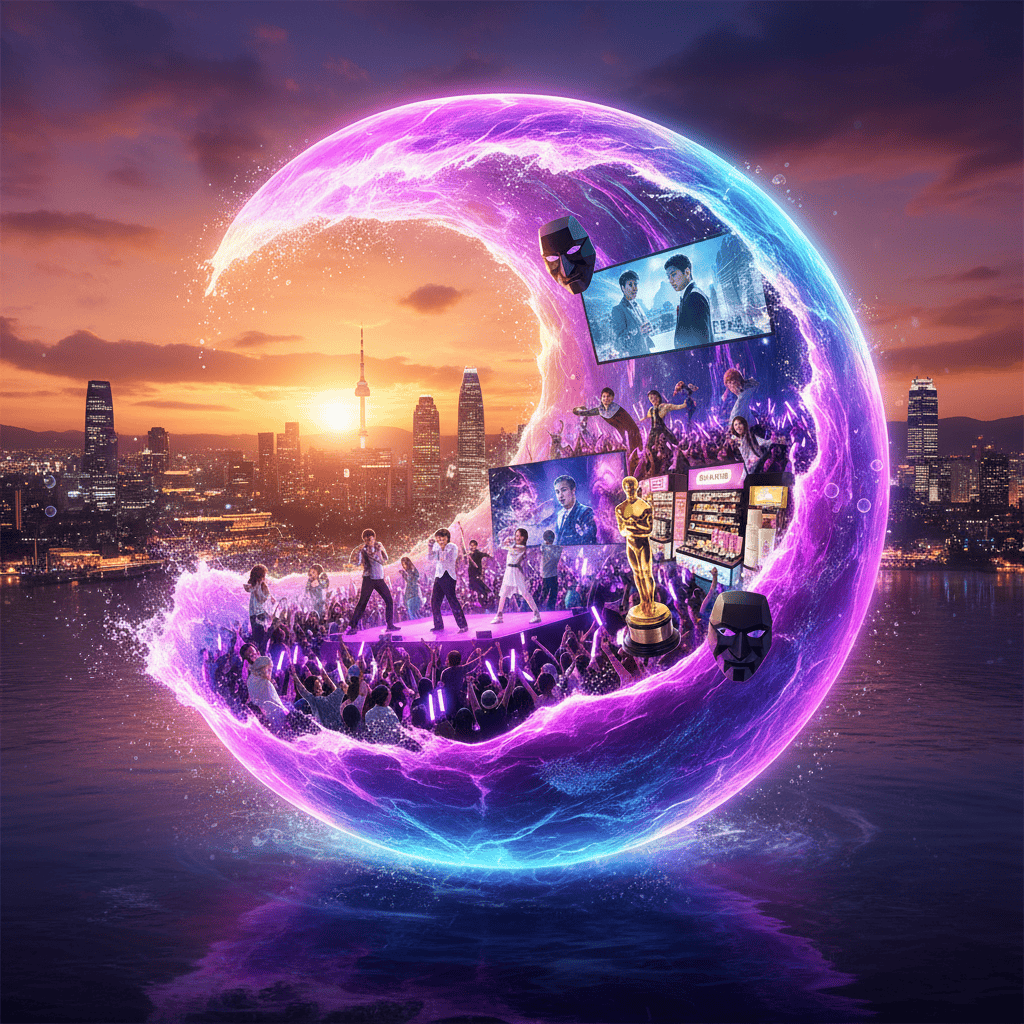
When Netflix’s Squid Game smashed records in 2021, becoming a platform-defining phenomenon, it was tempting to see it as a one-off fluke. But for anyone watching closely, the show’s runaway success was one crest of a much larger tide: the Korean Wave, or Hallyu. From the synchronized precision of K-pop idols to the intricate storytelling of K-dramas, Hallyu has become a defining cultural force of the twenty-first century.
It isn’t just entertainment; it’s a meticulously engineered ecosystem that generates billions in revenue, mobilizes fandom as a political force, resets global beauty and fashion, and rewrites soft power for the digital age. This feature traces how South Korea transformed from a war-torn state into a cultural trendsetter, why Hallyu resonates across regions, and what tensions shadow its rise.
From National Project to Global Phenomenon
Post-war resilience and the Miracle on the Han River
After the Korean War (1950–1953), South Korea was among the poorest countries on earth. Between the 1960s and 1980s, a state-led, export-oriented development model—powered by chaebol such as Samsung and Hyundai—sparked the “Miracle on the Han River.” That ethos of discipline, ambition, and global competition would later permeate cultural industries.
Democracy and creative liberation
The democratic transition of 1987 dismantled decades of authoritarian censorship. As Hollywood flooded Korean screens, domestic filmmakers and producers responded not with retreat but with hybridization—adopting global polish while preserving Korean narrative sensibilities. The result was a “glocal” product: globally familiar, locally authentic.
The Asian Financial Crisis: a turning point
The 1997 crisis forced a strategic pivot. President Kim Dae-jung’s government elevated IT and cultural content to national growth engines. Early hits such as What Is Love (China) and Winter Sonata (Japan) seeded a new phenomenon that Chinese media labeled Hallyu—the Korean Wave. What began as regional popularity became an export strategy.
In related news, see our detailed analysis of Power, Profit, and Prowess in Pre-Colonial Southeast Asia .
The Three Waves of Hallyu
- Hallyu 1.0 (late 1990s–mid-2000s): Regional spread of K-dramas via broadcast and DVDs across East and Southeast Asia.
- Hallyu 2.0 (mid-2000s–mid-2010s): The global breakout of K-pop powered by YouTube, social media, and fan translation networks; PSY’s “Gangnam Style” became the first video to hit 1B views.
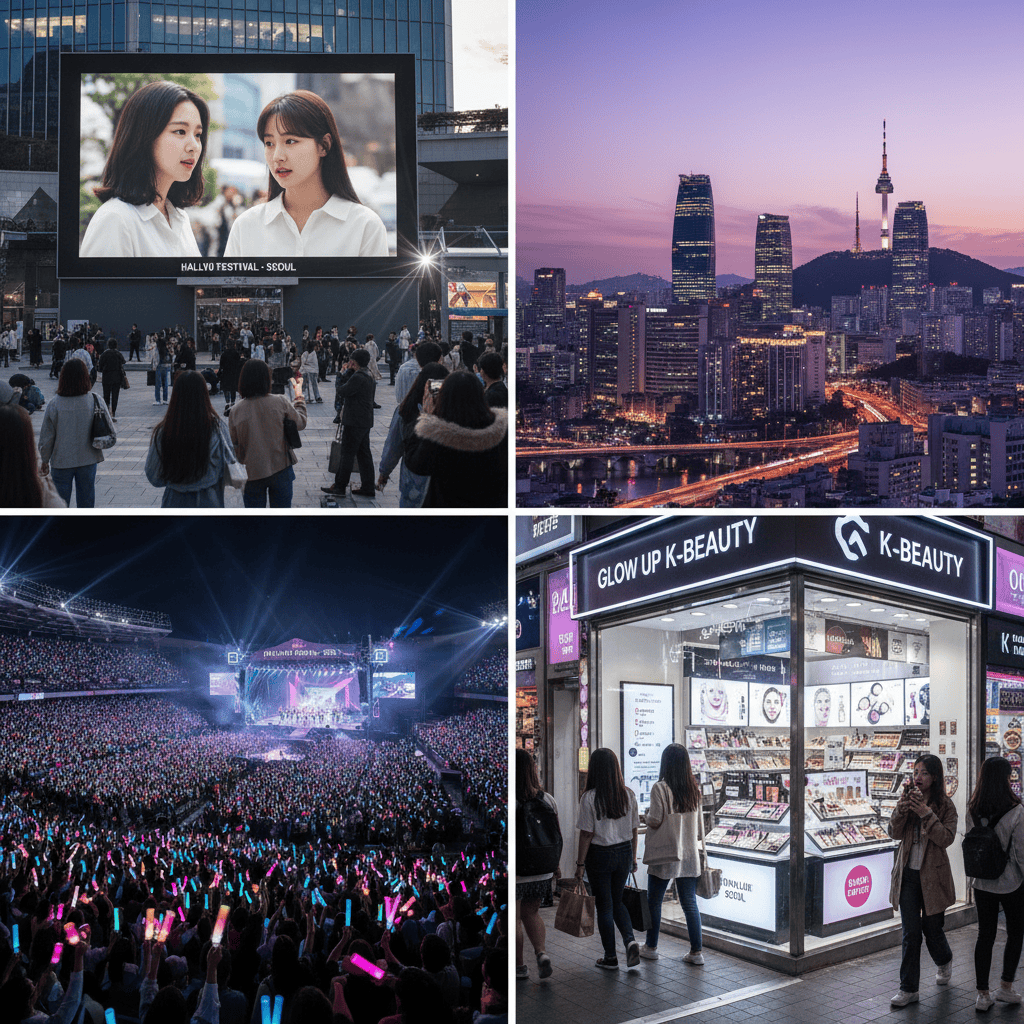
- Hallyu 3.0 (mid-2010s–present): Full globalization and diversification: BTS and BLACKPINK go stadium-scale; Parasite wins Best Picture; Squid Game dominates streaming. K-beauty, fashion, cuisine, and webtoons ride the same tide.
The State as Cultural Architect
Institutions that behave like investors
Post-1997, Seoul launched a formal Hallyu development plan, revamped the Ministry of Culture, Sports and Tourism, and created the Korea Creative Content Agency (KOCCA). These bodies functioned like strategic investors—funding production, translation, and overseas promotion, and de-risking global expansion for studios and labels.
Budgets matching ambition
Public support scaled quickly from tens of millions to sustained annual commitments. Crucially, this was not cultural charity—it was industrial policy: a feedback loop where global wins justified continued funding, which in turn enabled further reach.
From exports to soft power
Culture became diplomacy. Korean Cultural Centers multiplied; idols and filmmakers became de facto ambassadors. BTS addressed the UN, and Korea’s soft-power rankings climbed with “Culture & Heritage” as a standout pillar.
The K-Pop Engine
The idol factory
K-pop industrializes stardom. Trainees—often recruited in adolescence—live together, practice 12–15 hours a day, study languages, media etiquette, and choreography. Only a fraction debut; those who do arrive impeccably polished, brand-ready, and globally oriented.
The Big Four
SM, YG, JYP, and HYBE operate as vertically integrated conglomerates that control training, production, touring, merchandising, and endorsements. HYBE alone reports billion-dollar revenues. Increasingly, these firms export not just artists but the system: global auditions, localized groups, and overseas academies.
The superfan platform economy
Platforms like HYBE’s Weverse merge social interaction, exclusive content, and commerce into a closed loop that captures first-party data and monetizes directly—an advantage over Western labels reliant on third-party platforms. Fans don’t just stream; they subscribe, shop, vote, and participate.
Quantifying the Wave
- Exports: Hallyu-linked exports have surged into the tens of billions annually, with a “halo effect” lifting tourism, K-beauty, and food.
- Corporate performance: The Big Four agencies collectively rake in multi-billion revenues, buoyed by touring, merchandise, and robust physical album sales.
- Streaming & charts: Korean acts regularly dominate global physical sales lists; on streaming platforms, Korean series and films rank among the most watched worldwide.
Global Reception: Cultural Polyphony
North America and Europe
K-pop has broken beyond diaspora audiences, and K-dramas now attract racially diverse viewers. KCON events draw six-figure crowds, and K-pop dance studios dot the urban landscape across London, Paris, and Berlin.
Latin America
K-dramas resonate with telenovela traditions—romance, family, melodrama—delivered with Korean aesthetics and pacing, while K-pop fandoms flourish in Spanish and Portuguese speaking communities.
Middle East
Audiences embrace high-quality, family-friendly dramas whose themes of loyalty and respect align with local norms, offering an alternative to more explicit Western media.
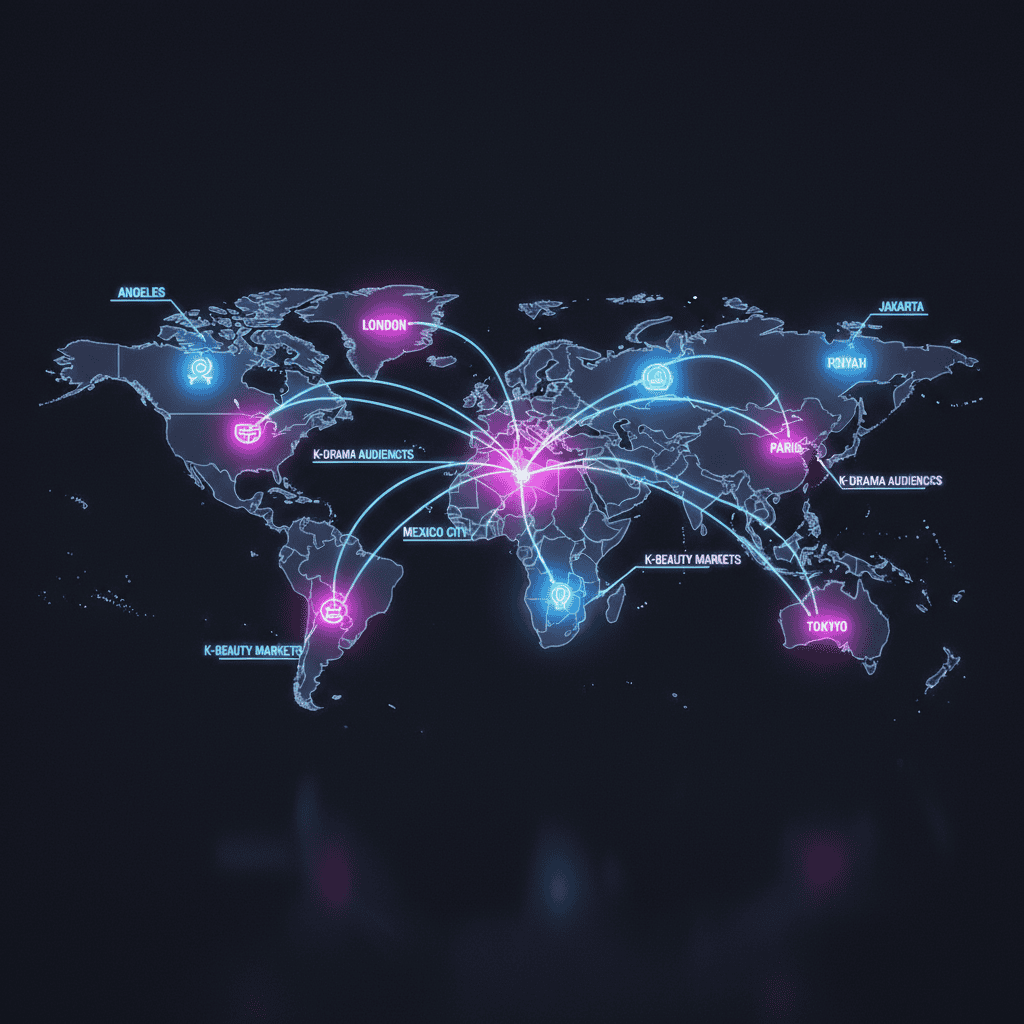
K-beauty has become a multi-billion-dollar global market; Korean language learning surges through classes and the TOPIK exam. Viewership evolves into consumption and, ultimately, immersion.
The Fandom Revolution
Consumers, co-creators, activists
Organized fandoms coordinate streaming drives, bulk album purchases, and award voting—turning fandom into an operational arm of the industry. The BTS ARMY has demonstrated the capacity for rapid fundraising and political mobilization, blurring lines between pop culture and civil society.
The paradox of fan activism
Fandom’s power is built on consumption. Charitable drives resemble pooling cash for albums, while boycotts reverse that logic and strain identity. Whether fandom can transcend consumer dynamics remains an open question.
The Price of Perfection
- Labor & power: Historic “slave contracts” have eased but asymmetries persist; schedules are punishing and tightly managed.
- Mental health: Extreme pressure, surveillance, and cyberbullying contribute to anxiety, disordered eating, and high-profile tragedies.
- Beauty standards: A narrow aesthetic—pale skin, slim frame, V-line face—fuels cosmetic surgery and toxic body image worldwide.
- Cultural appropriation: Recurring criticism over borrowing from Black culture (styles, slang, genres) without adequate credit.
This moral dissonance—the rhetoric of self-love packaged by a high-pressure system—poses the most significant long-term risk to Hallyu’s soft-power appeal.
The Future of Hallyu
Risks ahead include market saturation, formulaic output, and geopolitical shocks (from boycotts to censorship). The industry is adapting: diversifying into webtoons and games, exporting the training model to new regions, and nurturing localized talent. Even if growth plateaus, the legacy is secure: Hallyu proved a non-Western nation can dominate global culture and redefined soft power for the platform era.
Conclusion: A Resilient Wave or a Passing Tide?
The Korean Wave began as a state-backed recovery bet and matured into a cultural juggernaut. It works because it is more than entertainment: it is statecraft, commerce, identity, and community. The wave may face storms, but its foundations—institutions, corporate innovation, technology, and fandom—run deep.
Whether Hallyu remains unstoppable or eventually recedes, one truth endures: the global cultural tide will never again flow in a single direction. South Korea showed that culture itself can be an engine of national power—rewiring how the world listens, watches, and imagines.
Similar Posts
The Atomization of Fame: Deconstructing Celebrity in the Age of the Creator Economy
The Atomization of Fame – The Truth Beyond The Fog NebulaReports Feature • Analysis • October 2025
Fractured Victory: How WWII Memory Shapes a New Global Order
Fractured Victory: How WWII Memory Shapes a New Global Order – The Truth Beyond The Fog NebulaReports Feature • Analysis…
The Gilded Archipelago: Power, Profit, and Prowess in Pre-Colonial Southeast Asia
The Gilded Archipelago – The Truth Beyond The Fog NebulaReports Feature • History & Culture • September 2025
The Last Freedom: Anonymous Sacrifice and the Enduring Light of Humanity, 80 Years After World War II
The Last Freedom: Anonymous Sacrifice and the Enduring Light of Humanity — The Truth Beyond The Fog NebulaReports Feature •…