
The Atomization of Fame: Deconstructing Celebrity in the Age of the Creator Economy
Feature • Analysis • October 2025
Introduction: The Twilight of the Monoculture
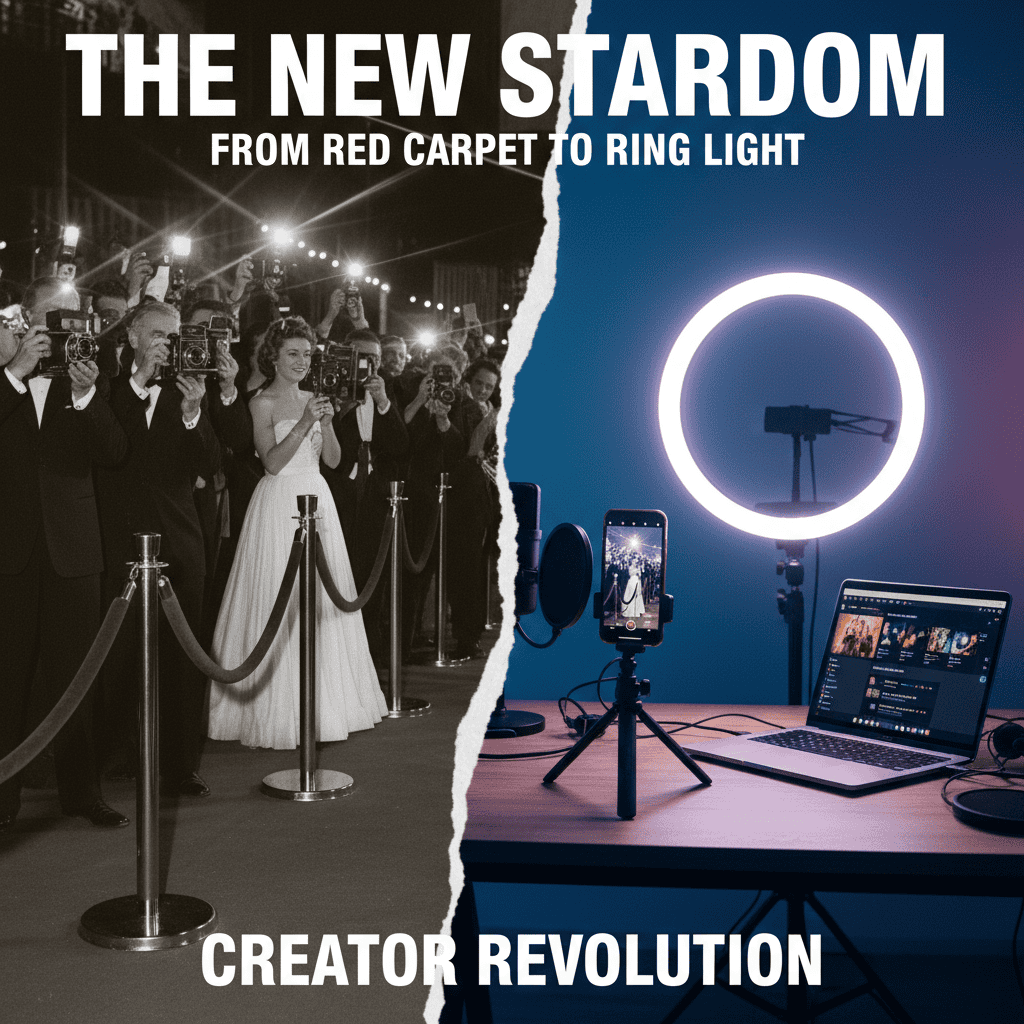
For much of the 20th century, celebrity was a monolithic force. Hollywood studios, broadcast networks, and glossy magazines manufactured stardom and projected it into a unified cultural consciousness. Everyone knew Marilyn Monroe’s smile, Muhammad Ali’s swagger, or Michael Jackson’s moonwalk. Those stars thrived in an environment of media scarcity, where audiences were captive, choices were few, and cultural moments were shared.
That world no longer exists. The monoculture has fractured into a thousand shards. The decline of traditional celebrity isn’t about fading charisma. It’s structural: a collapse of the institutions that curated fame and the rise of a decentralized, hyper-personalized ecosystem of influence.
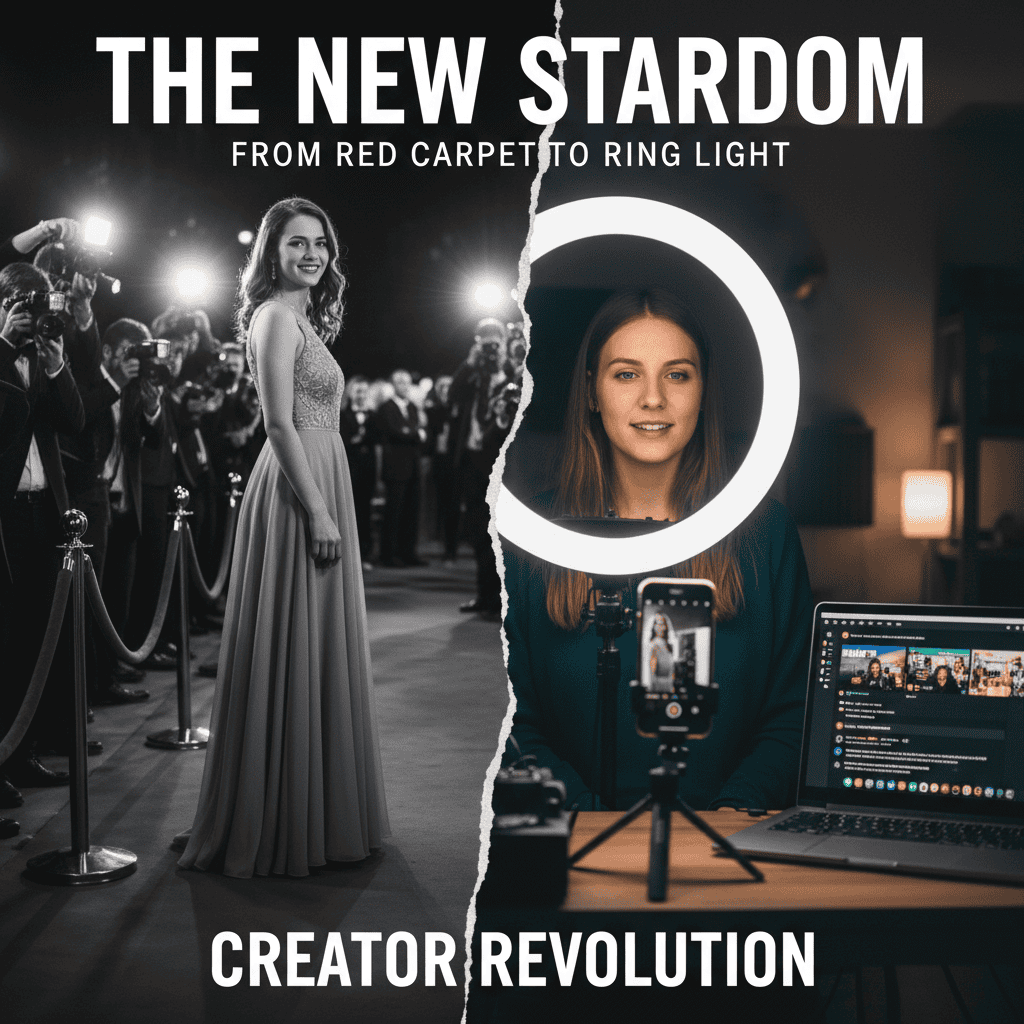
At the heart of this shift lies a tension—the aspirational celebrity defined by mystique versus the relatable creator defined by authenticity. This article explores how mass-market stardom dissolved into niche communities, how the creator economy rose into a colossal industry, and how the very concept of fame has been atomized.
The Structural Unraveling of Traditional Celebrity
Traditional stardom rested on two pillars: media scarcity and curated mystique. Digital platforms eroded both. Scarcity gave way to infinite choice; mystique gave way to radical transparency. The result isn’t the failure of stars to compel; it’s the collapse of the framework that manufactured mass-market appeal.
Fragmentation of the Audience and the End of Mass Appeal
“Water cooler” events that once glued the public together are rare. The Oscars that once commanded 57 million viewers struggle to approach a third of that, and marquee award shows no longer anchor a shared cultural calendar. Gen Z’s attention is splintered across short-form video, gaming, streaming, and podcasts—with no single platform monopolizing their time. In such a landscape, anointing a universally recognized A-lister via a single media buy is nearly impossible.

The Erosion of Mystique: Overexposure and the Authenticity Deficit
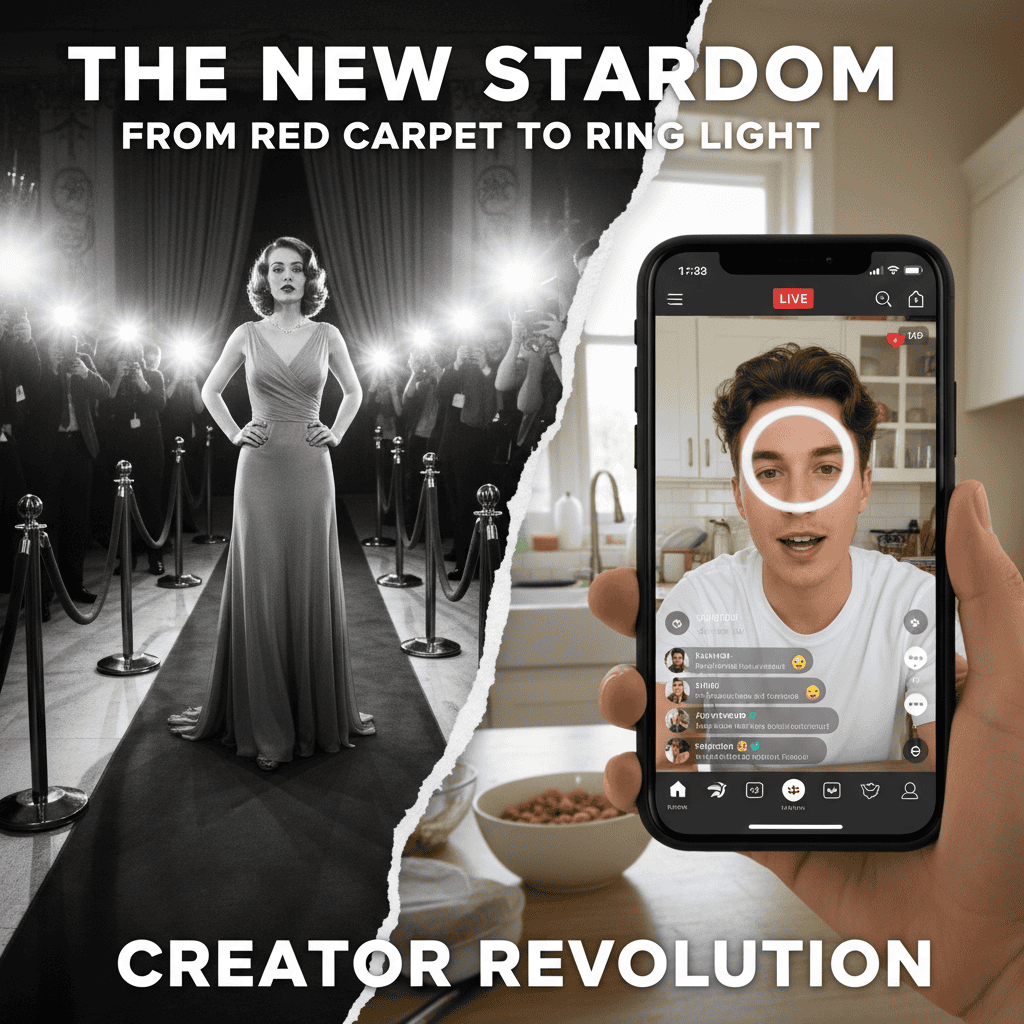
Publicists once polished every angle; now stars livestream from their kitchens. The distance that once produced glamour has collapsed. The pandemic crystallized the shift: high-profile displays of “relatability” from luxurious mansions landed as tone-deaf, exposing a widening authenticity gap. In an era where raw, handheld confessionals outperform glossy spreads, the airbrushed A-list aesthetic turned from asset to liability.
The Ascendancy of the Creator Economy: A New Fame Paradigm
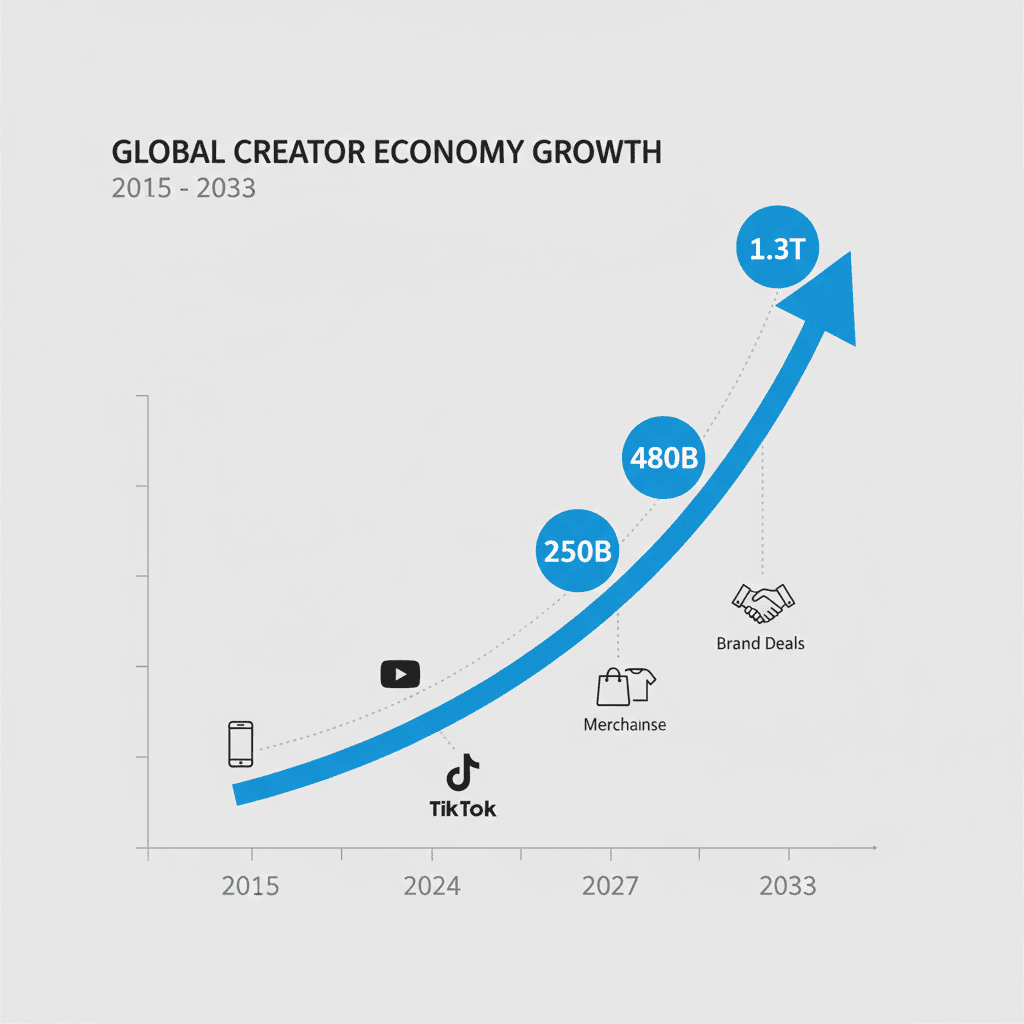
Economic Foundations: The $250B Revolution
What began as hobbyist uploads has become a global industry measured in the hundreds of billions—and growing fast. Crucially, it is driven by individuals, not studios. Yet democratized tools haven’t democratized wealth. Earnings follow a power law: a small elite captures outsized revenue; a struggling middle class fights to break sustainable thresholds; millions aspire from the base.
The Psychological Engine: Parasocial Bonds and Performed Authenticity
Parasocial relationships—one-sided bonds with media figures—have existed for decades. Platforms supercharge them, turning spectators into perceived friends. For creators, trust is the core currency; endorsements feel like advice from someone you “know.” But authenticity is also a performance. The creator’s dilemma is constant: share enough to feel real, but not so much that monetization feels manipulative—or that vulnerability becomes exploitation.

New Architectures of Influence
From Mass Market to Micro-Tribes
Depth beats breadth. Niche creators in ethical fashion, vegan cooking, or retro tech often convert better than celebrities with enormous but passive followings. Micro-communities deliver belonging, feedback loops, and durable loyalty.
Collaboration scales influence. Groups like the Sidemen evolved from friends filming challenges to a diversified media empire: food brands, spirits, memberships, even venture capital. Collectives re-create some functions of agencies and studios—production, strategy, monetization—while facing familiar risks: burnout, internal politics, public implosions.

Parallel Revolutions: Art, Technology, and the Decentralization of Culture
From Underground to Digital-Native Forms
The art world’s gatekeepers face similar disruption. Artists bypass galleries via online audiences, while digital-native forms—VR installations, interactive narratives, hybrid 3D/handcrafted aesthetics—thrive outside traditional institutions.
NFTs as Experiment
NFTs promised verifiable scarcity and direct patronage. The speculative bubble burst, but the core idea—routing value from intermediaries to creators—continues to influence how digital ownership, royalties, and community patronage might work in the long term.

Contemporary Case Studies: The Theory in Practice
Taylor Swift & Travis Kelce: A Hybrid Superstar Model
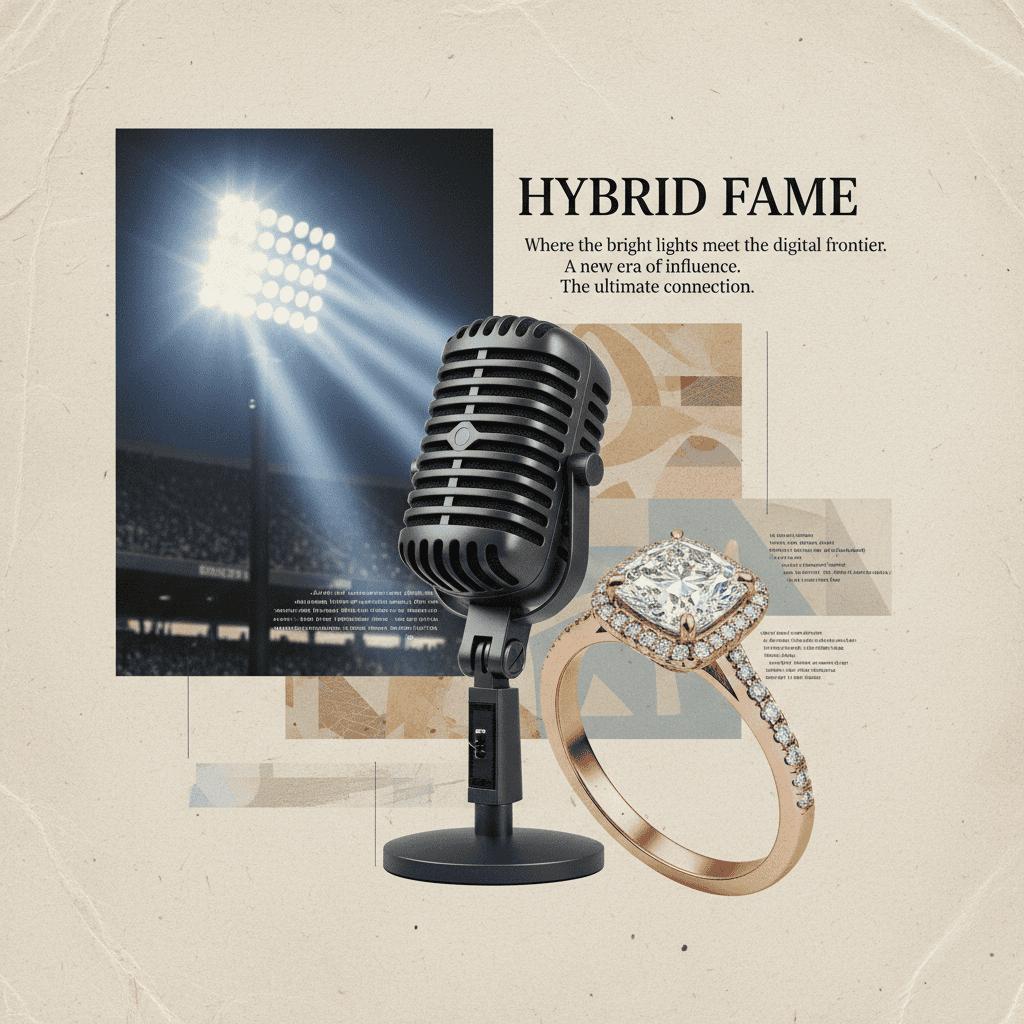
The Swift–Kelce engagement announcement bypassed legacy media yet generated a rare monoculture moment. Swift exemplifies hybrid fame: global scale plus direct-to-fan intimacy (podcasts, social posts, controlled narratives). It’s the old playbook executed with creator-era tools.
Reunion buzz reignited from the bottom up—fans connecting on Reddit, TikTok, and X, re-narrating history and demanding outcomes. Modern fandom isn’t merely an audience; it is an active producer of cultural momentum that can will tours, documentaries, and revivals into existence.
Virality has democratized the on-ramp to fame. Nathan “Doggface” Apodaca’s effortless skate video, Keith Lee’s trust-based food rescues, or Addison Rae’s pivot to a diversified brand show the new arc: authenticity sparks attention; strategy sustains it.

Optional: Key Events Timeline
(If your WordPress blocks scripts, skip this chart or embed via a trusted plugin.)
Conclusion: The Future of Fame in a Decentralized World
The monoculture of A-list dominance has dissolved into an ecosystem where influence is distributed across millions of creators. Fame is abundant, messy, and stratified—governed by trust more than trophies, by resonance more than reach.
Paradoxes define the terrain. Tools are democratized; wealth is not. Authenticity is prized; it is also performed. Old intermediaries are bypassed; new ones arise. For brands, the path forward is value-aligned, long-term partnerships with credible creators. For creators, it’s balancing personal truth with sustainable business models. For audiences, it’s navigating a culture that feels closer—and more fleeting—than ever.
The atomization of fame is complete. What remains isn’t the death of celebrity, but its rebirth—distributed, networked, and endlessly unpredictable.
Similar Posts
The Hallyu Hegemony: How South Korea Rewired Global Culture
The Hallyu Hegemony –The Truth Beyond The Fog NebulaReports Feature • Analysis • September 2025
Fractured Victory: How WWII Memory Shapes a New Global Order
Fractured Victory: How WWII Memory Shapes a New Global Order – The Truth Beyond The Fog NebulaReports Feature • Analysis…
The Last Freedom: Anonymous Sacrifice and the Enduring Light of Humanity, 80 Years After World War II
The Last Freedom: Anonymous Sacrifice and the Enduring Light of Humanity — The Truth Beyond The Fog NebulaReports Feature •…
The Gilded Archipelago: Power, Profit, and Prowess in Pre-Colonial Southeast Asia
The Gilded Archipelago – The Truth Beyond The Fog NebulaReports Feature • History & Culture • September 2025