
The Acceleration Engine: How AI Is Reshaping Industries, Science, and the Future of Humanity
Feature • Analysis • September 2025
Introduction: The Shift From Optimization to Creation
For most of its history, artificial intelligence was seen as a helpful assistant: a tool for crunching numbers, spotting patterns, or automating repetitive tasks. Today, that view feels outdated. AI has evolved from an optimizer into an accelerator—a generative engine that is not just making industries more efficient but actively creating new scientific methods, reshaping economies, and even helping humanity reach into space.
We are standing at a technological inflection point. The fusion of AI with robotics, data analytics, and automation is redefining the way we produce, heal, finance, and discover. It is also raising urgent questions: What happens to jobs when machines take over not only muscle work but cognitive tasks? How do we prevent algorithmic bias from becoming systemic discrimination? And, most importantly, can society adapt as fast as the machines accelerate?
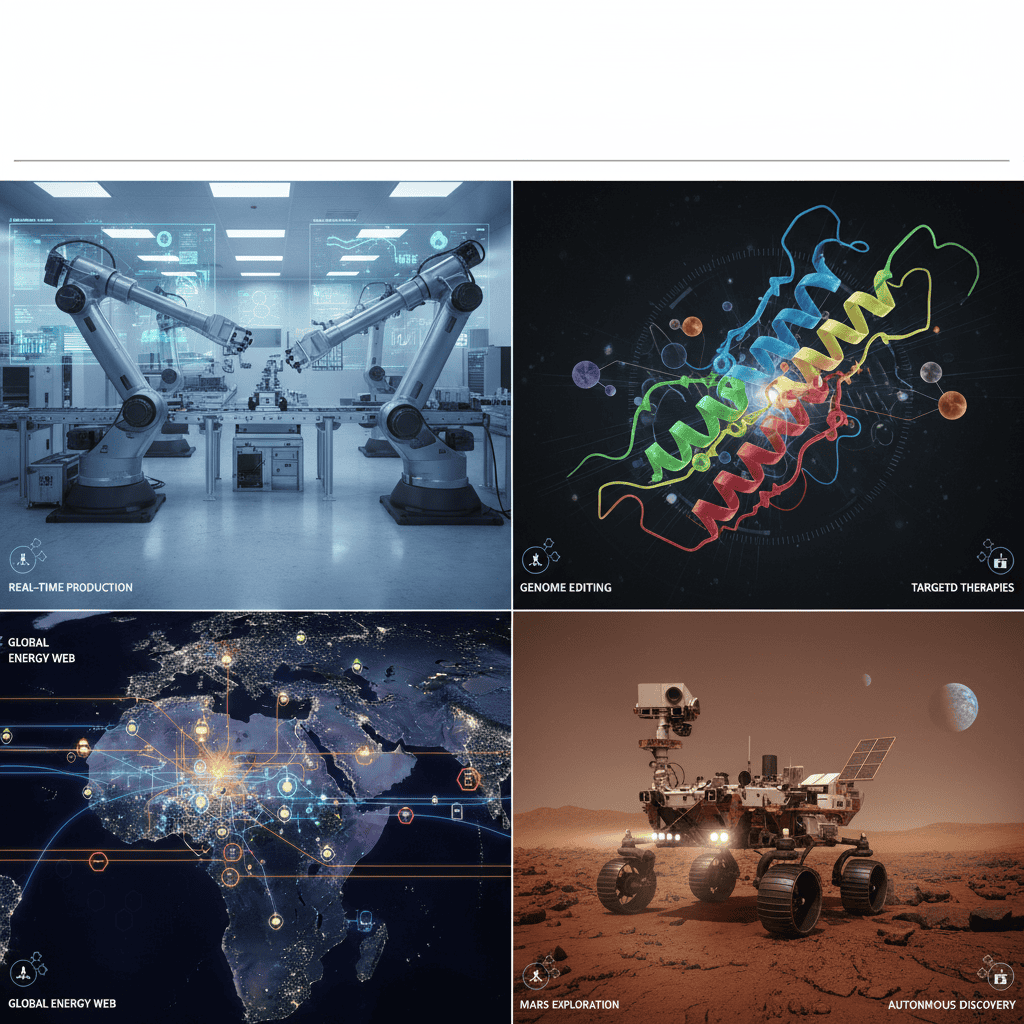
This article explores the four great “engines” of AI’s accelerating future: its transformation of industries, its role in scientific discovery, its frontier-shaping potential, and the ethical dilemmas it forces us to confront.
Part I: The Automation Engine — Redefining Core Industries
Manufacturing and Industry 4.0
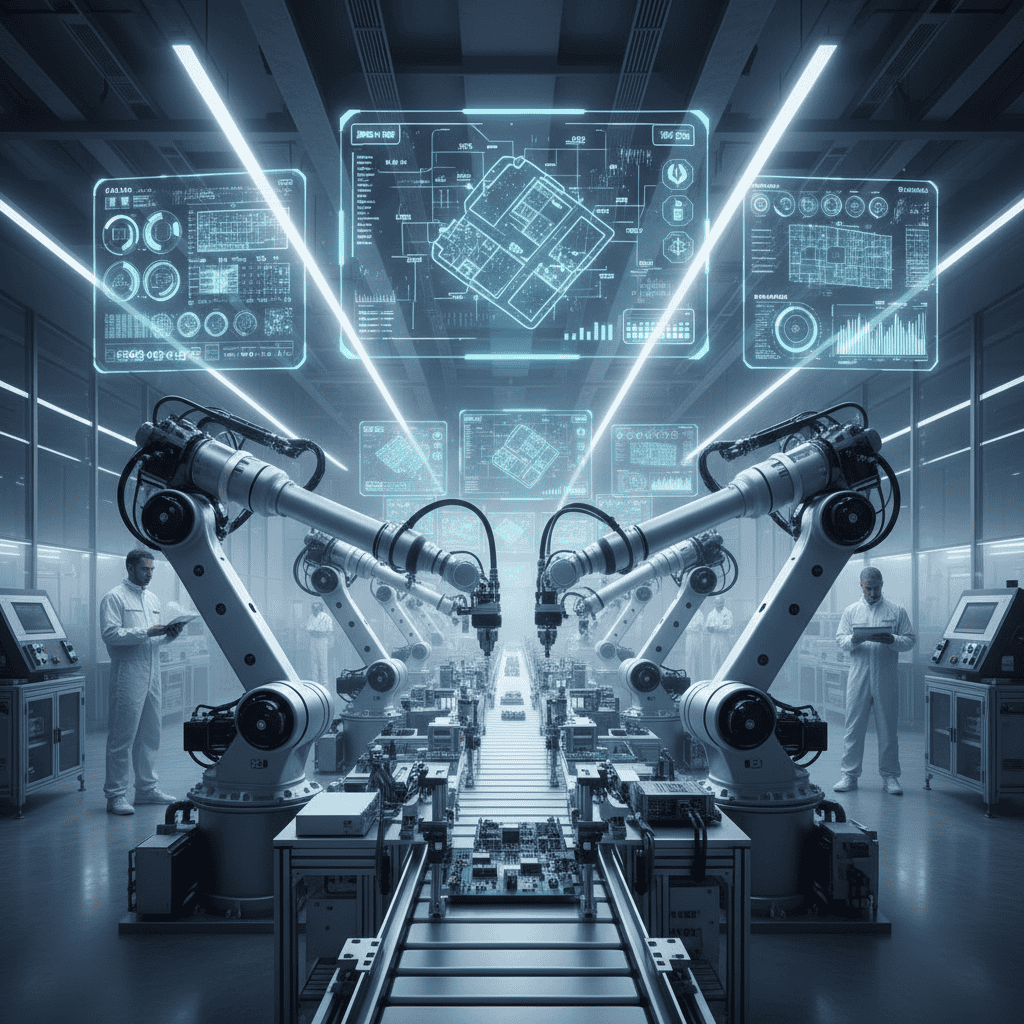
Factories no longer resemble the rigid, linear assembly lines of the 20th century. Instead, we are witnessing the rise of smart factories—highly dynamic ecosystems where machines, sensors, and AI collaborate in real time.
AI-driven predictive maintenance allows factories to spot a failing part before it breaks, cutting downtime by half and extending machine life by up to 40%. Visual inspection systems equipped with neural networks now catch microscopic defects invisible to humans, improving quality by nearly a third. And robots, guided by AI rather than preprogrammed routines, optimize entire workflows instead of just replacing human hands.
The result is measurable: production capacity boosted by up to 15%, costs slashed by a quarter, and national GDP growth linked directly to robot adoption. Yet the story isn’t simply about machines replacing humans—it’s about augmenting them. Workers are shifting from repetitive tasks to overseeing intelligent systems, troubleshooting complex issues, and programming the very robots that now assemble products.
Healthcare: From Reactive to Proactive
If there’s one sector where AI’s impact is both profound and deeply personal, it’s healthcare. On the administrative side, automation in billing and insurance verification is saving billions—up to $360 billion in the U.S. alone. Robotic process automation is speeding up paperwork by 66% while reducing costly claim denials by nearly 40%.
But the clinical breakthroughs are even more transformative. AI-powered imaging systems are now diagnosing cancers and neurological disorders with accuracy rivaling top radiologists. Algorithms trained on patient DNA, lifestyle, and medical histories are tailoring treatments with unprecedented precision.
The shift is monumental: healthcare is moving from reactive medicine—treating illnesses after they strike—to predictive care, where AI forecasts outbreaks, identifies at-risk populations, and enables early intervention. A virtuous cycle is emerging: administrative efficiencies free resources for better clinical care, which in turn produces data that trains even smarter AI, accelerating progress across the system.

Finance: Algorithmic Precision at Scale
Finance may be the most AI-saturated sector of all. Fraud detection algorithms now scan millions of transactions per second, flagging anomalies with up to 300% greater accuracy. Virtual assistants like Bank of America’s Erica have handled billions of customer queries in under a minute each.
AI-driven credit scoring has also expanded access to capital. Fintech firms using AI approve 27% more loans than traditional models while lowering interest rates, helping borrowers previously excluded by legacy systems.
Yet this progress comes with a hidden danger: algorithmic monoculture. As more institutions rely on a handful of AI providers for trading, credit scoring, and risk analysis, they begin to behave in dangerously similar ways. In a crisis, synchronized machine reactions could trigger cascading sell-offs—flash crashes on a global scale. What makes the system efficient also makes it fragile.

Optional: Industrial Impact Snapshot
(If your WordPress installation blocks scripts, skip this chart or embed via a trusted plugin.)
Part II: The Discovery Engine — AI at the Frontiers of Science
Google’s LLM + Tree Search: Automating Discovery
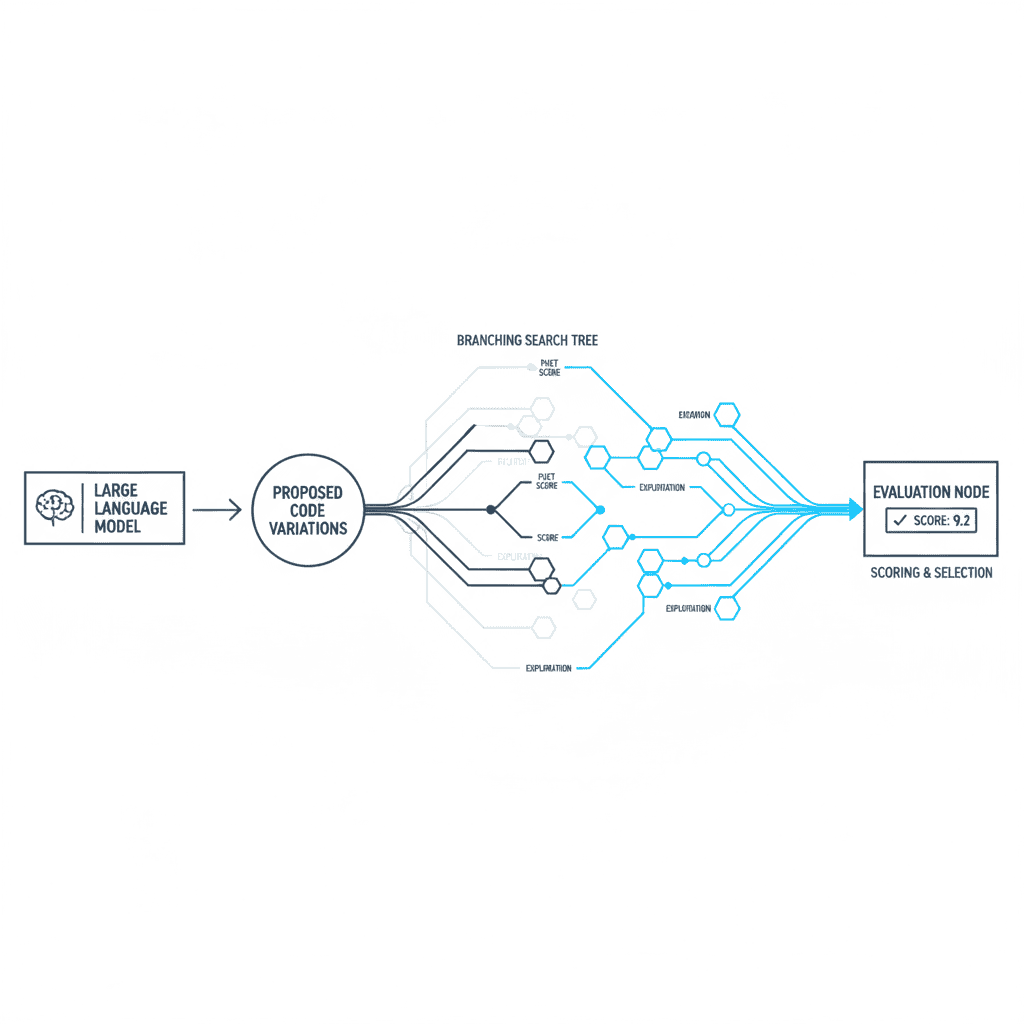
Traditionally, scientific breakthroughs depended on slow trial-and-error coding, where researchers built bespoke software for every experiment. Google’s fusion of Large Language Models (LLMs) with Tree Search has changed that.
This system doesn’t just write code—it invents scientific methods. By generating and strategically testing software variations, it has produced state-of-the-art solutions in fields as diverse as bioinformatics, epidemiology, and geospatial analysis. It even outperformed the CDC’s gold-standard COVID-19 forecasting models.
The innovation is staggering: AI is industrializing the “eureka moment,” transforming flashes of human intuition into a scalable, tireless process of exploration.
Biology Decoded: Proteins, Genes, and Drugs
In biology, AI is cracking open the secrets of life itself.
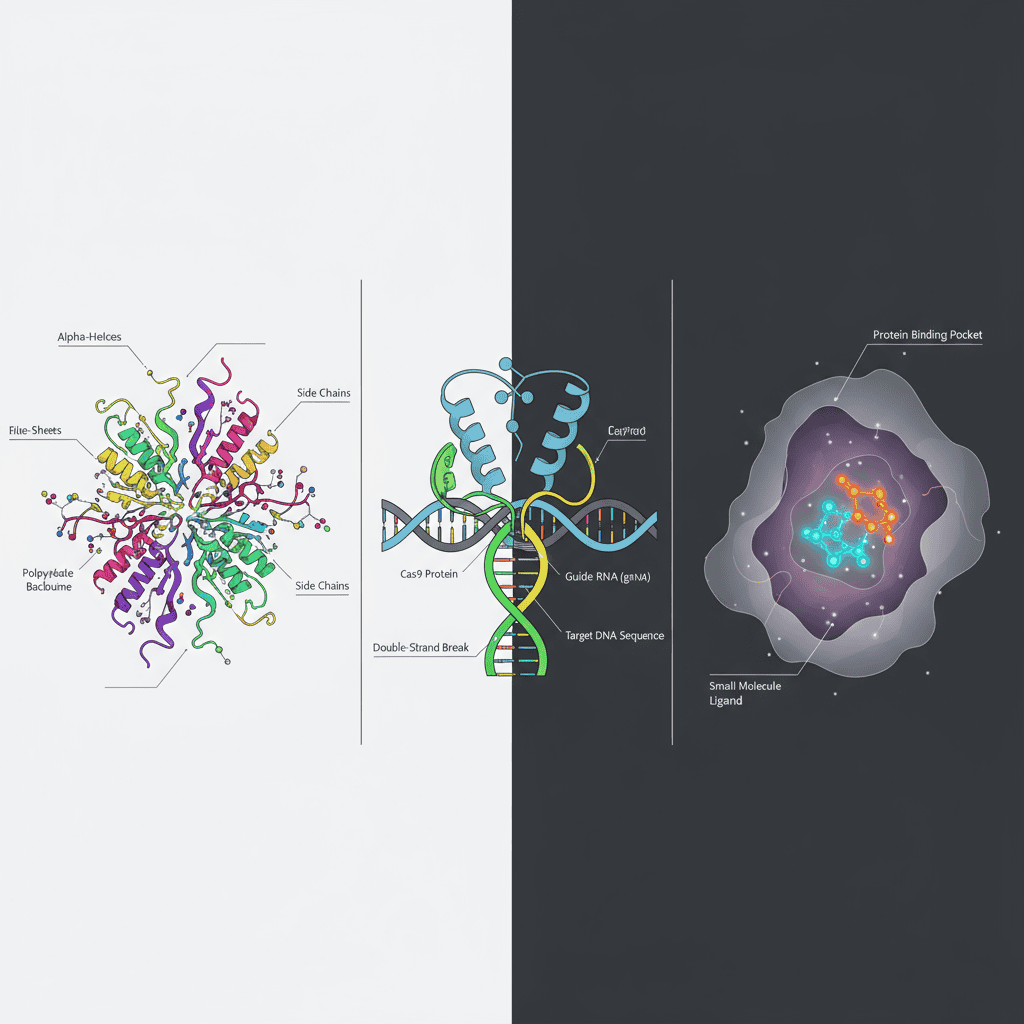
- Proteins: AlphaFold solved the decades-old challenge of predicting 3D protein structures. Its latest iteration maps complexes of proteins, DNA, RNA, and small molecules, accelerating drug discovery and basic research.
- Genes: AI-guided CRISPR systems are making gene editing more precise, reducing harmful off-target effects. Tools like “CRISPR copilots” now guide researchers through experiment design end-to-end.
- Drugs: Traditional drug discovery takes over a decade. AI can scan millions of compounds virtually, identify promising candidates, and even repurpose existing drugs. AI “co-scientists” have already suggested—and validated—new treatments for cancer and fibrosis.
Together, these breakthroughs amount to programmable biology: AI can predict a protein’s shape, design a drug to bind it, and rewrite the gene that produces it.
Part III: The Frontier Engine — AI Shaping New Worlds
Clean Energy and Smart Grids
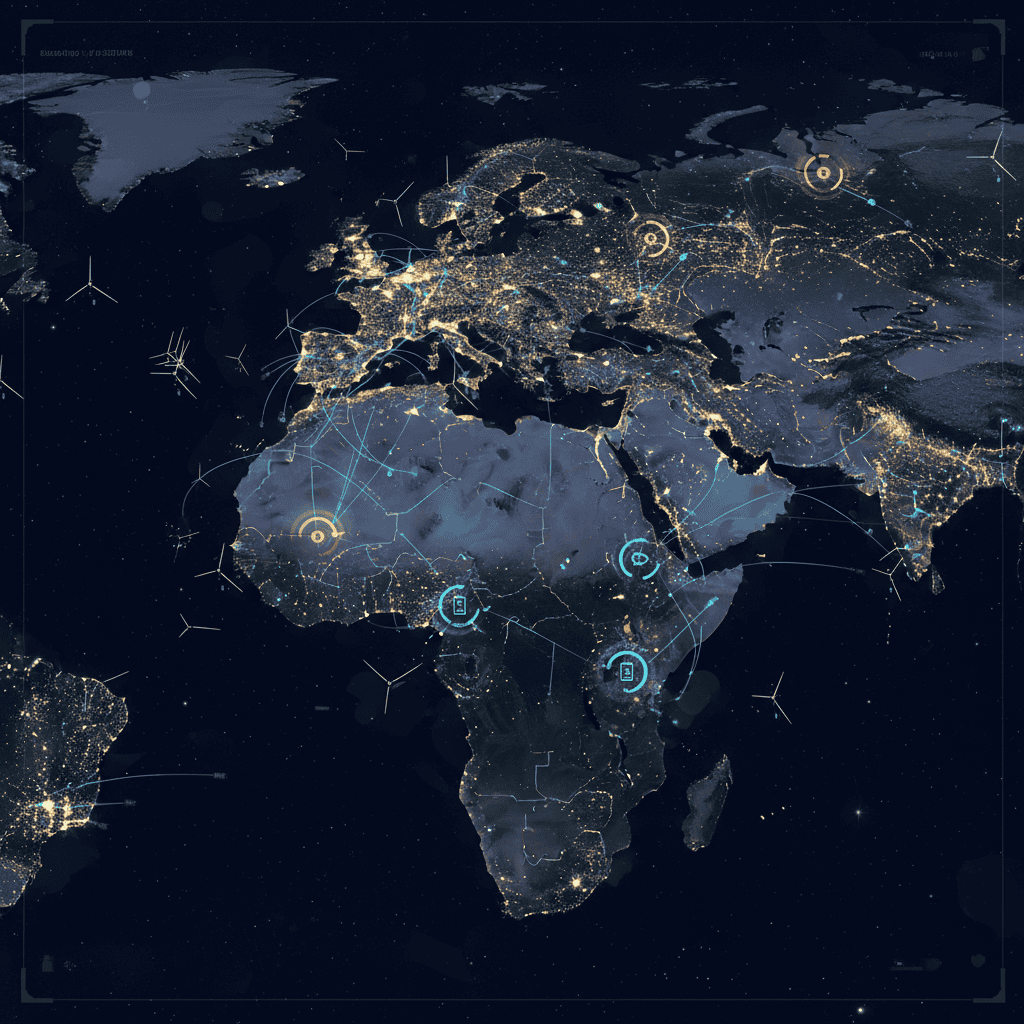
The transition to renewable energy isn’t just about solar panels and wind turbines—it’s about managing complexity. AI-powered smart grids forecast demand and supply in real time, deciding when to charge or discharge massive batteries to balance the system.
Equally important, AI is discovering new materials for next-generation batteries and solar cells—tasks that once took decades of lab work, now compressed into years or even months. The paradox: AI itself consumes enormous energy, meaning it must innovate fast enough to offset its own footprint.
Immersive Realities: Metaverse, AR, and VR
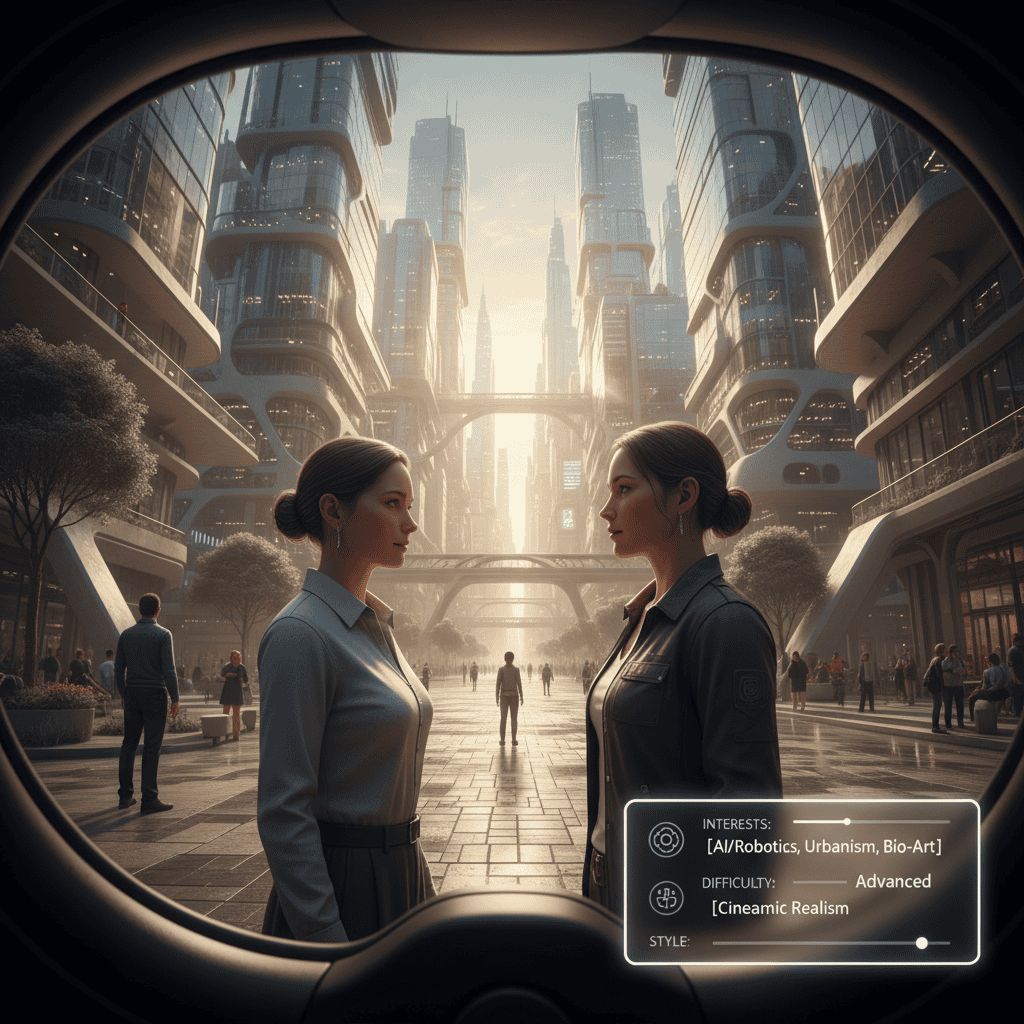
The metaverse has long been dismissed as hype, but AI is solving its biggest obstacles. Generative models can now create vast 3D worlds, characters, and textures at scale, addressing the “empty world” problem. AI-driven avatars and NPCs make these environments engaging and alive, while personalization algorithms keep users hooked with adaptive experiences.
In parallel, AI-powered AR devices can overlay digital intelligence onto the real world—translating signs, guiding navigation, or offering contextual data in real time. If smartphones defined the 2010s, AI-driven AR glasses may define the 2030s.
Quantum–AI Symbiosis
Quantum computing and AI are locked in a symbiotic loop. Quantum computers promise exponential boosts to AI’s problem-solving abilities, while AI is indispensable for stabilizing fragile quantum systems through advanced error correction.
In other words, AI may be both the builder and the first beneficiary of practical quantum computing—a feedback loop that could redefine what “computing” even means.

Space Exploration
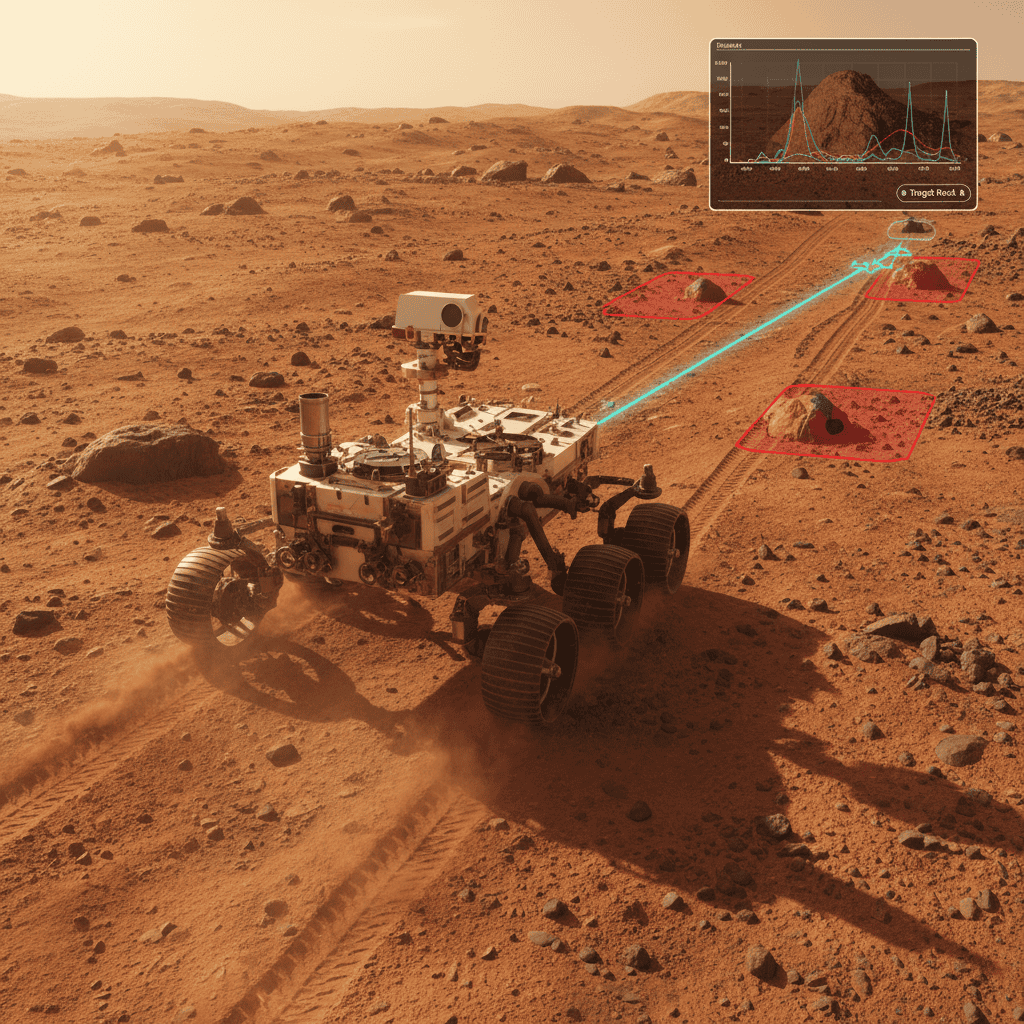
Mars rovers like Perseverance already use AI to navigate autonomously, avoiding hazards and selecting rocks for analysis without waiting for Earth’s delayed instructions. In deep space, AI manages spacecraft trajectories, diagnoses onboard issues, and ensures survival millions of miles from human intervention.
Back home, telescopes like the James Webb Space Telescope rely on AI to sift through gigabytes of daily data, classifying galaxies and spotting exoplanets. AI isn’t just helping us explore space—it’s becoming the only way exploration at such scales is possible.
Part IV: Navigating the Acceleration — Society and Ethics
The Future of Work
Estimates suggest that generative AI could disrupt the equivalent of hundreds of millions of jobs globally. Unlike past industrial revolutions that displaced manual labor, this one is targeting cognitive tasks—accountants, customer service reps, even junior lawyers and coders.
The key challenge isn’t mass unemployment, but a massive skills mismatch. As AI automates routine cognitive work, the demand for uniquely human skills—creativity, problem-solving, emotional intelligence—soars. Without rapid reskilling, societies risk deep inequality: jobs may exist, but workers may lack the skills to fill them.

Algorithmic Accountability
AI systems inherit our biases. A widely used healthcare algorithm once underestimated Black patients’ needs because it used healthcare spending as a proxy for health—a proxy rooted in systemic inequality. Similar issues have emerged in loan approvals, facial recognition, and hiring systems.
Transparency remains elusive. Many AI models are “black boxes” even to their creators. When they make life-changing decisions—denying loans, diagnosing diseases—accountability becomes murky. The way forward requires governance frameworks, representative datasets, participatory design, and continuous auditing. Ethical AI isn’t just about fixing code—it’s about reshaping the social and institutional contexts in which AI operates.

Conclusion: Steering the Acceleration
AI is no longer just another tool in the digital arsenal. It is the acceleration engine driving the fusion of robotics, biology, energy, and even space exploration into a single technological stack.
This convergence offers humanity its greatest opportunities—curing diseases, achieving clean energy, and exploring the cosmos. But it also carries profound risks: job displacement, algorithmic injustice, and systemic fragility.
The question is no longer whether AI will shape the future. It already is. The challenge now is whether society can steer this acceleration wisely—investing in education, building ethical guardrails, and ensuring that the benefits of this new era are shared broadly and fairly.
The engine has been ignited. The destination depends on us.
Similar Posts
The Fusion Horizon: From Scientific Breakthroughs to Commercial Power
The Fusion Horizon – The Truth Beyond The Fog NebulaReports Feature • Science & Innovation • September 2025
From Miracle Material to Viable Solution: Graphene and the Future of Global Water Security
From Miracle Material to Viable Solution — The Truth Beyond The Fog NebulaReports Science & Innovation • Feature • September…
Forged in Conflict, Focused on the Future: The U.S. Air Force at 78
Forged in Conflict, Focused on the Future – The Truth Beyond The Fog NebulaReports Feature • Analysis • September 2025