
The Vanishing at the Divide: Unraveling the Mystery of Kris Kremers and Lisanne Froon
Mysteries & Investigations • Feature • September 2025
Introduction: A Journey into Unanswered Questions
On April 1, 2014, two Dutch friends—Kris Kremers, 21, and Lisanne Froon, 22—set off for what should have been a simple day hike along the El Pianista trail near Boquete, Panama. They never came back.
What began as a carefree walk in the cloud forest spiraled into one of the most confounding and chilling mysteries of the 21st century. For weeks, authorities and volunteers scoured the mountains with dogs, helicopters, and even help flown in from the Netherlands. Yet, the forest remained silent. Then, ten weeks later, a single blue backpack turned up along a riverbank. Inside: both women’s phones, a camera, and personal belongings. The digital trail recovered from these devices—failed emergency calls, bizarre nighttime photos, and puzzling forensic clues—told fragments of a desperate story.
The tragedy of Kris and Lisanne has since become an internet obsession. True crime enthusiasts, forensic experts, and entire online communities continue to analyze the case in search of answers. Was it a tragic accident, a crime staged to look like one, or something stranger still?
Part I: The Journey to Boquete
The Travelers
Kris and Lisanne were not reckless adventurers. They were educated, responsible young women from Amersfoort in the Netherlands.
Lisanne Froon, thoughtful and athletic, had just completed a degree in applied psychology. A dedicated volleyball player, she was described as optimistic but reserved. Kris Kremers, by contrast, was creative and outgoing. She had just finished her studies in cultural social education, specializing in art. Passionate about Latin America, she longed to master Spanish and immerse herself in the region’s culture.
The two met while working at a local café, saved diligently for six months, and planned their Panama trip meticulously. They would travel, learn Spanish, and volunteer with children. Their preparation paints a portrait of level-headed women unlikely to take reckless risks.
A Sudden Change of Plans
Arriving in Boquete on March 29, 2014, the women expected to begin volunteer work almost immediately. Instead, they were told their program start had been delayed by a week.
This mundane scheduling error would prove critical. With unexpected free time, they decided to explore the surrounding mountains. Four days later, they walked into the El Pianista trailhead. It was a decision from which they would never return.
Part II: The Disappearance on El Pianista
The Final Hike – April 1, 2014
At 11:00 AM, photos show the women setting out on El Pianista. They wore shorts, tank tops, and hiking boots—adequate for a day trip, but not survival in a rainforest. Supplies were minimal: small water bottles, snacks, phones, and a Canon PowerShot camera.
The trail winds steadily uphill, culminating at the Mirador, a scenic summit marking the Continental Divide. Photos show them smiling and relaxed at 1:00 PM. At 1:54 PM, the last daylight photo captures Kris crossing a stream—beyond the official trail.
Here, they unknowingly entered danger.
The Point of No Return
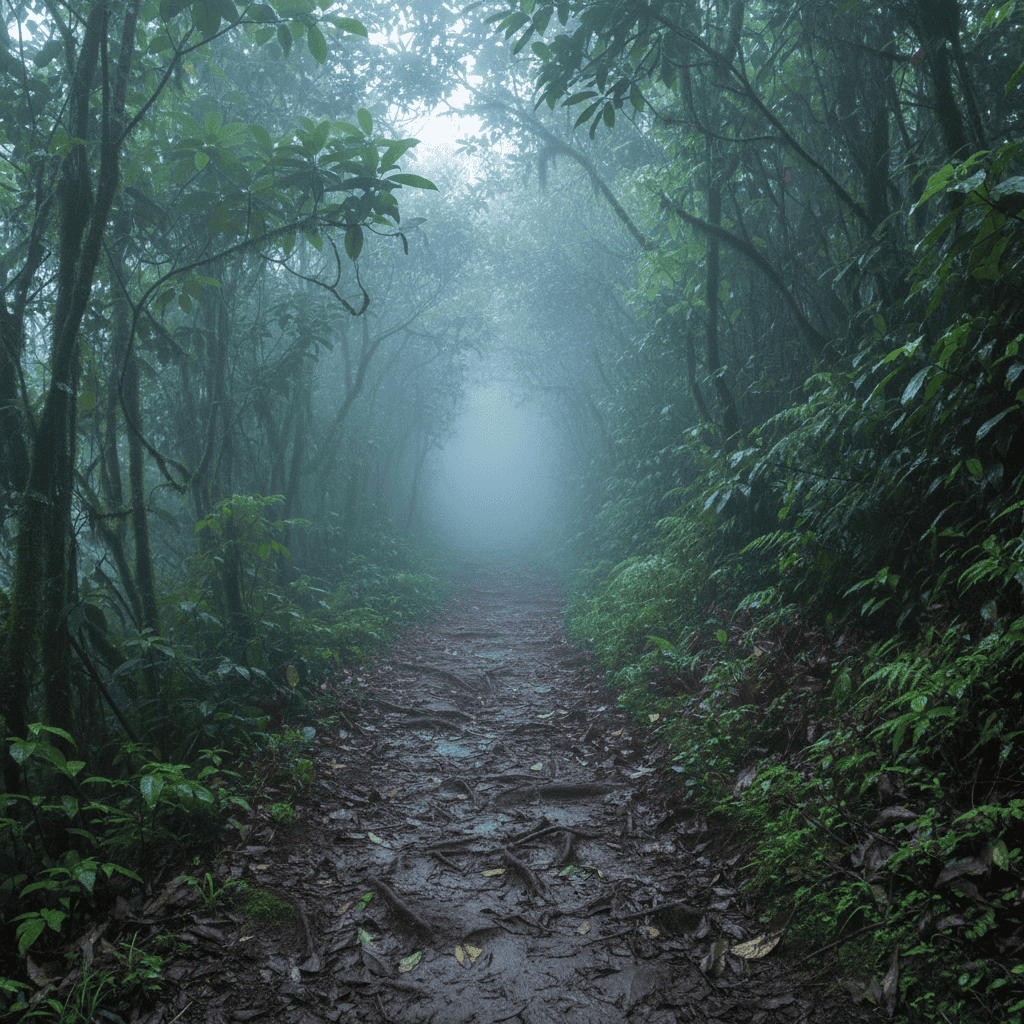
The El Pianista is an “out-and-back” trail. Tourists are warned: stop at the Mirador. Beyond it, the path descends steeply into dense, muddy wilderness on the Caribbean side—an unforgiving maze of rivers, gorges, and cloud forest.
But Kris and Lisanne pressed forward, perhaps assuming the trail looped back. Instead, they crossed into terrain that few locals dare to tread. This mistake would prove fatal.
The First Calls for Help
At 4:39 PM—nearly three hours after the last photo—Kris’s iPhone attempted to dial 112, the European emergency number. It failed: no signal. At 4:51, Lisanne’s Samsung phone tried too. Another failure.
The time gap is revealing. If they had been attacked or badly injured, calls would have been immediate. Instead, it suggests they initially tried to find their way back before realizing their situation had become critical.
Night fell. The rainforest closed in. And their ordeal began.
Part III: The Silent Search and the Digital Trail
The Search Begins
When Kris and Lisanne missed an appointment with their guide on April 2, alarms were raised. Beds unslept in, phones unanswered. By April 3, Panamanian authorities launched aerial and ground searches. Families soon flew in from the Netherlands, offering a $30,000 reward.
For ten days, the mountains were scoured. Yet nothing surfaced. In hindsight, the reason is painfully clear: rescuers searched the Boquete side of the Divide, unaware the women had crossed into the opposite river basin. They were looking in the wrong jungle.
A Digital Diary of Desperation
The women’s phones silently logged their struggle:
- April 1: Two failed emergency calls.
- April 2–3: Multiple attempts to 112 and 911, with phones carefully switched off to conserve battery.
- April 4: Lisanne’s phone died forever.
- April 5: The last time Kris’s PIN was correctly entered—suggesting she was alive until then.
From April 6–11, the iPhone was turned on daily, but the PIN was never re-entered. It seems Lisanne was alive, alone, desperately checking for a signal with her friend incapacitated—or already dead.
The final phone log ends on April 11.
In related news, see our detailed analysis of The 40-Year Hunt for a Killer
The Night Photos
Then comes the most haunting evidence. On April 8, between 1:00 and 4:00 AM, Lisanne’s camera took 90 photos in the darkness.
Most show nothing but jungle illuminated by flash: rocks, trees, raindrops. But some depict strange arrangements: a twig with strips of plastic tied around it; a Pringles lid and scraps of paper on a rock; a mirror and backpack strap; and—most chilling—a blurred close-up of Kris’s hair and head.
Why? Perhaps Lisanne used the flash as light, to scare animals, or signal rescuers. Perhaps she was documenting evidence. The images evoke the atmosphere of a horror film—frantic, surreal, and terrifying.
Even stranger: photo #509 is missing. Deleted in a way experts believe required a computer. Who deleted it, and why?
Part IV: The Grim Discovery
The Backpack
On June 14, over two months later, a Ngäbe woman found Lisanne’s blue backpack by a river. Inside: both phones, the camera, passports, money, and bras.
The backpack was oddly pristine—clean, dry, electronics intact. Locals swore it hadn’t been there the day before. Was it deliberately placed?
The Remains
In the weeks that followed, searchers found fragments of human remains near the river:
- Kris’s shorts.
- A boot containing Lisanne’s foot and tibia.
- A pelvic bone from Kris.
- Scattered bone fragments from both.
Forensic analysis deepened the contradictions: Lisanne’s remains still had flesh, consistent with dying later. Signs of overuse injuries suggested she walked long distances before death. Kris’s pelvic bone was unnaturally bleached and tested positive for phosphates, suggesting chemical treatment. None of the bones bore animal marks or natural damage expected in a rainforest.
Natural accident or staged disposal? The evidence pointed both ways at once.
Forensic Findings
The forensic picture is a study in contradictions. Only a small portion of each skeleton was ever recovered. Lisanne’s tissues and bone stress supported a prolonged survival attempt. Kris’s bleached bone and the lack of environmental or scavenger marks on all remains hinted at chemical treatment and later placement. It is difficult to reconcile these threads into a single, coherent narrative.
Part V: Competing Theories
The Official Explanation – Tragic Accident
Authorities ruled it an accident: the women mistakenly hiked past the Mirador; Kris was injured, immobilizing them; they rationed phone batteries and tried to survive; seasonal flooding scattered their remains. This theory is logical and consistent with the phone logs and Lisanne’s stress injuries. The families accepted it for closure.
Yet it fails to explain the pristine backpack, the deleted photo, or the chemically treated bones.
The Counter-Narrative – Foul Play
The anomalies fuel another theory: foul play. Perhaps the women were abducted, coerced, or attacked. Evidence cited includes the backpack’s condition and suspicious placement, the missing photo #509, Kris’s bleached bone, and the remains’ sudden appearance months later in previously searched areas.
But foul play struggles to reconcile the phone logs, which record a genuine survival effort spanning ten days. Would kidnappers allow their captives to make repeated 112 calls?
Fringe & Supernatural Theories
The mystery has also spawned folklore. Locals speak of “cursed” ground beyond the Mirador, shunned by guides. Online sleuths liken the night photos to The Blair Witch Project. Some claim paranormal involvement. These theories reflect the case’s cultural impact more than forensic truth—but they underscore why this story grips the imagination: it is horror made real.
Optional: Key Events Timeline
(If your WordPress installation blocks scripts, skip this chart or embed via a trusted plugin.)
Part VI: Legacy of a Mystery
Unanswered Questions and Enduring Debate
Ten years on, the disappearance of Kris Kremers and Lisanne Froon remains unsolved. Key questions endure:
- What triggered the first emergency calls? Injury, realization of being lost—or something more sinister?
- Who deleted photo #509?
- Why was the backpack so clean after weeks in the jungle?
- Why were Kris’s bones chemically altered while Lisanne’s were not?
- Can survival evidence and staging evidence ever be reconciled?
The internet has ensured the case never fades. Reddit forums, blogs, and documentaries dissect every pixel of photos and every second of phone logs. It has become both tragedy and puzzle—an enduring modern myth.
Conclusion
The disappearance of Kris and Lisanne resists resolution because the evidence speaks in two voices. One says: lost hikers, overwhelmed by a brutal environment. The other whispers: cover-up, manipulation, foul play.
Both narratives contain truth. Both contain contradictions. And until decisive new evidence surfaces, the mystery will remain suspended between them—an echo of fear, survival, and unanswered questions deep in the Panamanian jungle.
Similar Posts
The Vanished Imam and the Digital Ghost: How Forensics Reopened a 50-Year Mystery
The Vanished Imam and the Digital Ghost – The Truth Beyond The Fog NebulaReports Feature • Investigative Analysis • September…
A Partially Open Door: The 40-Year Hunt for a Killer in Robert Redford’s Shadow
A Partially Open Door – The Truth Beyond The Fog NebulaReports Feature • Investigations • September 2025
The Epstein Enigma: A Comprehensive Analysis of Crime, Conspiracy, and Corruption
The Epstein Enigma – The Truth Beyond The Fog NebulaReports Feature • Investigation • September 2025