
A Partially Open Door: The 40-Year Hunt for a Killer in Robert Redford’s Shadow
Feature • Investigations • September 2025
Introduction: The Ghost in the Machine
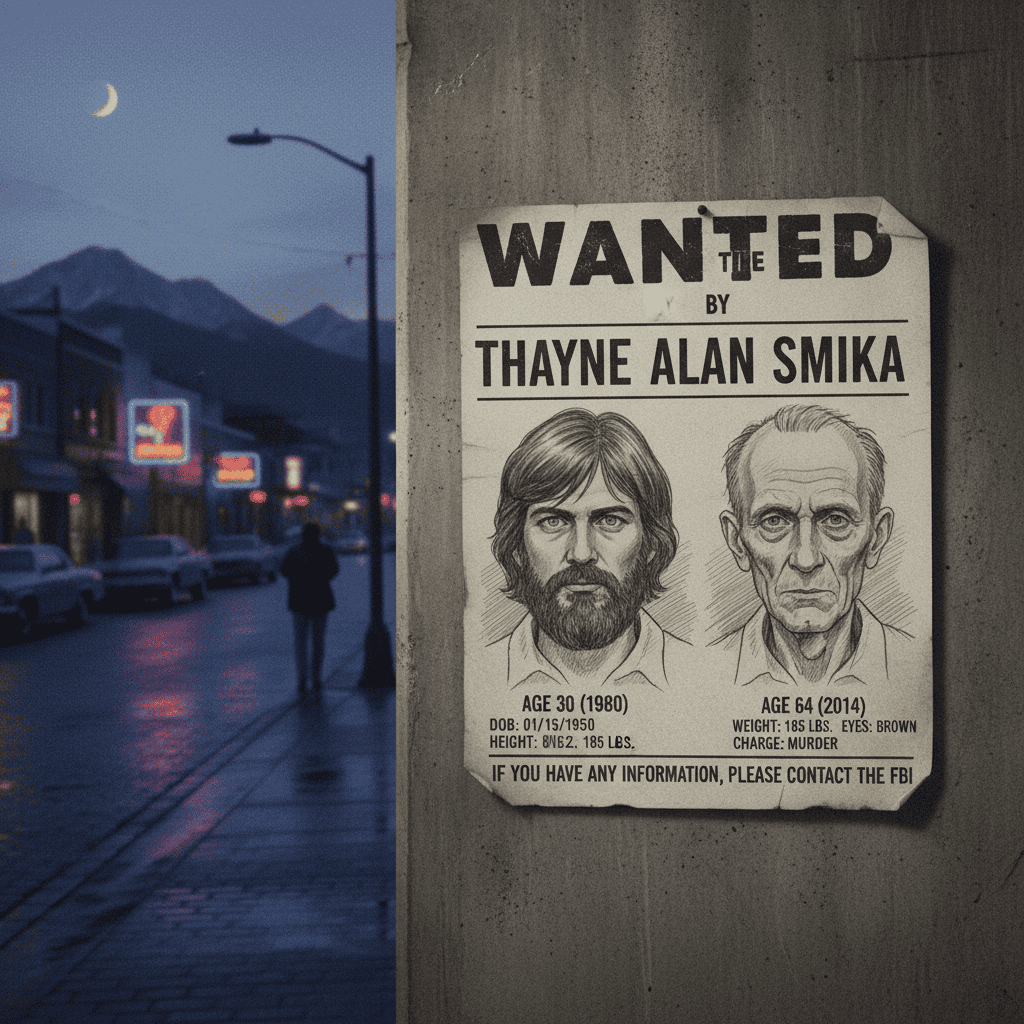
In September 2025, as tributes to Hollywood icon Robert Redford flooded social feeds after his death, the Denver FBI quietly seized the moment. They posted a wanted alert on X—age-progressed images of fugitive Thayne Alan Smika, the prime suspect in the 1983 murder of Sidney “Sid” Wells, who was dating Redford’s daughter, Shauna. A $10,000 reward. A decades-old link. A carefully timed jolt to collective memory.
The tactic worked. Within hours, global outlets resurfaced the case. At its center was a story as chilling as it was cinematic: a promising journalism student executed in his own apartment, a prime suspect who melted into the world, and a grieving family forever tethered to a legend of American cinema. For forty years, the Wells case has embodied the fragility of justice, the distorting power of celebrity, and the staying power of true-crime fascination.
Part I: A Life of Promise, A Brutal End (August 1, 1983)
Boulder in the summer of 1983 felt like possibility. For 22-year-old Sid Wells—journalism major at the University of Colorado, Navy ROTC, and a local TV intern—the future looked bright. At the center of his life was Shauna Redford. Friends described them as deeply serious; some said engaged. Their home bases sat steps apart in the Spanish Towers complex.
On August 1, 1983, Sid’s brother returned from a camping trip to a scene of quiet horror: Sid face-down on the rust-orange carpet, killed by a single 20-gauge shotgun blast to the back of the head. In Buffalo to begin filming The Natural, Robert Redford halted production and flew to Boulder, the cameras trailing grief. Overnight, a local homicide became international news—Sid recast for many as “the boyfriend of Robert Redford’s daughter.”
Part II: The Investigation and the Vanishing Act (1983–1986)
The Suspect and the Motive
Detectives quickly focused on Thayne Alan Smika, 24, the Wells brothers’ new roommate. He had arrived tidy and studious, even prepaying rent. Soon, he grew reclusive, noisy at night—and behind on payments. He owed Sid $300, due the very day of the killing. Friends told police Sid believed Smika was stealing cash and small quantities of cocaine from his room. When confronted, investigators theorized, Smika snapped.
The Evidence Trail
- Crime-scene anomaly: a note from Smika, left after blood spatter suggests the shooting had occurred.
- Cracked alibi: he claimed he left to get a perm and do laundry—yet he’d had a perm the week prior, and the complex had laundry on site.
- Physical links: a 20-gauge shotgun found in a closet at his family’s home; shells missing from a box; later forensic testing would match pellets to those recovered from Sid’s body.
- Witness accounts: a friend recalled a drunken confession; another source alleged a sister was made to wash bloody clothes.
A System’s Failure—and a Disappearance
Despite the mosaic of evidence, the District Attorney declined to prosecute in 1983, calling the case insufficient. A grand jury expired without indictment. One investigator later claimed a troubling document suggested a non-indictment understanding between the DA’s office and defense—an allegation that, true or not, seeded lasting suspicion of institutional failure.
By 1986, a warrant issued for Smika on separate theft and forgery charges. His car turned up abandoned in Beverly Hills with stolen plates. After that, the trail went cold.
Part III: The Long Silence and the Modern Manhunt
For a quarter century, the Wells case lived in limbo—kept alive by family vigilance and quiet help from Robert Redford, who even funded private security for the Wells family in the chaotic early days. Sid’s mother, June Menger, became a steady voice for her son until her death in 2014.
Then, in 2010, newly elected DA Stan Garnett reopened the file. Modern ballistics resolved earlier doubts and linked the shotgun to the murder with far greater confidence. A judge signed a new arrest warrant—bail set at $5 million—and the FBI added a federal warrant for unlawful flight.
Leads placed Smika in California, and for years in Yelapa, Mexico, with possible sightings in Costa Rica. The FBI lists aliases—“Jungle Mike,” “Thaymes Micah”—and notes he may be bilingual. Today, he would be in his mid-70s. The reward remains.
When the 2010 warrant went public, Redford phoned the DA’s office to thank the team. Even decades later, he was still watching.
Part IV: The Anatomy of a Modern Cold Case
Celebrity as an Amplifier of Tragedy
Redford’s presence guaranteed attention and institutional memory that many victims never receive. But the amplifier cuts both ways: saturation coverage can distort narratives, overshadow victims, and inadvertently elevate perpetrators to grim notoriety. In the Wells case, media often framed Sid via Redford, not as a young journalist whose life was his own story.
A Tale of Two Cold Cases
Juxtapose Wells (1983) with the 1961 murder of Betty Gail Brown in Kentucky: Brown’s case faltered on unreliable confession evidence and a hung jury; Wells’ case stalled before trial, despite corroborating physical links. Both reveal how single points of institutional failure—jury deadlock in one, prosecutorial hesitation in the other—can freeze justice for generations.
The Digital Cold Case Squad
In 2025, an FBI post can mobilize a global swarm of digital sleuths. Podcasts, forums, and social feeds function as a public-facing auxiliary—pressuring institutions, surfacing tips, and keeping names alive. Psychologically, true crime blends puzzle-solving with a quest for order: by studying darkness, audiences feel closer to safety. Add celebrity and the parasocial bonds are immediate.
In related news, see our detailed analysis of The Epstein Enigma .
Optional: Key Milestones Timeline
(If your WordPress blocks inline scripts, skip this or use a trusted embed plugin.)
Conclusion: Justice Delayed, Justice Redefined?
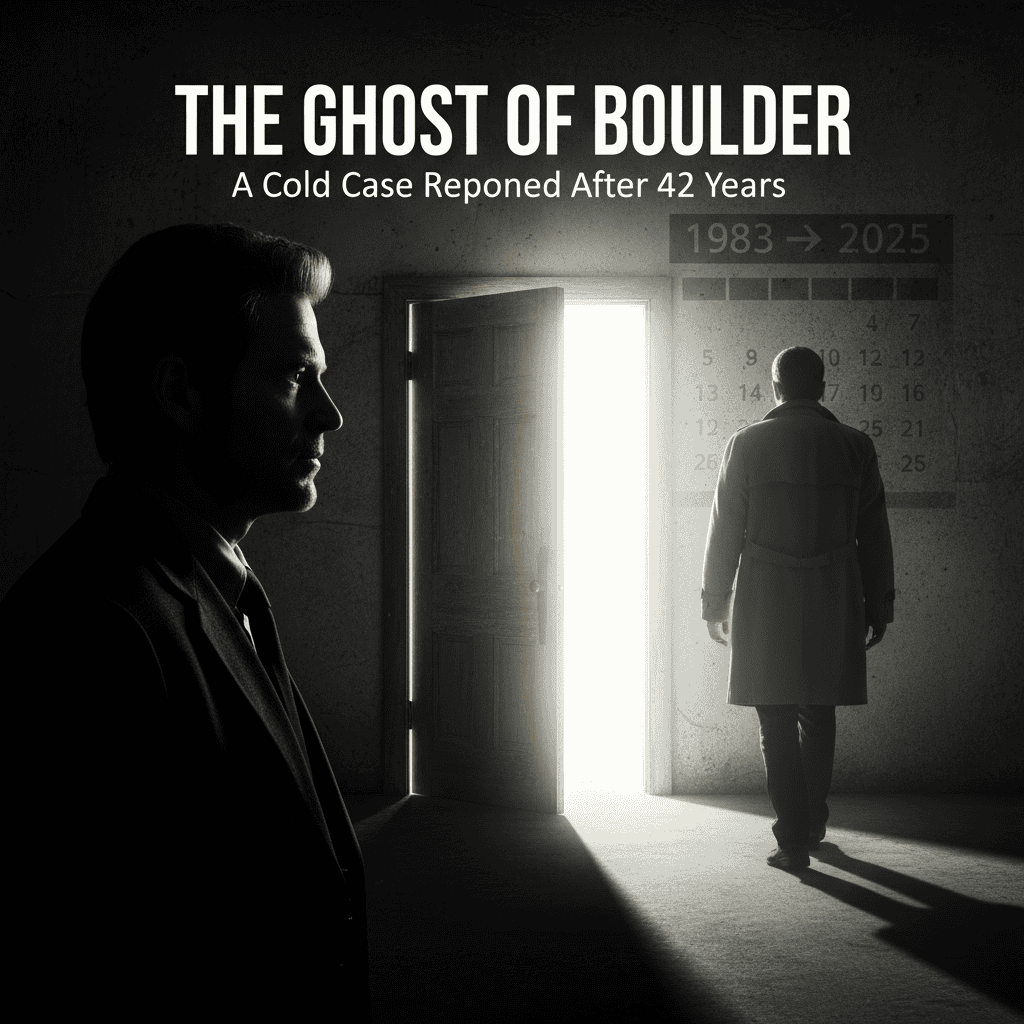
Robert Redford once described the case as “a partially open door with a very dark room behind it.” That door has never shut. For the Wells family, justice slipped away in 1983 when charges were declined. For investigators, the chase persists, hinging on a tip that might surface anywhere the internet reaches.
Yet remembrance is its own kind of justice. Sid Wells’ story endures not only because of celebrity gravity, but because his family refused silence and investigators refused surrender. Whether Thayne Smika is ever arrested, the case has already taught us something profound about modern justice: that memory, amplified by technology, can keep the cold from settling in.
Similar Posts
The Epstein Enigma: A Comprehensive Analysis of Crime, Conspiracy, and Corruption
The Epstein Enigma – The Truth Beyond The Fog NebulaReports Feature • Investigation • September 2025
The Vanished Imam and the Digital Ghost: How Forensics Reopened a 50-Year Mystery
The Vanished Imam and the Digital Ghost – The Truth Beyond The Fog NebulaReports Feature • Investigative Analysis • September…
The Vanishing at the Divide: Unraveling the Mystery of Kris Kremers and Lisanne Froon
The Vanishing at the Divide: Unraveling the Mystery of Kris Kremers and Lisanne Froon – The truth Beyond The Fog…