The Epstein Enigma: A Comprehensive Analysis of Crime, Conspiracy, and Corruption
Feature • Investigation • September 2025
Introduction
The Jeffrey Epstein scandal is not merely the story of a single predator. It is a sprawling, labyrinthine account of exploitation engineered at scale—and of institutions that failed, repeatedly and visibly, when confronted by money and influence. From elite townhouses to a Caribbean island, Epstein built a machinery of abuse that preyed on the vulnerable while courting presidents, royals, financiers, and academics. His 2019 death in federal custody did not close the book; it tore out crucial pages, leaving a vacuum where facts should be and a bonfire where suspicion thrives.
This investigation charts the enterprise from its origins to its collapse, examines the notorious 2008 non-prosecution agreement that short-circuited justice, documents Epstein’s elite network, and maps the conspiracy theories that colonized public discourse in the aftermath. The goal is not to sensationalize but to render the record clearly—because when the truth is obscured, distrust metastasizes.
Part I: The Network of Abuse
A. Architects of a Criminal Enterprise
Epstein’s operation was methodical. At its center stood Ghislaine Maxwell—socialite, confidante, recruiter. Drawing on pedigree and charm, she approached teenagers with offers of cash, mentorship, or opportunity. The script was chillingly consistent: a “massage” at an opulent residence; escalating sexual abuse; pressure to recruit others; in some cases, coercion to service adults in Epstein’s circle. The network functioned like a pyramid, with incentives and threats binding victims into silence while normalizing the abnormal within a setting of wealth and power.
The engine behind it all was money. Epstein’s fortune—estimated near $600 million—operated as lubricant and shield: paying for travel, gifts, and silence; attracting powerful acquaintances whose presence created a veneer of legitimacy; and bankrolling an intimidating legal defense. Maxwell herself received more than $30 million from Epstein over the years, compensation for complicity in a system that industrialized exploitation.

B. The “Deal of a Lifetime”: The 2008 Non-Prosecution Agreement
The first reckoning arrived in Palm Beach in 2005, when police uncovered a pattern of abuse involving dozens of minors. A federal probe—Operation Leap Year—followed. Yet by 2008, Epstein avoided federal charges via a secretly negotiated non-prosecution agreement (NPA) brokered by U.S. Attorney Alexander Acosta. Epstein pleaded to reduced state counts, served thirteen months in county jail with generous work release, and—most explosively—the NPA extended federal immunity to “any potential co-conspirators.”
Victims were not told, a violation of the Crime Victims’ Rights Act. A federal court later condemned the secrecy and deception. Defenders framed the deal as realism in the face of Epstein’s “army of legal superstars.” Critics called it a catastrophic abdication that fortified Epstein’s impunity and signaled to victims that their suffering could be bargained away. The reverberations continue: Maxwell’s current appeal argues the NPA should have shielded her from later prosecution.
C. Justice Delayed: The 2019 Arrest
For a decade, Epstein returned to opulence. The public forgot; institutions looked away. In 2018, The Miami Herald detonated the status quo with a forensic series, Perversion of Justice, centering survivors and exposing the NPA’s contours. Outrage mounted. In July 2019, prosecutors in the Southern District of New York, unbound by Florida’s deal, charged Epstein with sex trafficking of minors and conspiracy. Deemed a flight risk and a danger, he was remanded without bail to Manhattan’s Metropolitan Correctional Center. For survivors, the possibility of a real trial flickered at last.
Part II: A Death in Custody and the Questions That Remain
A. The Official Account: Suicide by Hanging
On August 10, 2019, guards found Epstein unresponsive in his cell at approximately 6:30 a.m. The medical examiner ruled suicide by hanging. Senior officials, including the Attorney General, asserted there was “no evidence of foul play,” citing surveillance from common areas. Formally, the government’s position is straightforward. Public acceptance is not.
In related news, see our detailed analysis of The Vanished Imam and the Digital Ghost .
B. Anatomy of Suspicion: A Cascade of Irregularities
- Guard Negligence: The officers on duty admitted to sleeping and falsifying logs, skipping required checks.
- Isolation & Cameras: Epstein’s cellmate had been moved. Two cameras outside his cell reportedly malfunctioned, leaving gaps.
- Forensic Disputes: An outside pathologist pointed to hyoid and thyroid cartilage fractures as more consistent with strangulation than typical hangings.
- Video Blind Spots: Later analysis indicated angles left sections of the tier out of view, complicating categorical claims.
Whether the explanation is incompetence or conspiracy, the effect is the same: confidence collapses. In the vacuum, baroque theories flourish.
Part III: The Circle of Power — Documenting the Connections
A. Unsealing the Record: The Giuffre v. Maxwell Files
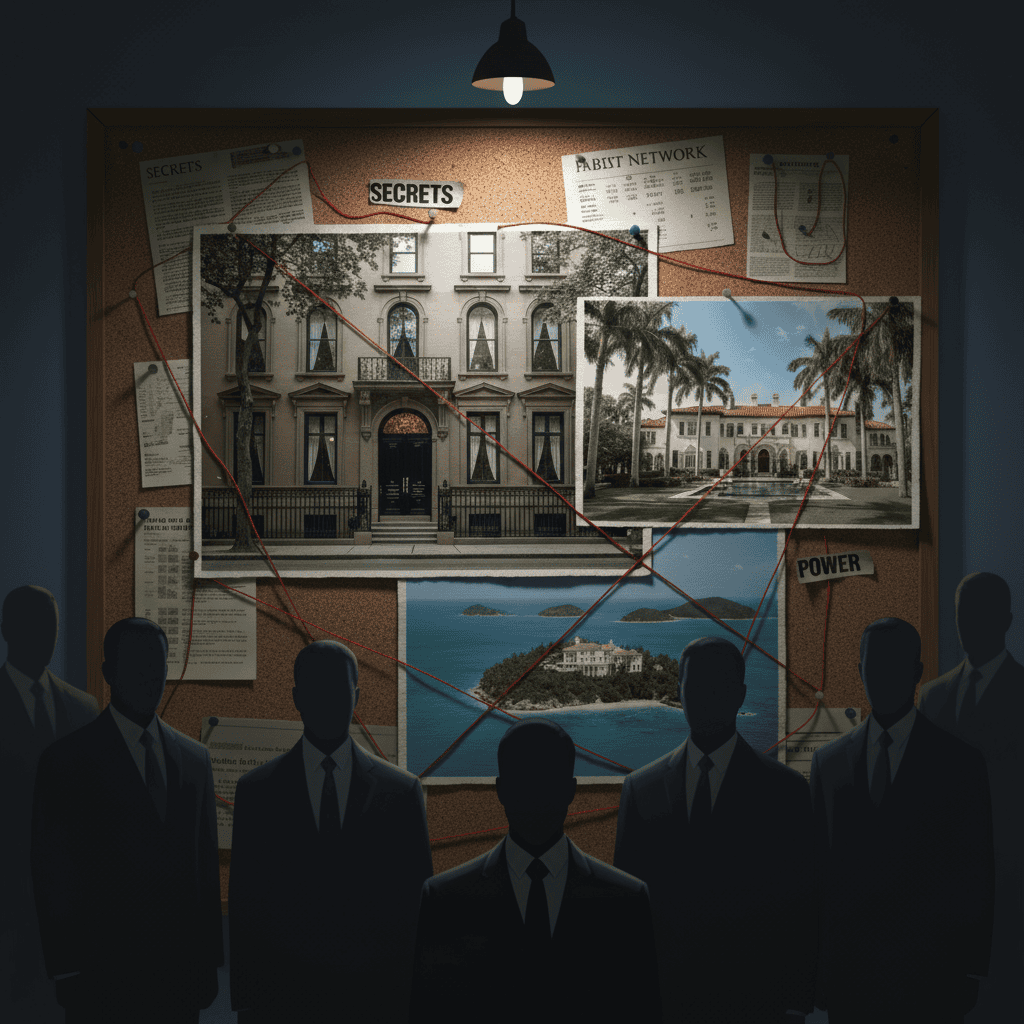
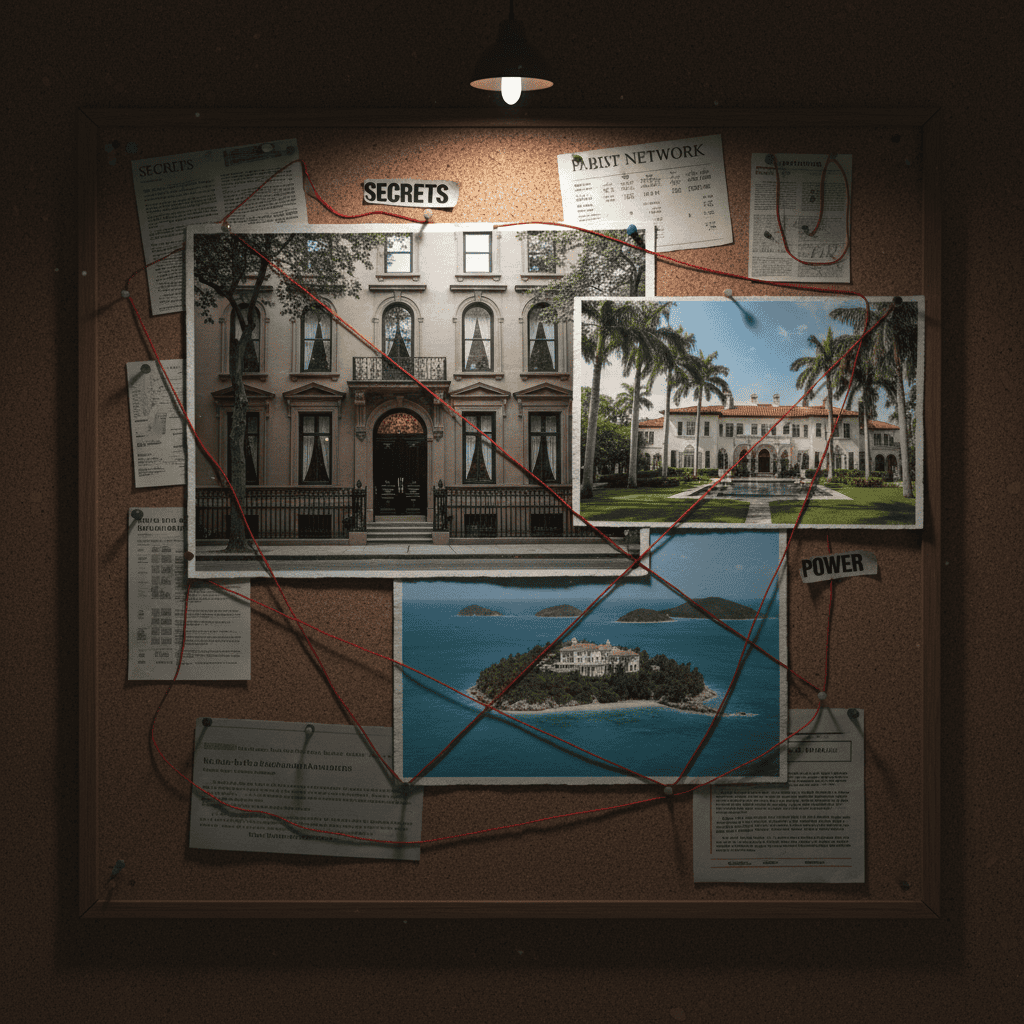
Years of litigation over sealed records from Virginia Giuffre’s defamation suit against Maxwell produced thousands of pages: depositions, exhibits, emails. They are not a tidy “client list.” They are a mosaic—names appearing as witnesses, staff, social contacts, alleged abusers, and bystanders. Their value lies in corroboration and context: establishing timelines, patterns, and proximity that map an ecosystem of access and impunity.
B. The Presidents and the Predator
Bill Clinton. Flight logs confirm multiple trips on Epstein’s jet in the early 2000s for foundation work. Clinton denies knowledge of crimes, denies visiting the island, and says contact ceased years ago. Testimony in unsealed files includes disturbing remarks attributed to Epstein about Clinton’s preferences and allegations that Clinton sought to suppress a magazine story—claims that remain contested.
Donald Trump. Epstein and Trump moved in the same Palm Beach circles in the 1990s and early 2000s. Trump once called Epstein a “terrific guy,” and footage shows them socializing. Later accounts describe a falling out and a ban from Mar-a-Lago. Unsealed materials introduce secondary allegations around Trump’s proximity, but no criminal charges linked to Epstein have been brought against him.
C. Royalty and Disgrace: The Case of Prince Andrew
Prince Andrew’s friendship with Epstein and Maxwell culminated in credible accusations by Virginia Giuffre, who says she was trafficked to the Duke at 17 in London, New York, and on Epstein’s island. A widely circulated photo shows Andrew with his arm around Giuffre, Maxwell in the background. After a disastrous BBC interview, Andrew settled Giuffre’s civil suit in 2022 and relinquished public roles—an extraordinary fall for a senior royal.
D. Philanthropy and Blackmail: The Bill Gates Connection
Gates met Epstein several times after 2008, a decision he later called a “huge mistake.” Reports suggest Epstein attempted to leverage knowledge of a private affair in 2017—illustrating how, when proximity failed to yield influence and money, he could pivot to coercion. The relationship exemplifies Epstein’s strategy of reputation laundering through association with globally respected figures.
Part IV: The Conspiracy Nexus — Separating Fact from Fiction
A. A Trail of Bodies?
Epstein’s jailhouse death primed the public to view subsequent deaths through a conspiratorial lens. Jean-Luc Brunel—accused of procuring girls—died by hanging in a Paris cell in 2022 before trial. Suicides involving figures linked to Epstein’s banks were folded into online cover-up narratives. Even unrelated tragedies, like Ivana Trump’s accidental death, were absorbed into the gravitational field of Epstein speculation. The pattern is less proof than psychology: when trust collapses, coincidence becomes conspiracy fuel.
B. Epstein and the “Deep State”
For conspiracist movements, Epstein is the master-key that unlocks a narrative of elite depravity and government complicity. The cry to “release the files” presumes a hidden ledger of powerful abusers. When officials later said no incriminating “client list” existed, the announcement paradoxically validated suspicions for many: absence of evidence was read as evidence of suppression. In this feedback loop, institutions cannot reclaim credibility without transparency—and perhaps not even then.
C. The Intelligence Angle: Asset or Allegory?
One enduring thesis casts Epstein as an intelligence asset running a sophisticated honeytrap to collect compromising material on elites—often pointing to Israeli or other services. The narrative is coherent and tempting: it explains impunity, the protection of networks, and the inconclusive end. But public, verifiable evidence remains thin. Until concrete proof emerges, the intelligence theory should be treated as a hypothesis—possible, not proven.
Conclusion: The Enduring Shadow
Maxwell’s 2021 conviction and 20-year sentence delivered partial justice, and a victims’ compensation program ultimately paid out roughly $125 million—financial validation of harm if not closure. Yet legal aftershocks continue, including appeals that reach back to the NPA, the scandal’s original fault line. The deeper legacy, however, is civic: a collapse of trust in equal justice, an exposure of how prestige institutions courted tainted money, and a culture war that bends facts to fit grievance.
The Epstein saga is a cautionary epic about power without accountability. It affirms the courage of survivors and the necessity of investigative journalism—and warns that, in darkness, conspiracy is the inevitable substitute for truth. The honest reckoning still ahead is not only who was involved, but why the system made it so easy for so long.
Appendix: Key Individuals & Status (Snapshot)
| Name | Role | Status (as referenced) | Notes |
|---|---|---|---|
| Jeffrey Epstein | Principal perpetrator | Deceased (2019, ruled suicide) | 2019 SDNY indictment; death in MCC ended prosecution. |
| Ghislaine Maxwell | Accomplice, recruiter | Convicted (2021), 20-year sentence; appeal pending | Central recruiter/groomer; key witness accounts. |
| Alexander Acosta | U.S. Attorney (S.D. Fla.) | Resigned Labor Secretary (2019) | Brokered the 2008 NPA; later criticized by courts and public. |
| Virginia Giuffre | Key accuser | Settlements against Maxwell & Prince Andrew | Her litigation prompted document unsealing and public scrutiny. |
| Prince Andrew | Duke of York | Settled civil suit (2022); removed from public duties | Allegations by Giuffre; photo evidence fueled scandal. |
| Bill Clinton | 42nd U.S. President | Denies wrongdoing | Trips on Epstein’s jet for foundation work; allegations remain contested. |
| Donald Trump | 45th U.S. President | Denies wrongdoing | Past social ties; later falling out; no charges linked to Epstein. |
| Bill Gates | Microsoft co-founder | Denies wrongdoing | Post-2008 meetings; alleged extortion attempt by Epstein. |
Similar Posts
The Vanished Imam and the Digital Ghost: How Forensics Reopened a 50-Year Mystery
The Vanished Imam and the Digital Ghost – The Truth Beyond The Fog NebulaReports Feature • Investigative Analysis • September…
A Partially Open Door: The 40-Year Hunt for a Killer in Robert Redford’s Shadow
A Partially Open Door – The Truth Beyond The Fog NebulaReports Feature • Investigations • September 2025
The Vanishing at the Divide: Unraveling the Mystery of Kris Kremers and Lisanne Froon
The Vanishing at the Divide: Unraveling the Mystery of Kris Kremers and Lisanne Froon – The truth Beyond The Fog…