The Riyadh–Islamabad Axis: Anatomy and Implications of the 2025 Strategic Mutual Defense Agreement
Feature • Analysis • September 2025

Introduction
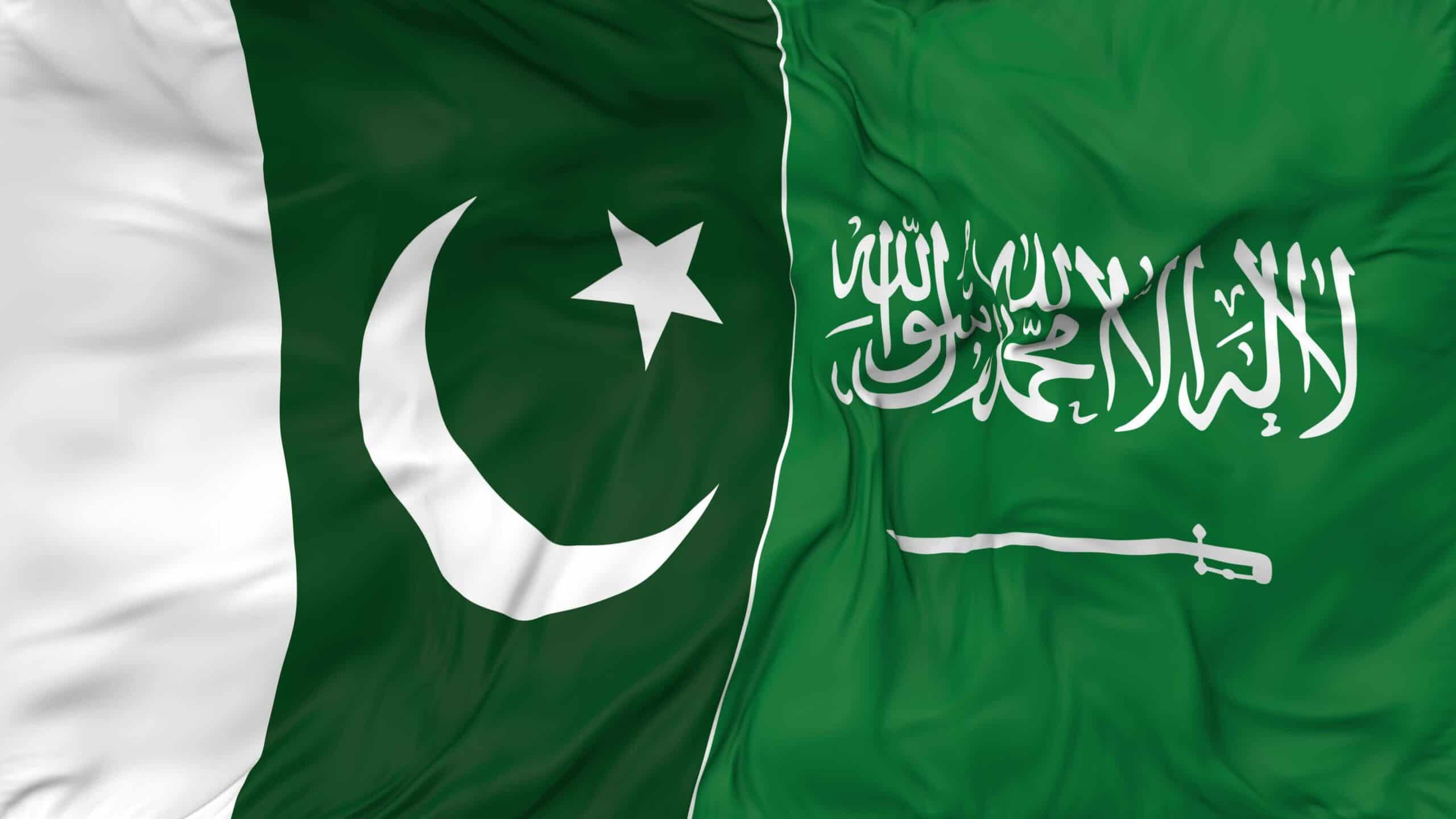
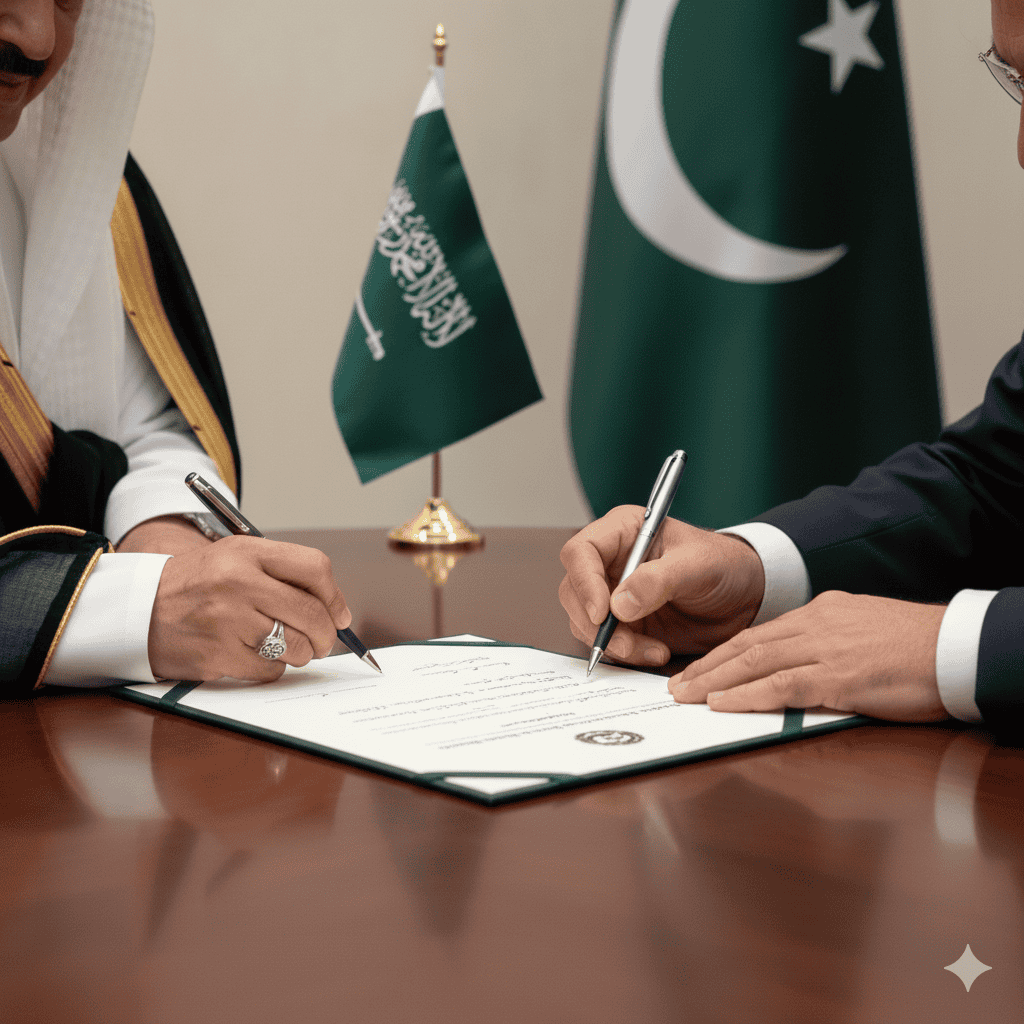
On September 17, 2025, at Riyadh’s Al-Yamamah Palace, Saudi Crown Prince Mohammed bin Salman and Pakistan’s Prime Minister Shehbaz Sharif inked a document that has already redrawn the geopolitical maps of both the Middle East and South Asia.
The Strategic Mutual Defense Agreement (SMDA) declares that “any aggression against either country shall be considered an aggression against both.” In one sentence, the Kingdom of Saudi Arabia and the Islamic Republic of Pakistan elevated their decades-old partnership from ad-hoc cooperation into a NATO-style security pact.
For Saudi Arabia, this is about strategic autonomy—hedging against U.S. unpredictability, Israeli assertiveness, and Iranian influence. For Pakistan, it is about prestige and survival—locking in Riyadh as its most reliable financial and political backer while enhancing its global standing as the Muslim world’s security anchor.
And lurking behind the ink is the unspoken but widely acknowledged reality: Pakistan’s nuclear umbrella has, by ambiguity, been extended to Riyadh.
This article unpacks the anatomy of the pact, the history that undergirds it, the nuclear dimension, the immediate catalysts, the ripple effects across India, Israel, and Iran, and the broader implications for great-power competition.
Section 1: From Informal Alliance to Ironclad Pact
1.1 Anatomy of the SMDA
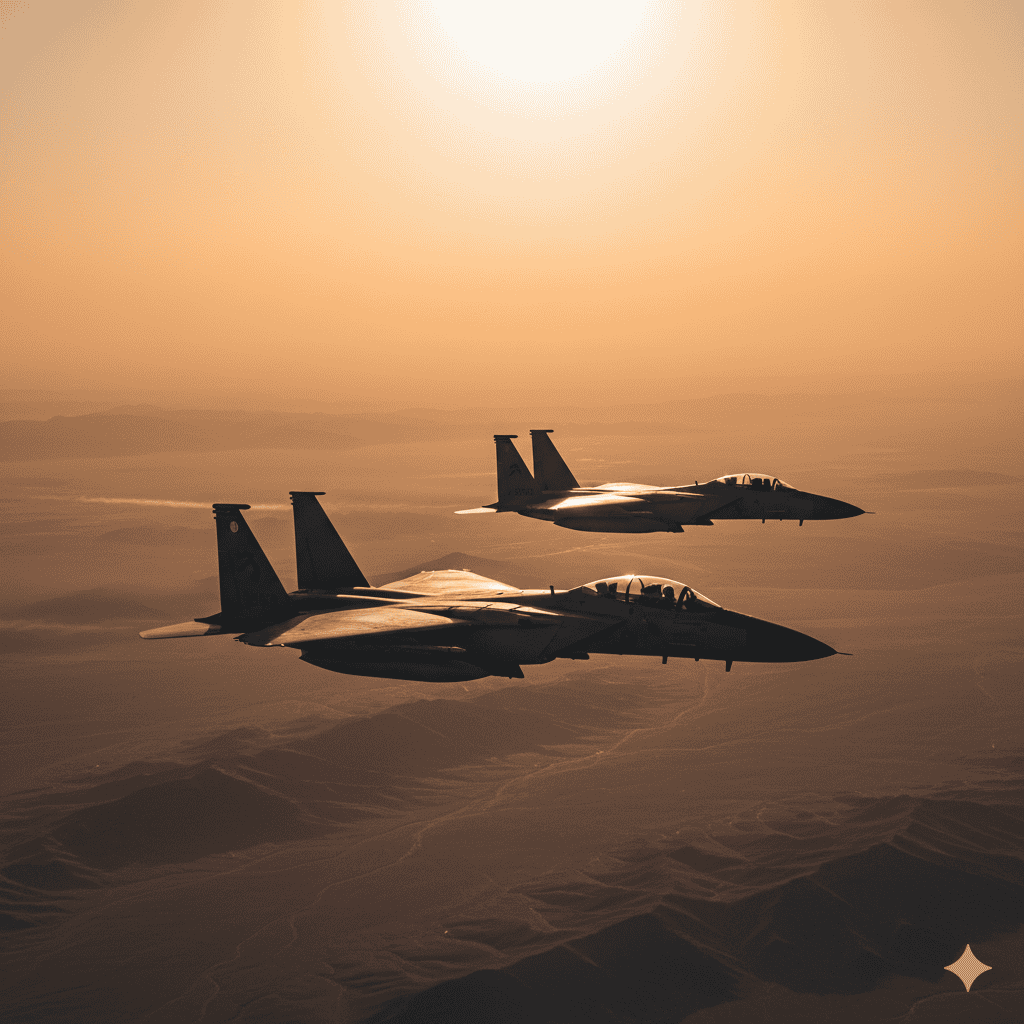
The signing ceremony was staged with calculated symbolism. Pakistani Prime Minister Shehbaz Sharif’s plane was escorted into Saudi airspace by a squadron of Royal Saudi Air Force F-15s. Pakistan’s Army Chief, Field Marshal Asim Munir, sat beside him at the table—an unmistakable signal that Pakistan’s military establishment, not just its civilian leadership, was on board.
At the heart of the pact lies the mutual defense clause: “any aggression against either country shall be considered an aggression against both.” The language mirrors NATO’s Article 5, a deliberate choice to project credibility and deterrence.
But unlike NATO, the pact lacks operational detail. There are no automatic war triggers, no joint command structures. Instead, its power lies in its ambiguity: it forces adversaries to assume the risk of a joint response, even if that response is calibrated rather than automatic.
1.2 Legal Commitment vs. Political Reality
This vagueness is not a flaw—it is strategy. It allows both Riyadh and Islamabad to deter aggression without binding themselves to reckless entanglements. History matters here. In 2015, Pakistan’s parliament refused to send combat troops to Saudi Arabia’s war in Yemen, despite direct requests. The lesson: commitments are subject to sovereign interest.
Thus, the SMDA is less about guaranteed warfighting and more about “deterrence by complication.” Any aggressor must now calculate that a strike on one could unleash unpredictable retaliation from both.
1.3 Institutionalizing a Historic Partnership
For decades, Saudi–Pakistani ties were transactional: Pakistani troops for Saudi money. The SMDA transforms this into a codified alliance, placing Pakistan not as a contractor but as a formal ally. Symbolically, it elevates Pakistan into the ranks of Riyadh’s indispensable partners, alongside Washington—and increasingly, Beijing.
Section 2: The Historical Bedrock
2.1 Pakistani Troops in the Kingdom (1967–2024)
The roots of this alliance stretch back nearly sixty years.
- 1967: Pakistan signed its first defense cooperation pact, providing training to the fledgling Saudi Air Force.
- 1969: Pakistani pilots flew Saudi jets in combat against South Yemeni incursions.
- 1979: During the Mecca Grand Mosque seizure, Pakistani special forces reportedly played a role in retaking Islam’s holiest site.
- 1980s: At the height of the Iran–Iraq War, 20,000 Pakistani troops were stationed in Saudi Arabia.
- 1990–91: Over 11,000 Pakistani soldiers defended Saudi territory during the Gulf War.
Even today, between 1,500–2,000 Pakistani military personnel remain deployed in Saudi Arabia in advisory and training roles.
2.2 The Economic Nexus
This relationship has always been underwritten by money. Saudi Arabia is Pakistan’s largest financial lifeline, providing billions in loans, oil on deferred payments, and budgetary deposits. For 2025–26 alone, Riyadh’s commitments exceed $6.4 billion—a decisive factor in preventing Pakistan’s sovereign default.
On the flip side, Pakistani manpower has fueled Saudi Arabia’s labor market and its Vision 2030 megaprojects. In 2024–25, Pakistani expatriates sent home $7.4 billion in remittances from the Kingdom, a quarter of Pakistan’s total.
2.3 Joint Exercises and Interoperability
Since 2004, the Al-Samsam series of joint military drills has tested counter-terrorism tactics and interoperability. Combined with naval and air exercises, this has created a high level of operational familiarity—one that the SMDA can now institutionalize.
Section 3: The Nuclear Elephant
3.1 Deterrence by Ambiguity
The treaty text avoids mentioning nuclear weapons. Yet official statements make the implication unavoidable.
- A senior Saudi official described the pact as covering “all military means.”
- Pakistan’s Defense Minister, Khawaja Asif, went further: “What we have, our capabilities, will absolutely be available under this pact.”
Thus, Riyadh gains the benefits of a nuclear shield without formally breaching the Nuclear Non-Proliferation Treaty (NPT).
3.2 Saudi Arabia’s Long Nuclear Shadow
Saudi Arabia’s ties to Pakistan’s nuclear program run deep. Western intelligence has long suspected that Riyadh financed large parts of Pakistan’s nuclear effort in the 1970s and 1980s. President Zia-ul-Haq once told the Saudi king: “Our achievements are yours.”
The understanding has always been that, in a crisis, Riyadh could call upon Islamabad for nuclear protection. The SMDA brings this tacit understanding into the open.
3.3 Extending an India-Centric Deterrent
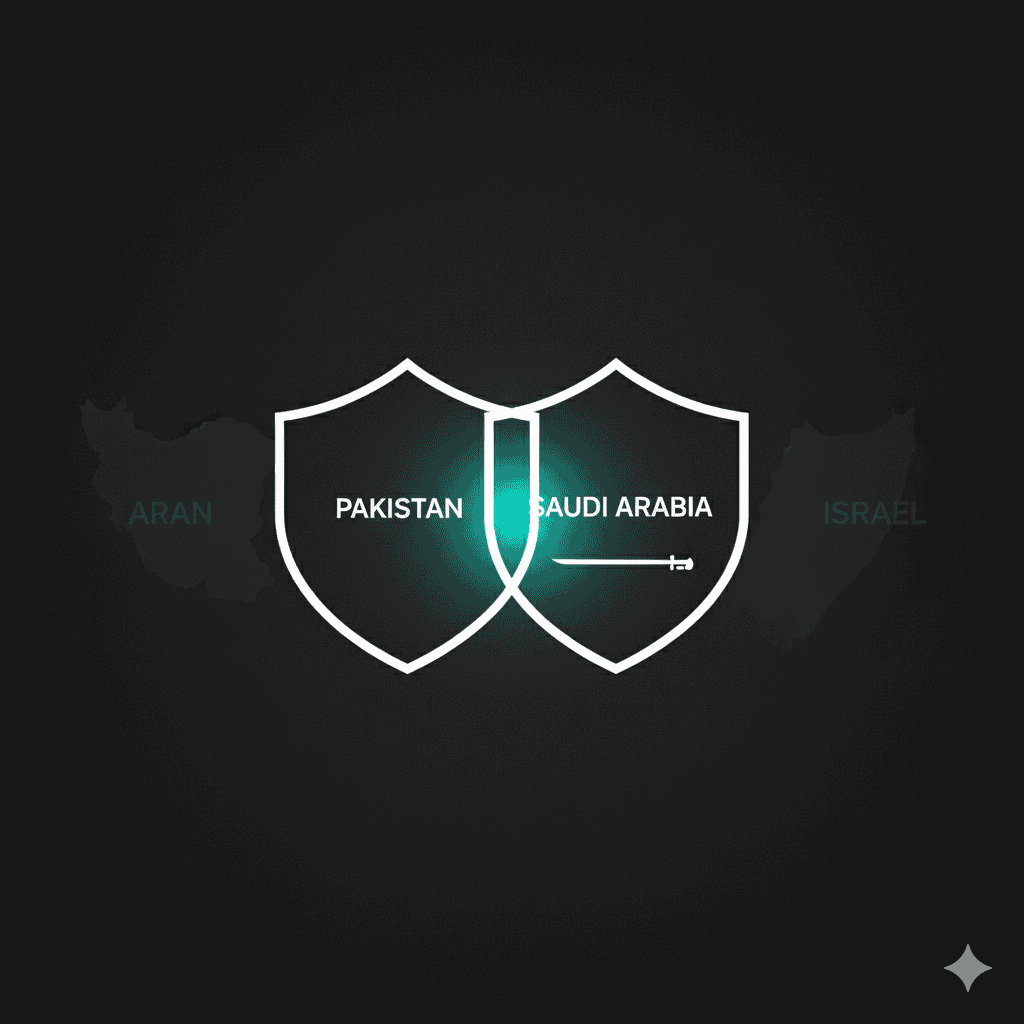
Pakistan’s nuclear doctrine has always been about India. Extending its umbrella to Saudi Arabia introduces new adversaries into the equation: Iran and potentially Israel.
While Pakistan is unlikely to ever share operational control, the perception alone reshapes deterrence. For Israel, a strike in the Gulf now carries nuclear risk. For Iran, it means facing a Sunni axis backed by nuclear ambiguity.
Section 4: Catalysts and Calculus—Why Now?
4.1 The Doha Shockwave
On September 9, 2025, Israel launched an unprecedented airstrike in Doha, Qatar, killing senior Hamas leaders. The attack shattered Gulf assumptions of sovereignty and, crucially, highlighted the limits of U.S. protection. Within eight days, Riyadh and Islamabad signed the SMDA.
4.2 Saudi Arabia’s Strategic Autonomy
For decades, Saudi security rested on America’s umbrella. But confidence has eroded—from the muted U.S. response to the 2019 Houthi attack on Abqaiq oil facilities, to Washington’s broader pivot to Asia.
The Doha strike was the tipping point. Saudi leaders concluded they could not rely solely on Washington. By aligning with Pakistan, Riyadh declared its multi-aligned independence.
4.3 Pakistan’s Payoff
For Islamabad, the timing was equally ripe. Facing chronic economic crisis, the pact secures Riyadh’s continued largesse. Symbolically, it positions Pakistan as guardian of the Muslim heartland, boosting its prestige against India’s narrative of Pakistani isolation.

Section 5: The Regional Fallout
5.1 India’s Dilemma
India has reacted with studied caution, pledging to “study the implications.” But its concerns are threefold:
- A more emboldened Pakistan, shielded by Saudi backing.
- Potential Saudi funding for Pakistan’s military modernization.
- Strains on India’s own $41 billion trade relationship with Riyadh.
The SMDA forces India into an uncomfortable recalibration.
5.2 Israel’s Redrawn Threat Matrix
For Israel, the pact is a nightmare scenario. Its freedom of military action in the Gulf is now constrained by the possibility of Pakistani involvement—or worse, nuclear escalation.
The SMDA also torpedoes hopes of Saudi–Israeli normalization under the Abraham Accords. Riyadh has chosen deterrence over détente.
5.3 Iran’s Strategic Containment
Tehran has publicly downplayed the pact, framing it as Saudi distancing from Washington. But the reality is stark: the leading Sunni monarchy has allied with the only Muslim nuclear power, creating a formidable containment wall around Iran.
5.4 A Template for the Gulf?
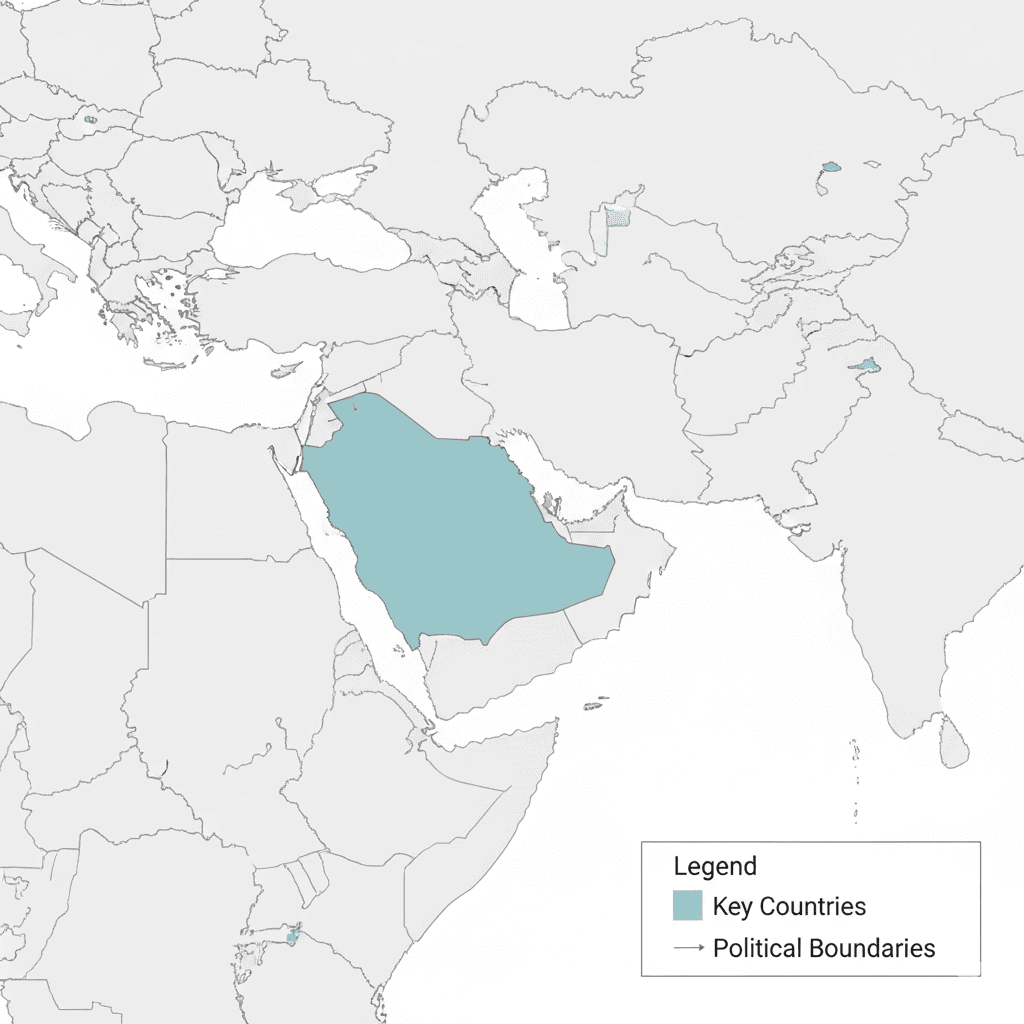
Other Arab states are watching closely. Officials in Qatar and the UAE have expressed interest in similar arrangements. The symbolism—Custodian of the Two Holy Mosques + Muslim nuclear state—has revived talk of an “Islamic NATO.”
Section 6: The Great-Power Competition
6.1 Washington’s Waning Influence
The U.S. reaction was telling: silence. Publicly endorsing the pact would mean conceding its waning influence; criticizing it would risk alienating both allies.
The SMDA is the clearest sign yet that Washington’s unipolar grip on Gulf security is over.
6.2 Beijing’s Quiet Windfall
For China, the pact is a gift. Both Pakistan and Saudi Arabia are Belt and Road partners. Their strengthened security partnership stabilizes China’s energy lifelines and creates opportunities for military–technical cooperation—without Beijing spending a dime.

Section 7: Operational Scenarios and Strategic Outlook
7.1 How Could the Pact Be Tested?
- India–Pakistan War: Riyadh unlikely to send troops, but could provide massive financial and diplomatic support.
- Iran–Saudi Clash: Pakistan would likely deploy defensive forces to the Kingdom.
- Israel–Saudi Strike: Pakistan would face immense pressure to respond militarily and raise nuclear alerts.
7.2 Lessons from Yemen (2015)
The precedent of Pakistan’s refusal to fight in Yemen remains relevant. The SMDA’s clause is powerful as deterrence but not an unconditional blank check.
7.3 The Future of the Axis
The pact could expand into joint defense production, intelligence sharing, and even an expanded bloc of Gulf states. Its endurance will depend on balancing ties with India, the U.S., and China.
Optional: Key Events Timeline
(If your WordPress installation blocks scripts, skip this chart or embed via a trusted plugin.)
Conclusion: A Paradigm Shift
The 2025 Pakistan–Saudi Strategic Mutual Defense Agreement is not just another treaty. It is a geopolitical earthquake.
- It ties the security of South Asia and the Gulf together.
- It extends nuclear deterrence into the Middle East by ambiguity.
- It complicates India’s strategy, constrains Israel’s options, and erects new barriers for Iran.
- It marks a historic move by Saudi Arabia toward strategic autonomy in a multipolar world.
For Pakistan, it is the ultimate validation of decades of sacrifice—an elevation from hired gun to indispensable ally. For Saudi Arabia, it is insurance against a turbulent future.
And for the wider world, it is a signal that the old U.S.-centric order is fading, replaced by a dense web of overlapping, unpredictable, multi-aligned partnerships. The Riyadh–Islamabad Axis has arrived.
Similar Posts
America First, Israel Exception: Aid, Strategy, and Hypocrisy in the Trump Era
America First, Israel Exception – The Truth Beyond The Fog NebulaReports Feature • Analysis • September 2025
An Axis of Convenience and Conviction: The Russia–North Korea Strategic Partnership and the Future of Global Order
An Axis of Convenience – The Truth Beyond The Fog NebulaReports Feature • Analysis • September 2025
An Anthem of Allegiance: Alberta’s Vigils for Charlie Kirk and the Forging of a Transnational Conservative Identity
An Anthem of Allegiance – NebulaReports The Truth Beyond The Fog Feature • Analysis • September 2025
The Caribbean Crucible: U.S. Military Posturing, Narco-Terrorism Narratives, and the Specter of Intervention in Venezuela
The Caribbean Crucible – The Truth Beyond The Fog NebulaReports Feature • Analysis • September 2025