America First, Israel Exception: Aid, Strategy, and Hypocrisy in the Trump Era
Feature • Analysis • September 2025
Introduction
When Donald Trump came to power promising to put “America First,” his foreign policy vision was unambiguous: the United States would no longer bankroll what he described as wasteful international commitments. He targeted foreign aid as a symbol of a bloated, globalist bureaucracy that served everyone but the American taxpayer. Yet, even as Trump sought to dismantle decades of development programs and slash billions from the State Department and USAID, one country stood completely insulated from these cuts: Israel.
This paradox—cutting foreign aid almost everywhere while protecting and even accelerating it for Israel—defined a central tension of the Trump administration. Was this hypocrisy? Or was it a calculated expression of his “Principled Realism”? To answer this, we need to look at how Trump applied two entirely different standards of foreign aid: one transactional and conditional for the world, the other unconditional and sacrosanct for Israel.
The “America First” Revolution in Foreign Aid
Trump’s foreign policy rested on what the White House called Principled Realism. The 2018 National Security Strategy described the world as an “arena of competition,” rejecting the idea of a global community. Alliances were not sacred; they were temporary alignments of interest.
Foreign aid, long framed as an investment in stability and democracy, was suddenly rebranded as a “bad deal.” Trump declared: “Moving forward, we are only going to give foreign aid to those who respect us and, frankly, are our friends.” The result was a radical experiment in transactional diplomacy: cut aid to those who crossed the U.S. at the UN, reward those who supported American positions.
Wielding the Budgetary Axe
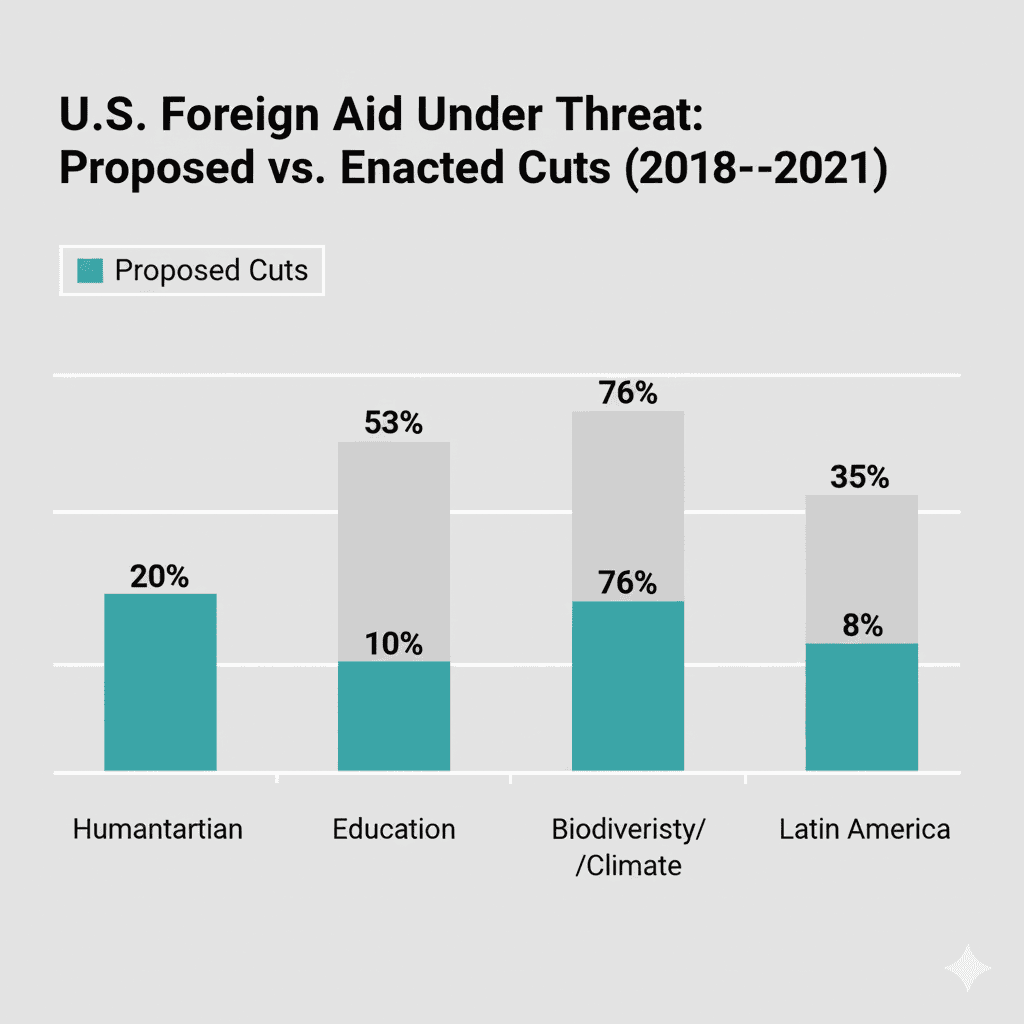
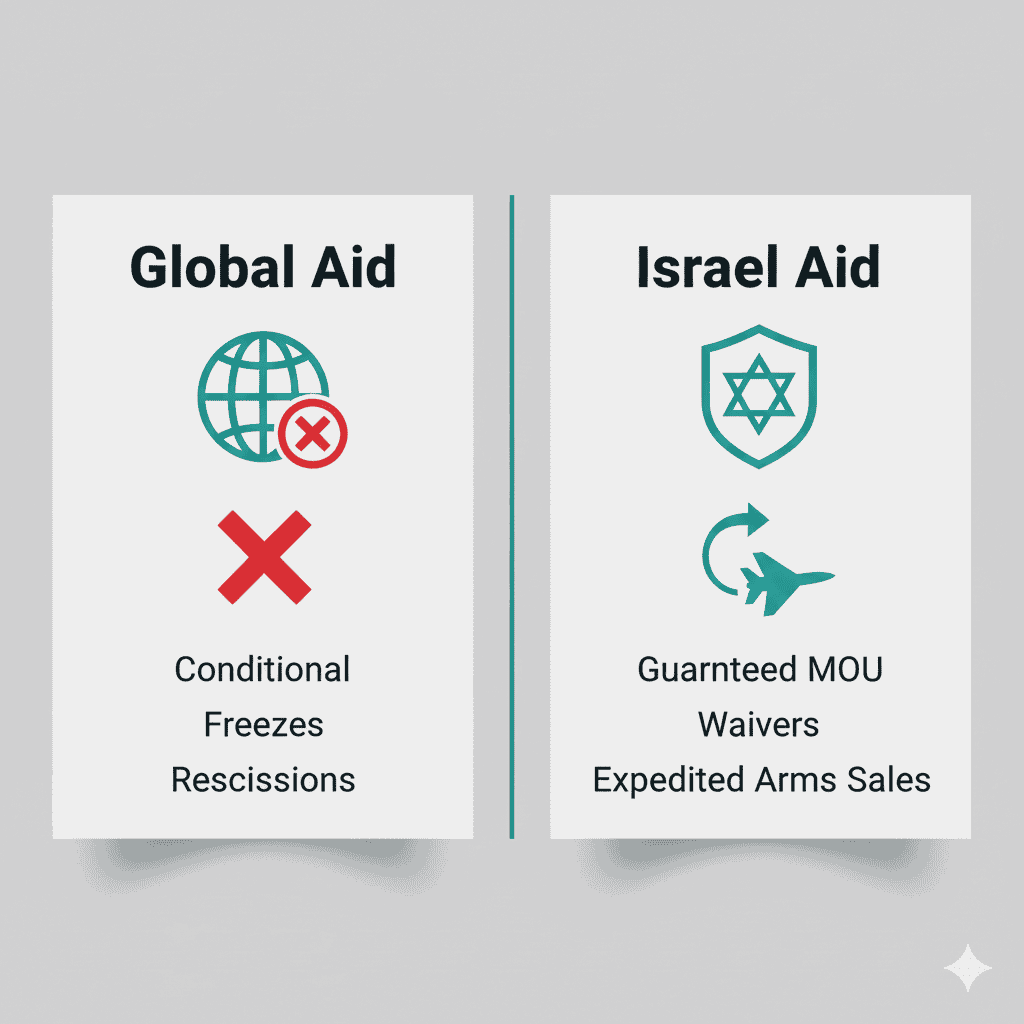
Budgets told the story. Each year, the administration submitted proposals slashing aid by up to 30%. Funding for Latin America was to be gutted; humanitarian programs faced steep reductions. Climate, biodiversity, and education initiatives were cut to the bone.
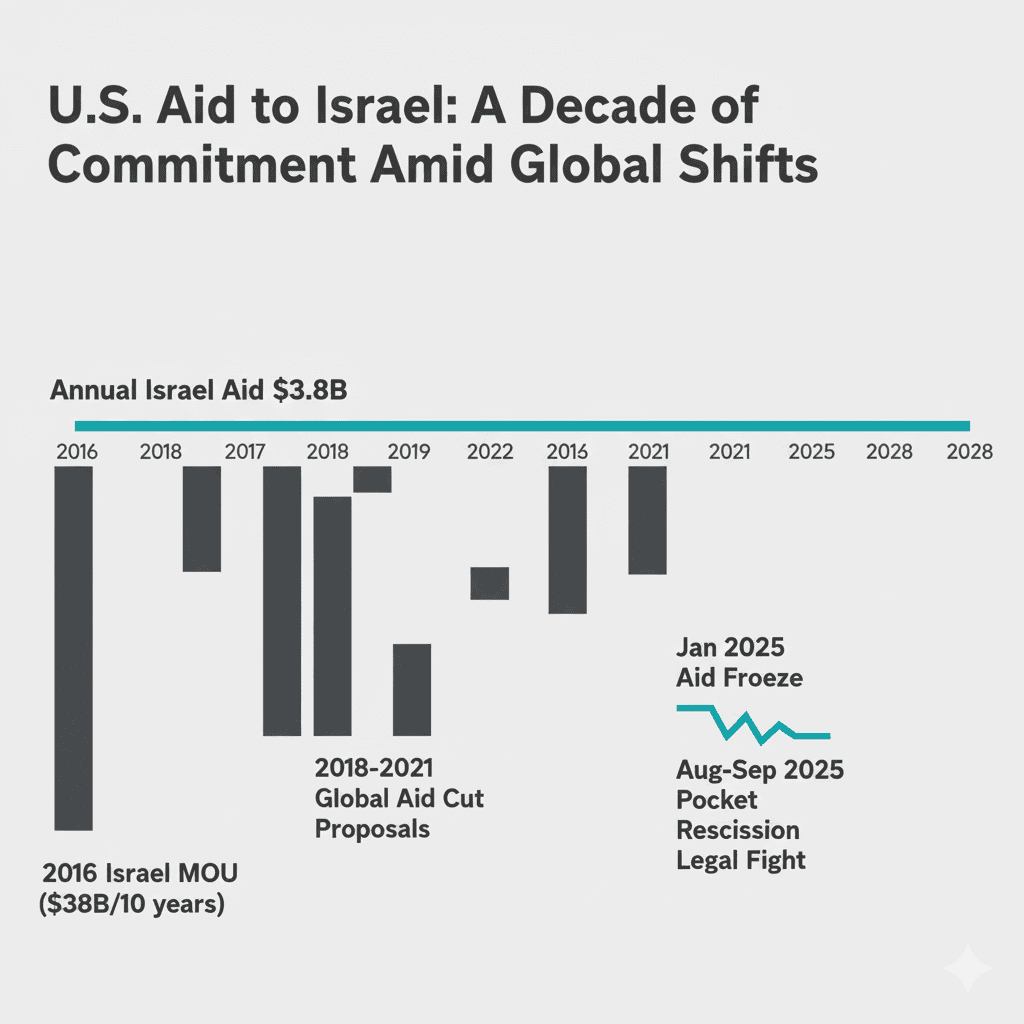
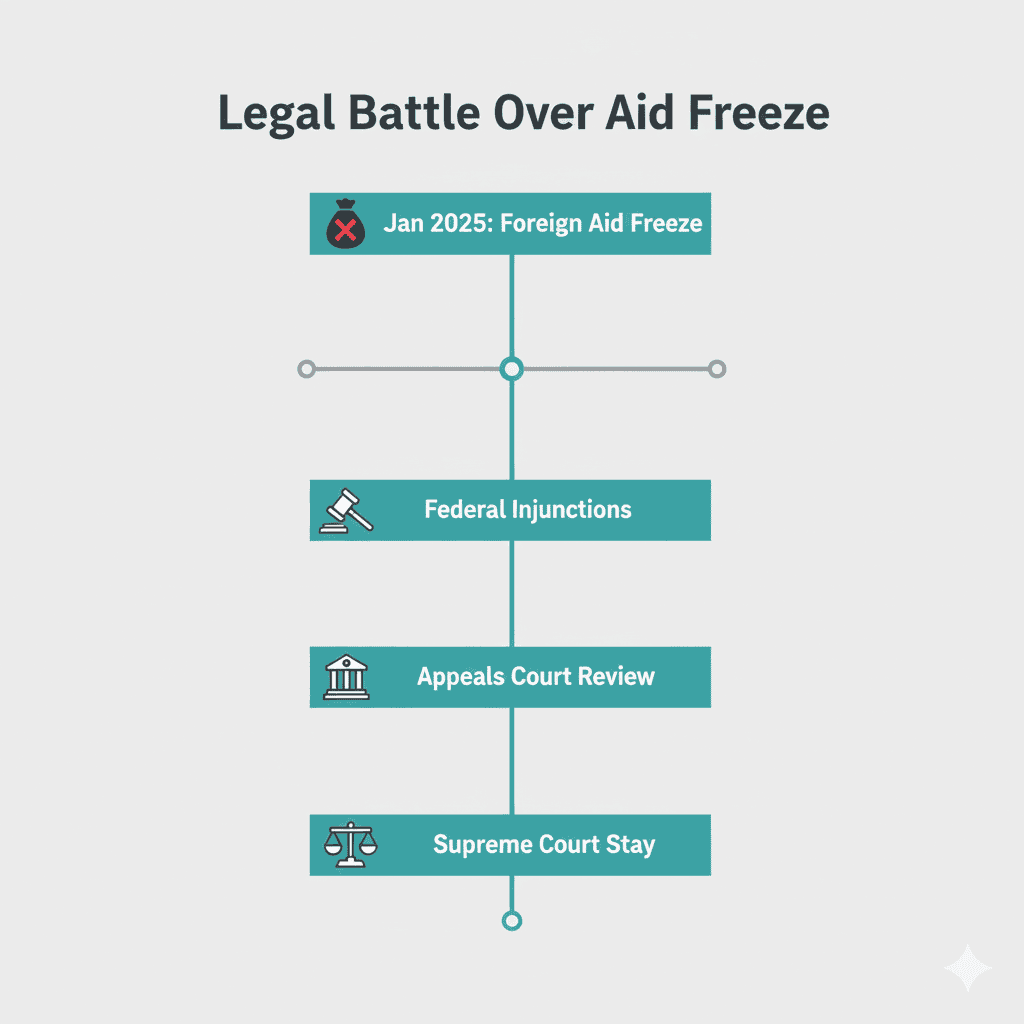
While Congress blocked the harshest proposals, the White House used executive maneuvers to freeze and rescind funds. In 2025, a $4.9 billion “pocket rescission” attempted to bypass Congress altogether, dragging courts into a constitutional clash over the power of the purse.
The most dramatic move came with the effective dismantling of USAID. Thousands of development staff were sidelined. Projects in health, education, and poverty relief ground to a halt. For much of the world, American aid simply disappeared.
The Israel Exception
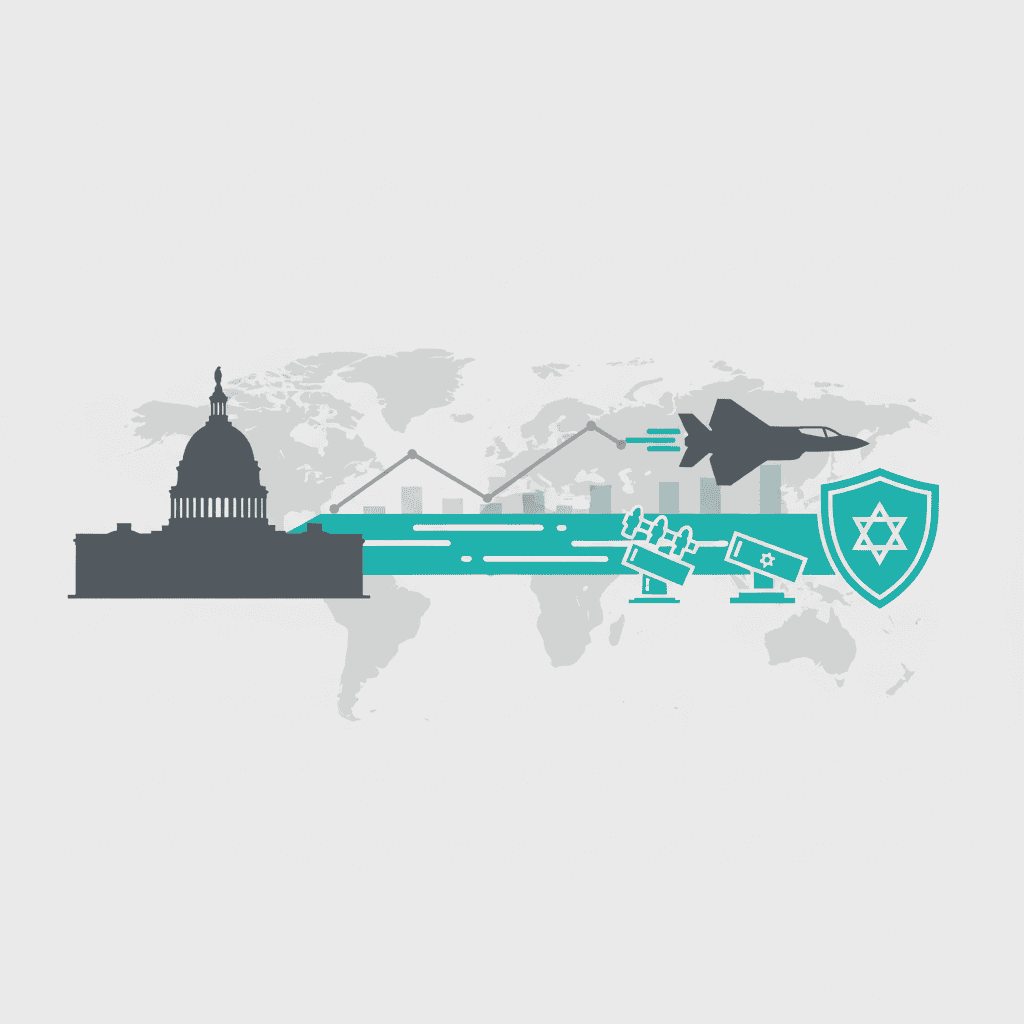
While aid elsewhere was slashed, Israel remained untouchable. The foundation lay in the 2016 Memorandum of Understanding (MOU): a $38 billion, 10-year deal guaranteeing Israel $3.8 billion annually through 2028—the largest U.S. military assistance package in history. Trump embraced the MOU fully. Even the January 2025 freeze carried an explicit waiver for Israeli military financing.
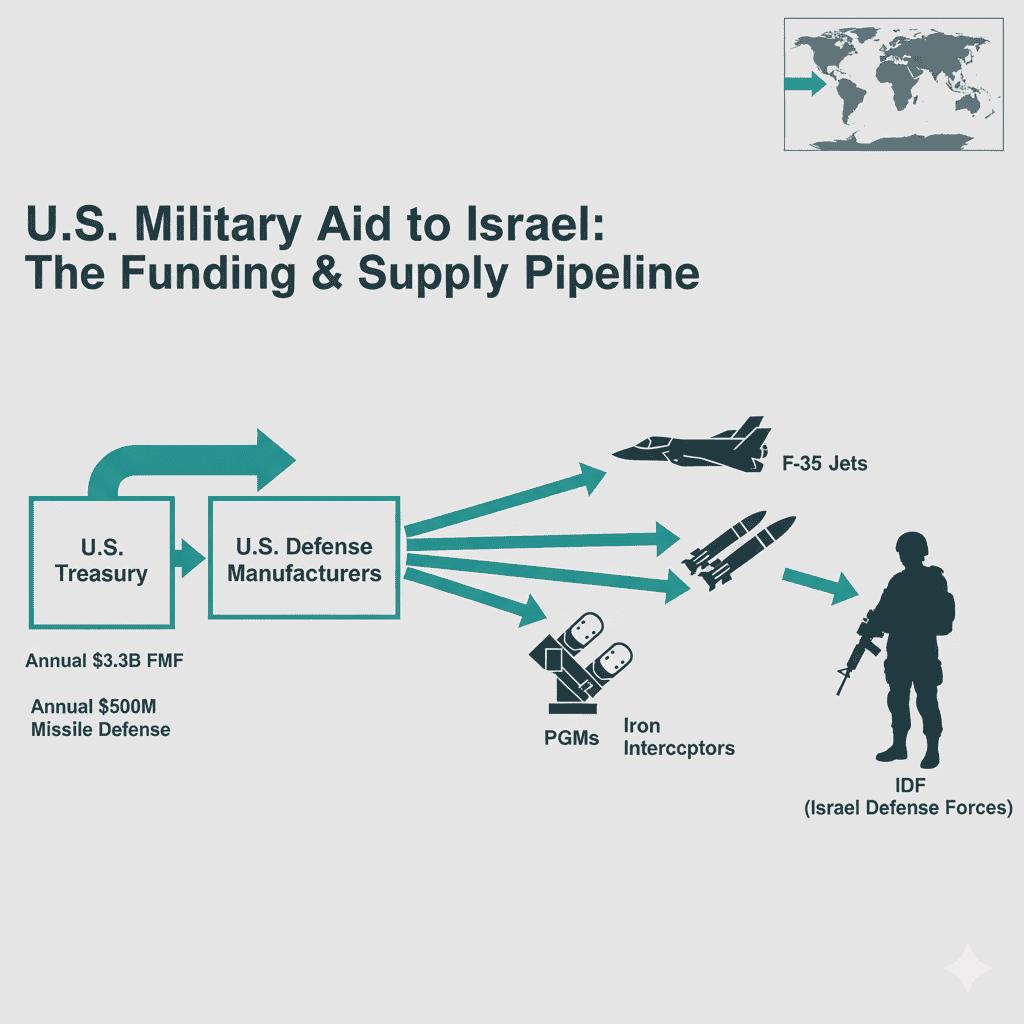
From 2019 through 2021, Israel received $3.3B annually in Foreign Military Financing plus $500M for missile defense—funding advanced systems from F-35 jets to Iron Dome interceptors. Beyond the MOU, emergency arms sales and expedited deals (at times bypassing congressional review) underscored that Israel was not just exempt—it was prioritized.
Strategic Justifications
How did the administration square this with “America First”? By redefining U.S. interests in the Middle East as virtually identical to Israel’s.
In related news, see our detailed analysis of Forged in Conflict, Focused on the Future: The U.S. Air Force at 78 .
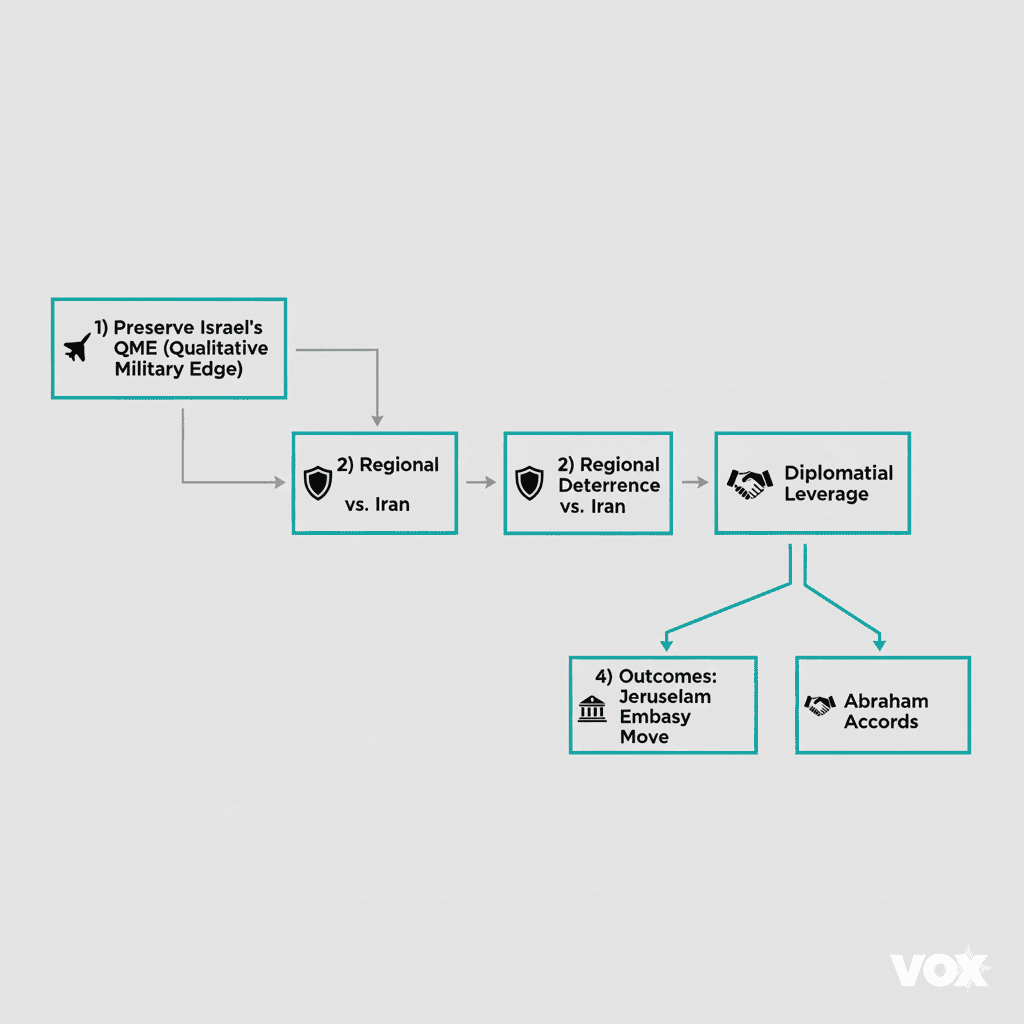
- Preserving the Qualitative Military Edge (QME): Ensuring Israel can deter and defeat regional adversaries—framed as essential to countering Iran and its proxies.
- Israel as a strategic asset: “America’s aircraft carrier in the Middle East,” requiring no U.S. boots on the ground. MOU spending on U.S.-made systems doubled as industrial policy and jobs.
- Platform for broader policy: The security backstop underwrote the Jerusalem embassy move and the Abraham Accords, with diplomatic carrots and advanced weapons packages.
Hypocrisy, Double Standards, and the “Israel First” Charge
The contradiction was not lost on critics. While the White House warned of “endless handouts” abroad, Israel received billions without conditions. Civil rights advocates decried policies that tied even domestic disaster relief to stances on Israel boycotts—fueling the accusation of an “Israel First” agenda.
More surprising was the critique from within the nationalist base: younger conservatives questioned why aid to Honduras was conditional but aid to Israel untouchable—and whether those billions should instead be spent at home. Abroad, this double standard dented U.S. credibility, while rivals like China stepped into the vacuum, eroding American soft power.
Congress Strikes Back
Throughout the tug-of-war, Congress acted as a constitutional counterweight. Lawmakers repeatedly blocked the harshest cuts, noting that aid is under 1% of the federal budget but yields outsize strategic benefits. Still, under pressure, Congress did approve some rescissions—clawing back funds from UN accounts.
Legal fights over the $4.9B freeze reached the Supreme Court, where a stay allowed the White House to withhold funds temporarily. Though unresolved, the episode set a precedent for expanded executive power over appropriations.
Legacy: What Endures, What Fractures
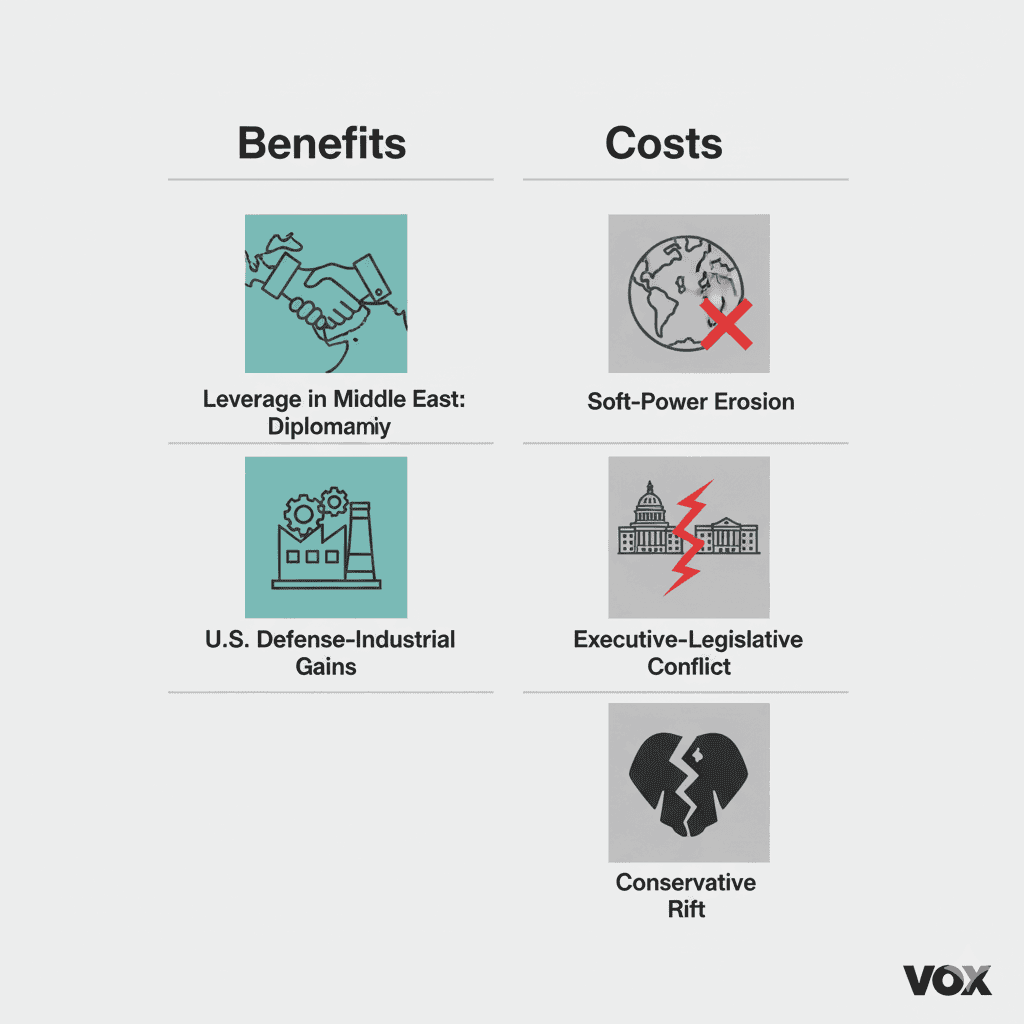
- Soft power decline: America’s image as a reliable partner eroded, opening doors for rivals.
- Executive–legislative strain: Aggressive rescissions and freezes tested the balance of powers.
- Conservative realignment: A rising cohort on the right now questions the once-unassailable Israel-aid consensus.
Optional: Cuts by Category (Chart.js)
(If your WordPress blocks scripts, skip or embed via a trusted plugin.)
Conclusion
Was the Trump doctrine hypocritical—or coherent on its own terms? In practice, it ran on two tracks: for most of the world, aid was a transactional tool of leverage; for Israel, it was recast as America First itself—a direct investment in U.S. security and industrial capacity. By defining Israeli and American interests as nearly synonymous, the administration reconciled a paradox that left lasting marks on U.S. power: austerity for most, indulgence for a few.
Similar Posts
The Caribbean Crucible: U.S. Military Posturing, Narco-Terrorism Narratives, and the Specter of Intervention in Venezuela
The Caribbean Crucible – The Truth Beyond The Fog NebulaReports Feature • Analysis • September 2025
An Axis of Convenience and Conviction: The Russia–North Korea Strategic Partnership and the Future of Global Order
An Axis of Convenience – The Truth Beyond The Fog NebulaReports Feature • Analysis • September 2025
An Anthem of Allegiance: Alberta’s Vigils for Charlie Kirk and the Forging of a Transnational Conservative Identity
An Anthem of Allegiance – NebulaReports The Truth Beyond The Fog Feature • Analysis • September 2025
The Riyadh–Islamabad Axis: Anatomy and Implications of the 2025 Strategic Mutual Defense Agreement
The Riyadh–Islamabad Axis – The Truth Beyond The Fog NebulaReports Feature • Analysis • September 2025