The Last Freedom: Anonymous Sacrifice and the Enduring Light of Humanity, 80 Years After World War II
Feature • History & Culture • September 2025
Introduction: Beyond the USS Missouri — Commemorating the Unseen Victory
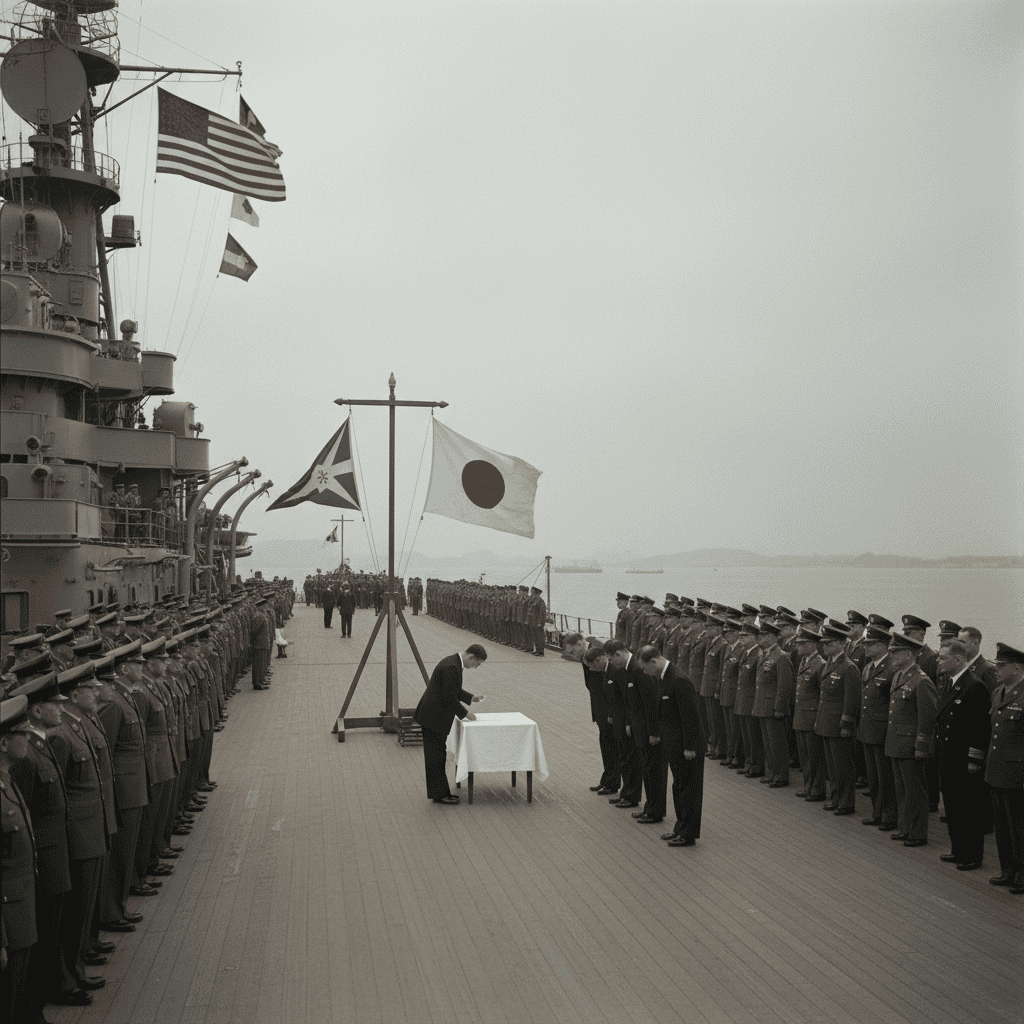
On September 2, 1945, a 23-minute ceremony aboard the USS Missouri in Tokyo Bay concluded the bloodiest conflict in human history. Flags heavy with symbolism—the Stars and Stripes flown over the U.S. Capitol on December 7, 1941, and Commodore Perry’s 1853 banner—framed General Douglas MacArthur’s promise that “a better world shall emerge.” The scene restored order and offered a script for remembrance: treaties, speeches, and the triumph of freedom.
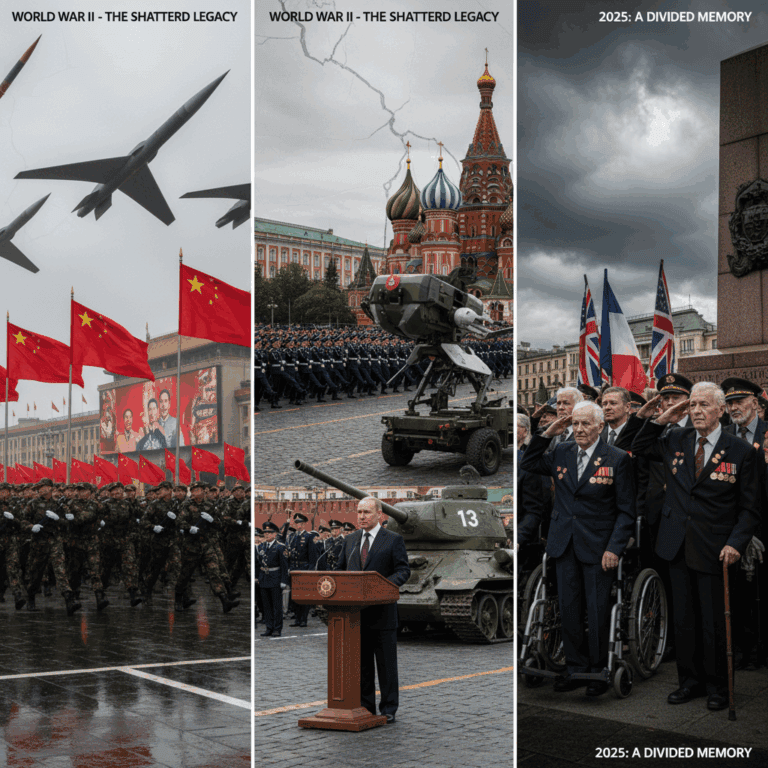
Eighty years on, commemoration is fractured. V-J Day is celebrated in Allied nations, while Japan marks the date with solemn reflection and political controversy. As the last living witnesses pass—fewer than one percent of 16.4 million American WWII veterans remain—the risk grows that official memory will flatten the war’s hardest truths. What gets lost is the quiet victory of the human spirit: the unrecorded acts of compassion that affirmed dignity in places designed for its annihilation.
This feature makes the case that the truest victory of World War II wasn’t signed on a battleship; it was won in barracks and backrooms, forests and farmhouses—whenever someone chose humanity over hate.
Part I: The Archetypes of Sacrifice in Extremis
The Canonized Martyr: The Choice of Maximilian Kolbe
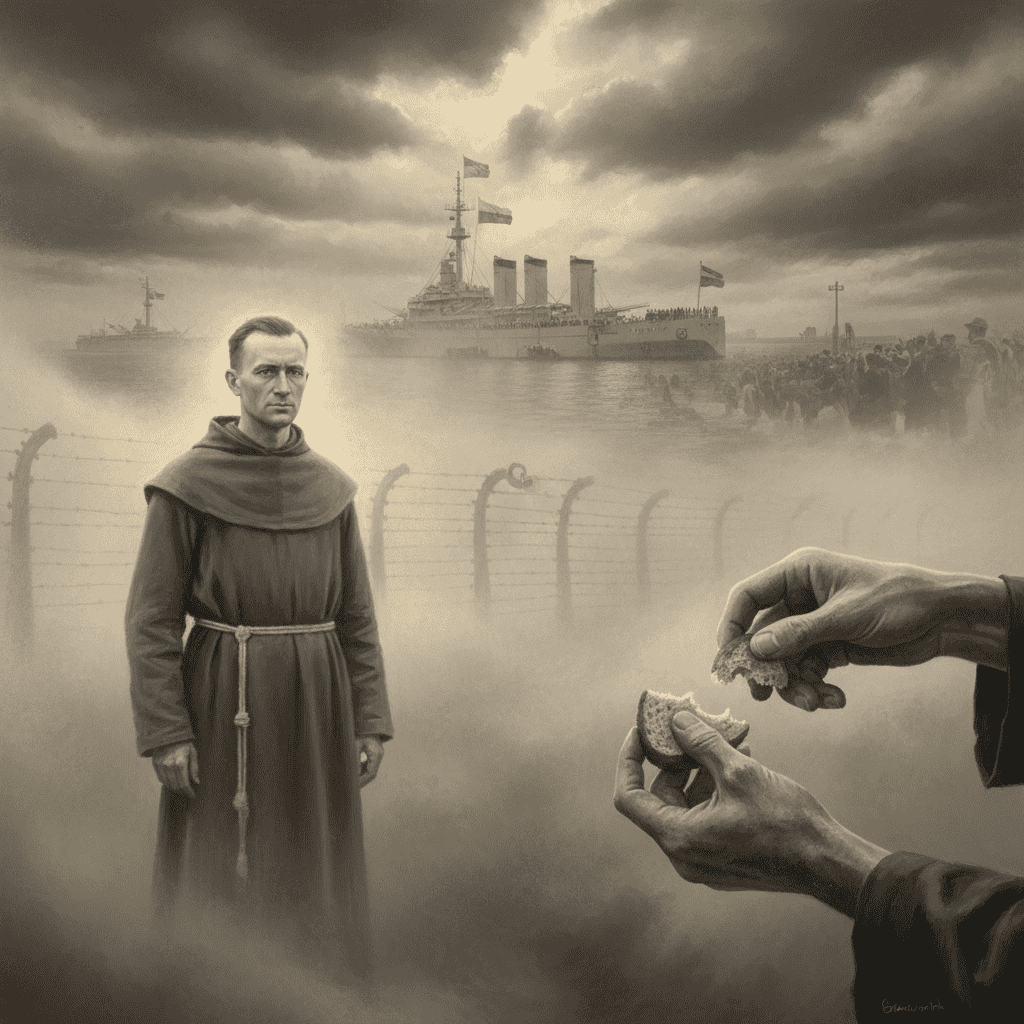
Before he was prisoner #16670, he was Rajmund Kolbe—a Polish Conventual Franciscan friar who built a modern media monastery, sheltered thousands (including Jews) after the invasion, and was arrested by the Gestapo in 1941. Deported to Auschwitz, he shared rations, heard confessions in whispers, and kept hope alive among men starved for it.
In July 1941, after an escape from Block 14, ten men were condemned to death by starvation. When one chosen prisoner cried for his wife and children, Father Kolbe stepped out of ranks and volunteered to take his place. In the darkness of Block 11 he led prayers and hymns as men died one by one. When the Nazis finally needed the cell, a guard killed Kolbe with a carbolic-acid injection. Later canonized a “martyr of charity,” his sacrifice endures because it was seen, recorded, and remembered.
The Anonymous Saint: The Observations of Viktor Frankl
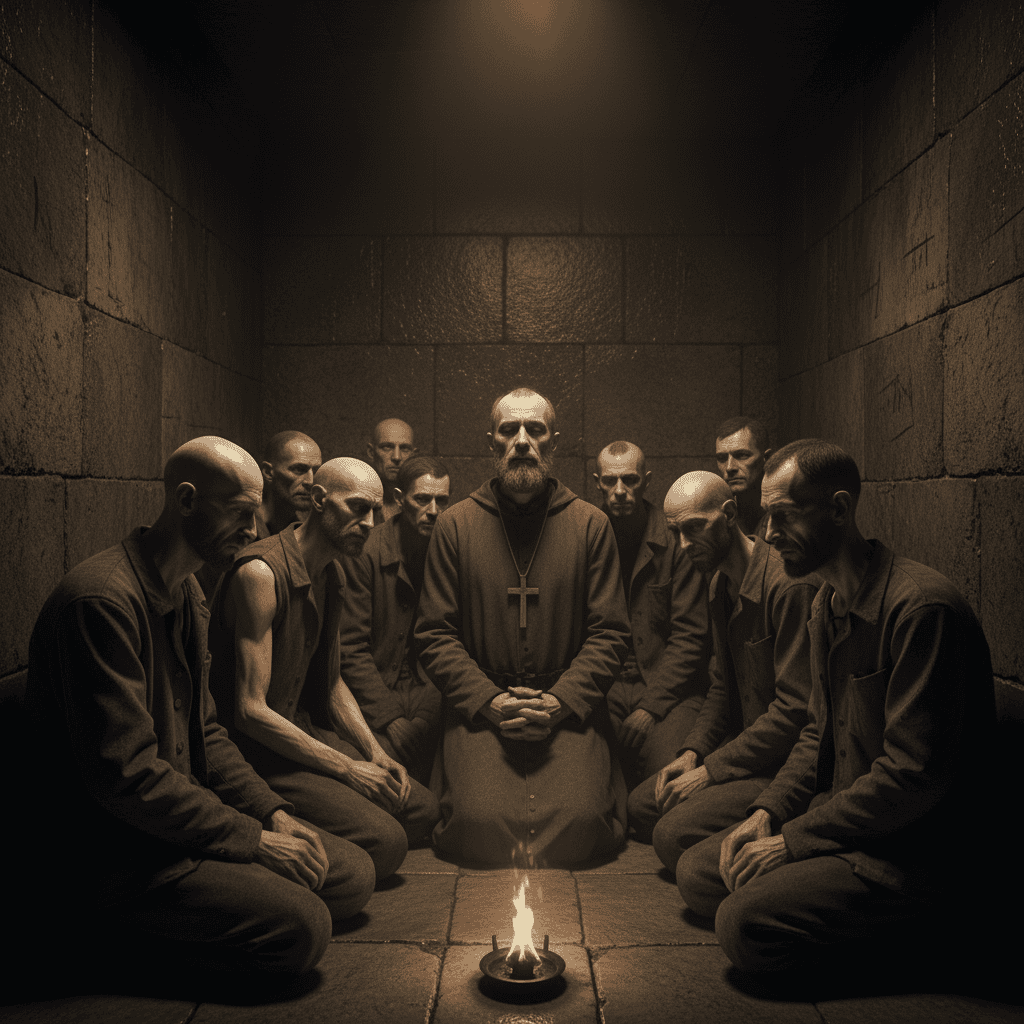
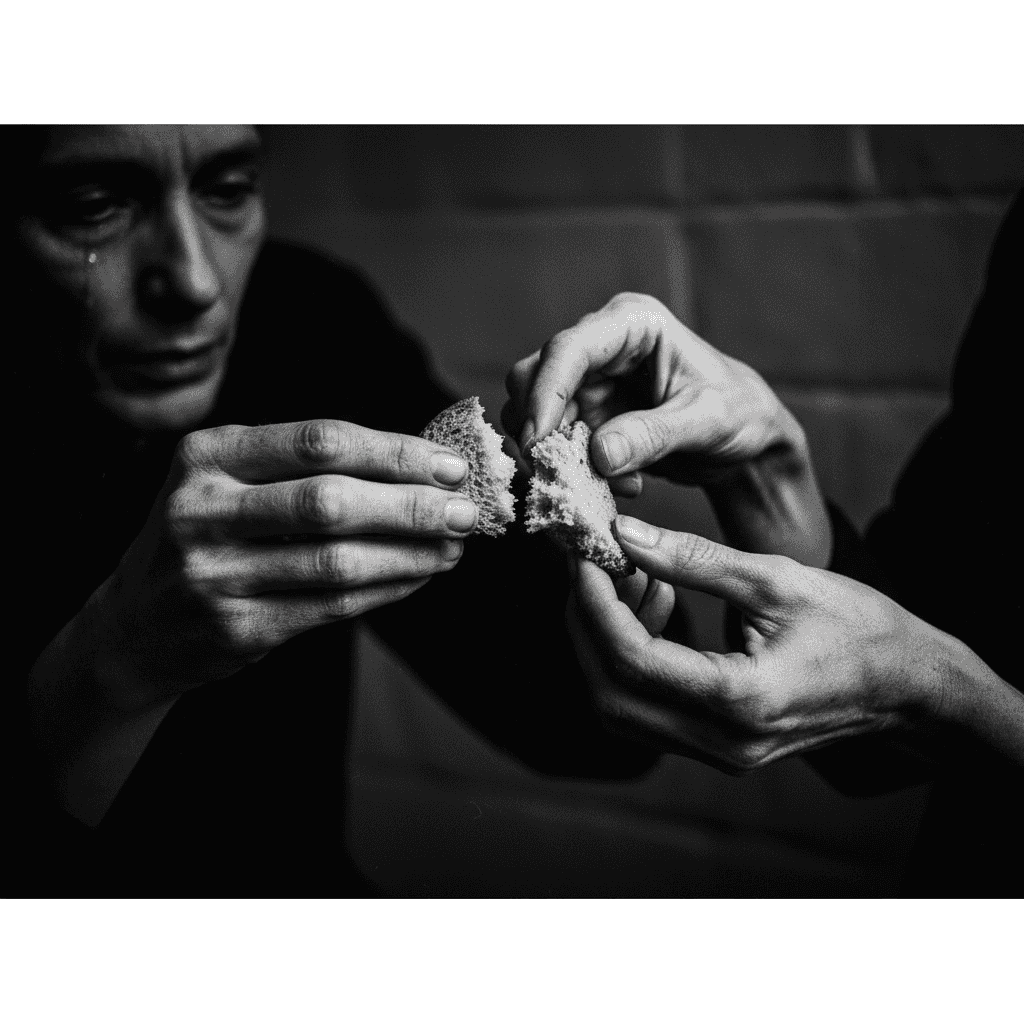
Viktor Frankl—psychiatrist, survivor of Auschwitz and Dachau—argued that even in hell there remained “the last of the human freedoms”: to choose one’s attitude. He remembered men who walked the huts comforting others, giving away their last piece of bread—gestures that violated the camp’s logic of brutal self-preservation. They were few, he wrote, and often “the best of us did not return.” Their sainthood was anonymous by design, transmitted only through testimony.
Part II: An Ecology of Quiet Courage — The Unseen Networks of WWII
Fragments of Humanity in the Camps
Testimonies speak of improvised toys for children, stolen moments of music, and rings secretly re-made for women stripped of their wedding bands. These weren’t small things; they were deliberate acts of re-humanization in a machine built to erase the self.
The Shadow Armies of Resistance
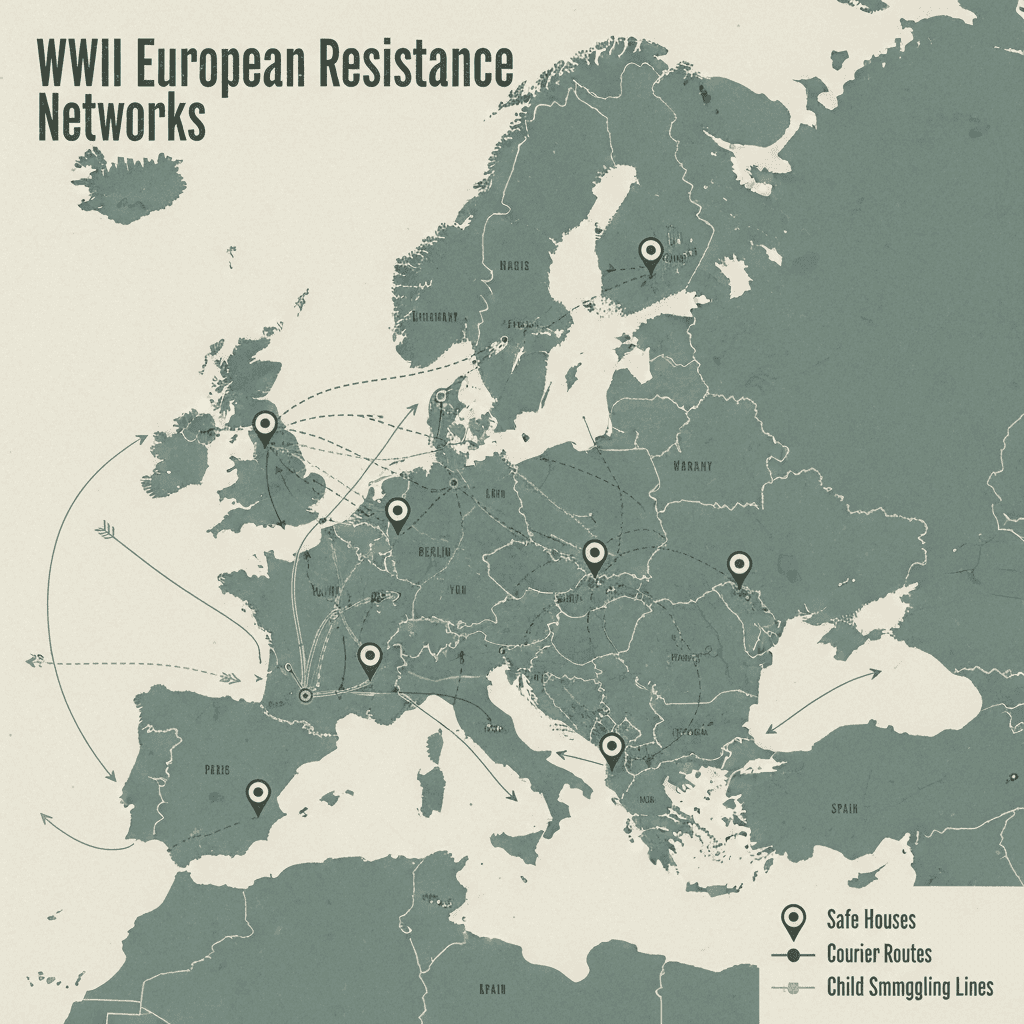
Beyond famous names, resistance lived in ordinary women and men. Couriers hid pistols in shopping bags, stitched intelligence onto silk and into hems, passed radio transmitters under aprons while the Gestapo searched upstairs, and turned laundromats into clandestine presses. Teachers, nuns, and farmwives ran networks that ferried Jewish children to safety. Everyday objects became instruments of moral war.
A Universe of Obligation: The Righteous Among the Nations
Yad Vashem has recognized more than 27,000 non-Jews who risked their lives to save Jews. Some were individuals; others, whole communities. In Belgium, Anna and Charel Jacobs-Van Dijck hid a child, Regina Sluszny, for years, while the town of Hemiksem kept a collective silence that saved her life.
Kindness Across Enemy Lines
Even amid combat, conscience flickered. Luftwaffe ace Franz Stigler escorted a crippled American B-17 to safety rather than claim an easy kill. On the Eastern Front, a German sergeant lowered his rifle at two escaping Soviet tankers: “If you’ve been that lucky, who am I to shoot you now?”
Part III: The Psychology of the Heroic Imagination
The Anatomy of a Rescuer
Rescuers came from every class, creed, and country. What they shared was learned altruism—homes where empathy was modeled and responsibility for others taught—and an internal locus of control, the belief that one’s actions matter. Under pressure many formed a “rescuer self,” an identity that reframed deception and risk as moral duties.
Overcoming the Bystander Effect
Most freeze in public crises. Rescuers didn’t because they reduced the question to an integrity test: Can I live with myself if I say no? This is Frankl’s last freedom, operationalized.
Redefining Heroism: From “Big H” to “small h”
Psychologists distinguish dramatic, public heroism from everyday kindness. WWII collapsed the difference. In occupied Europe and the camps, a crust of bread or a night’s shelter could be a capital crime. Scale mattered less than risk and intent.
Optional: Heroism Spectrum (WWII & Today)
Part IV: Modern Echoes — The Unbroken Chain of Compassion
New Theaters, Timeless Humanity
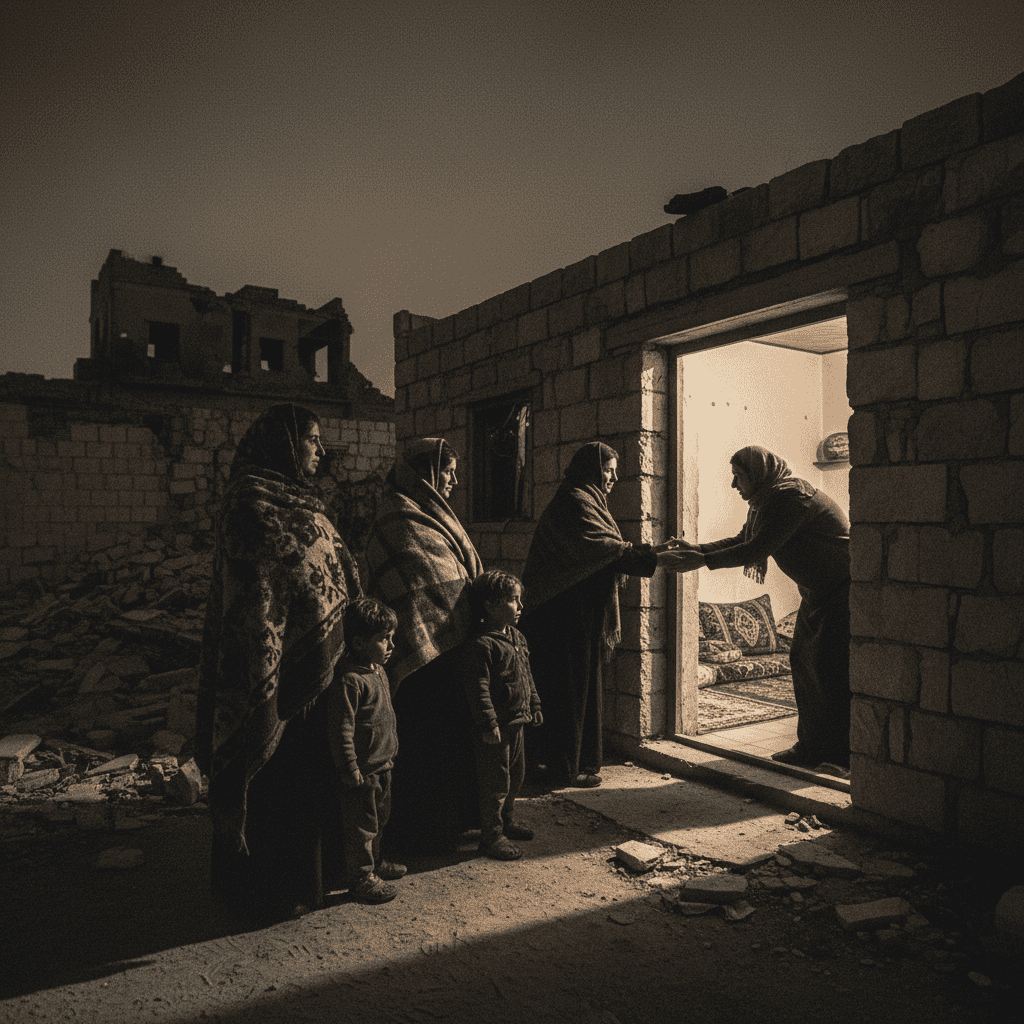
In Syria, a displaced family of thirty found refuge when strangers opened their door and shared food. In Afghanistan, a Hazara refugee, robbed and beaten, still paid the tea bill for others after telling his story. These choices echo the camp hut where a last piece of bread changed hands.
The Courage of the Ordinary in Ukraine
Ukraine’s civilians have mirrored WWII’s “weaponization of the mundane”: farmers towing abandoned tanks with tractors, neighborhoods supplying defenders, aid workers serving under missile fire. Today, phones record heroism in real time, amplifying witness but risking compassion fatigue—and sometimes the lives of those who document it.
Conclusion: To Remember the Fragments
The surrender aboard the USS Missouri ended the shooting war. But the moral victory—humanity defended against a system built to crush it—was fought in a million small moments that never made the news. The hidden saints of WWII prove that circumstances don’t get the last word.
Heroism is not mystical; it’s learned, practiced, and chosen. If the bystander effect is the default, the “heroic imagination” is the upgrade—an inner readiness to act when life presents the test. To honor the anonymous dead is to choose, in our crises, the same stubborn compassion they offered in theirs.
Similar Posts
The Atomization of Fame: Deconstructing Celebrity in the Age of the Creator Economy
The Atomization of Fame – The Truth Beyond The Fog NebulaReports Feature • Analysis • October 2025
The Gilded Archipelago: Power, Profit, and Prowess in Pre-Colonial Southeast Asia
The Gilded Archipelago – The Truth Beyond The Fog NebulaReports Feature • History & Culture • September 2025
The Hallyu Hegemony: How South Korea Rewired Global Culture
The Hallyu Hegemony –The Truth Beyond The Fog NebulaReports Feature • Analysis • September 2025
Fractured Victory: How WWII Memory Shapes a New Global Order
Fractured Victory: How WWII Memory Shapes a New Global Order – The Truth Beyond The Fog NebulaReports Feature • Analysis…