An Axis of Convenience and Conviction: The Russia–North Korea Strategic Partnership and the Future of Global Order
Feature • Analysis • September 2025
Introduction
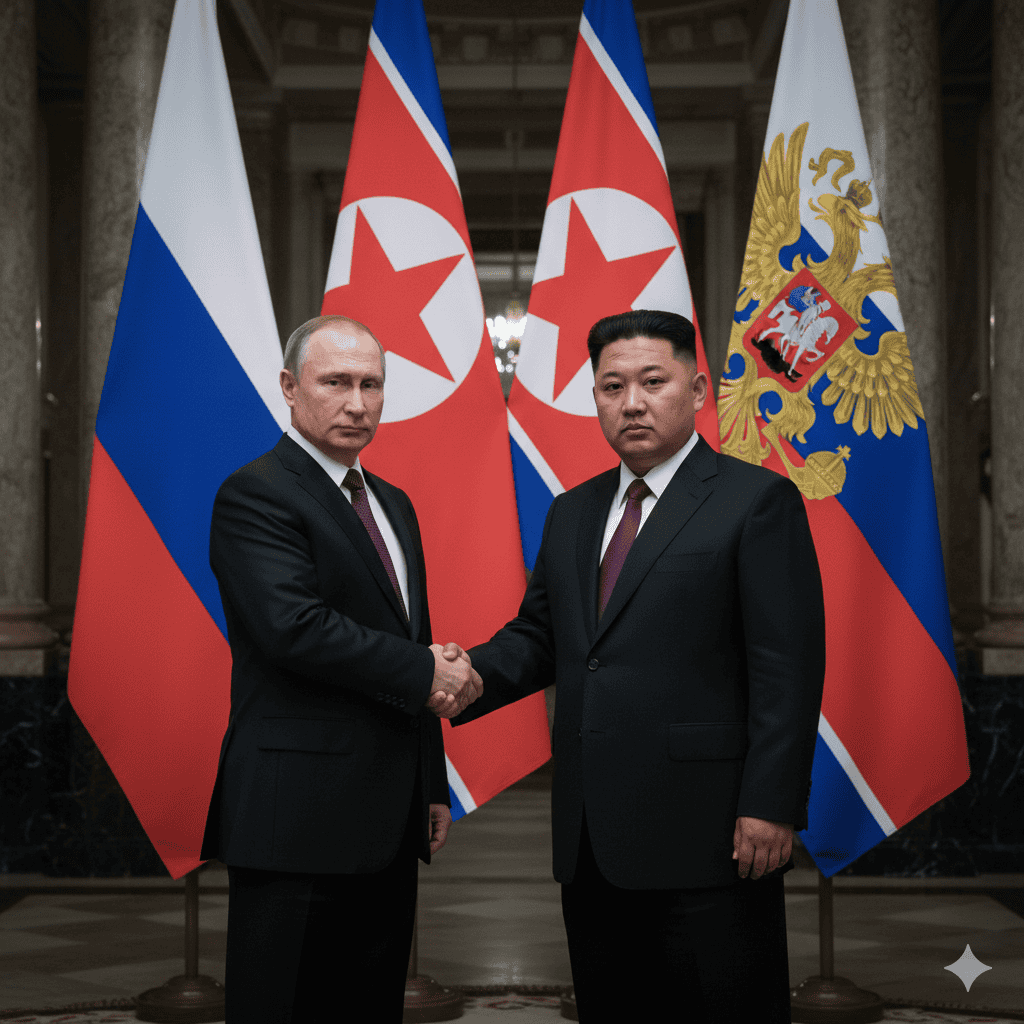
In June 2024, on a humid summer day in Pyongyang, Vladimir Putin and Kim Jong Un clasped hands beneath banners proclaiming a “new era” of friendship. The two leaders signed the Treaty on Comprehensive Strategic Partnership—a document that would do more than formalize a diplomatic gesture. It stitched together the war-torn battlefields of Ukraine with the powder-keg tensions of Northeast Asia, and in doing so, it shook the foundations of the post-Cold War order.
To many, the alliance between Moscow and Pyongyang might look like a desperate marriage of convenience: Russia, hemorrhaging munitions in Ukraine, finds a partner in one of the world’s most sanctioned states; North Korea, starved of legitimacy and modern technology, suddenly has the ear of a permanent UN Security Council member. But this is not just a transactional arms-for-oil exchange. As analysts warn, this partnership is an axis of both convenience and conviction—a shared ideological project that openly defies Western dominance and undermines the fragile architecture of global security.
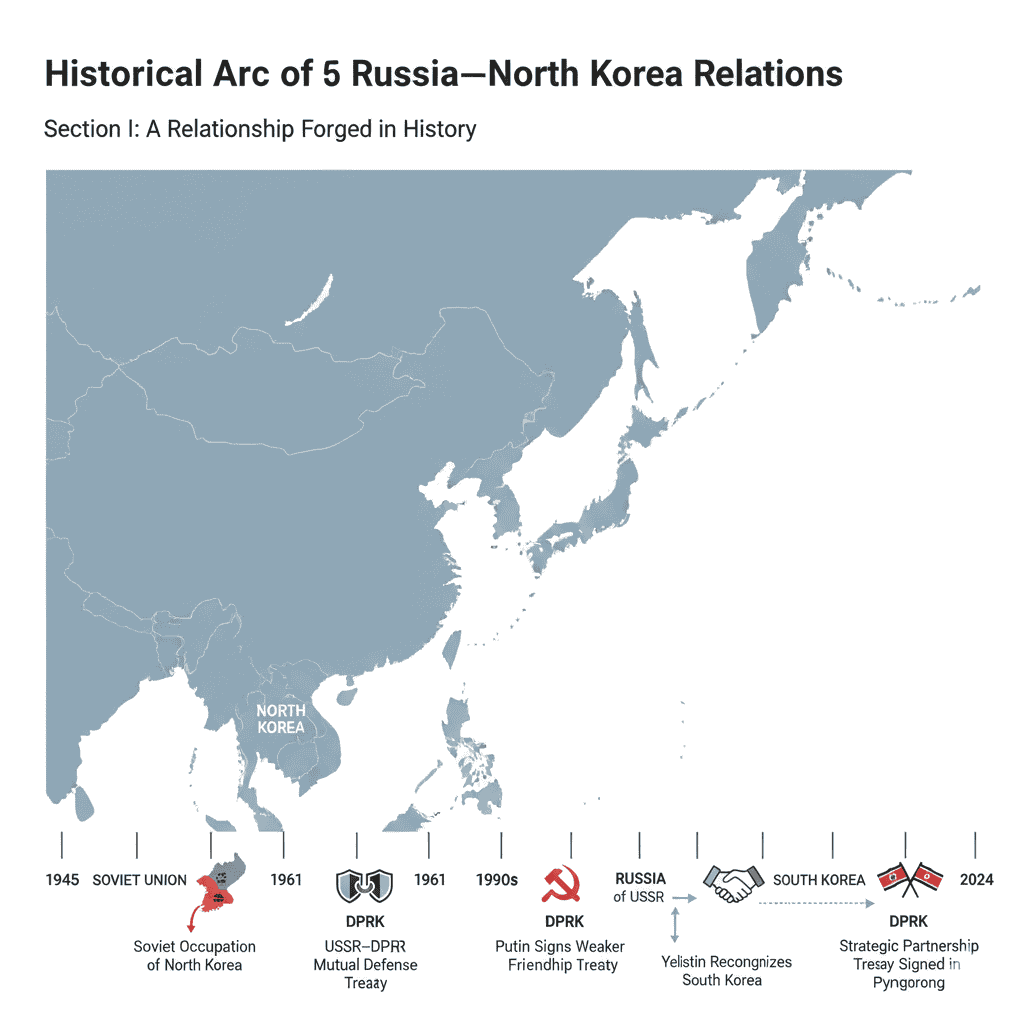
I. A Relationship Forged in History
The Soviet Union midwifed North Korea into existence, shaping its institutions, ideology, and leadership. In 1961, Moscow and Pyongyang signed a mutual-defense treaty. The 1991 Soviet collapse upended the relationship; Russia recognized Seoul and abandoned the pact, forcing Pyongyang closer to China. Putin’s early-2000s outreach wrote off DPRK debt but stayed cautious—until the Ukraine war shattered the balance.
II. Ukraine: The Catalyst for a Dangerous Convergence
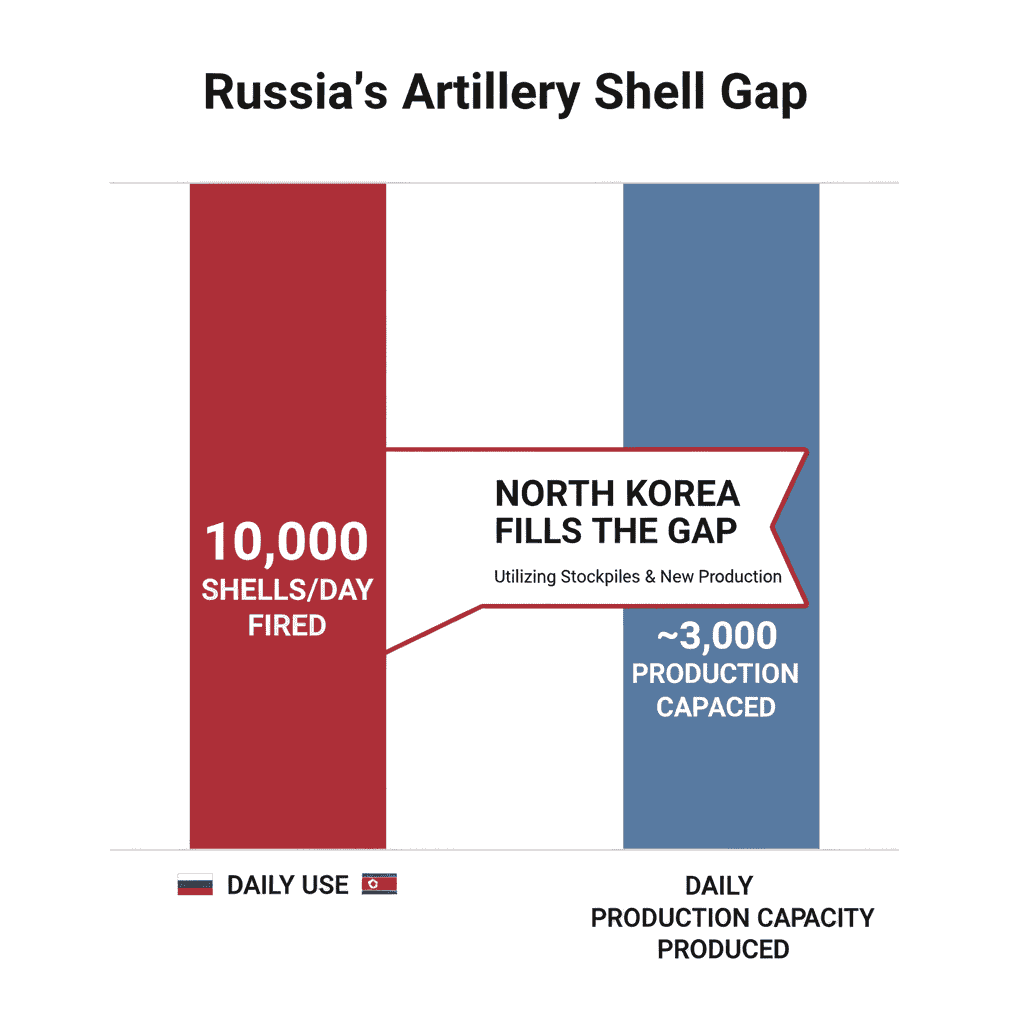
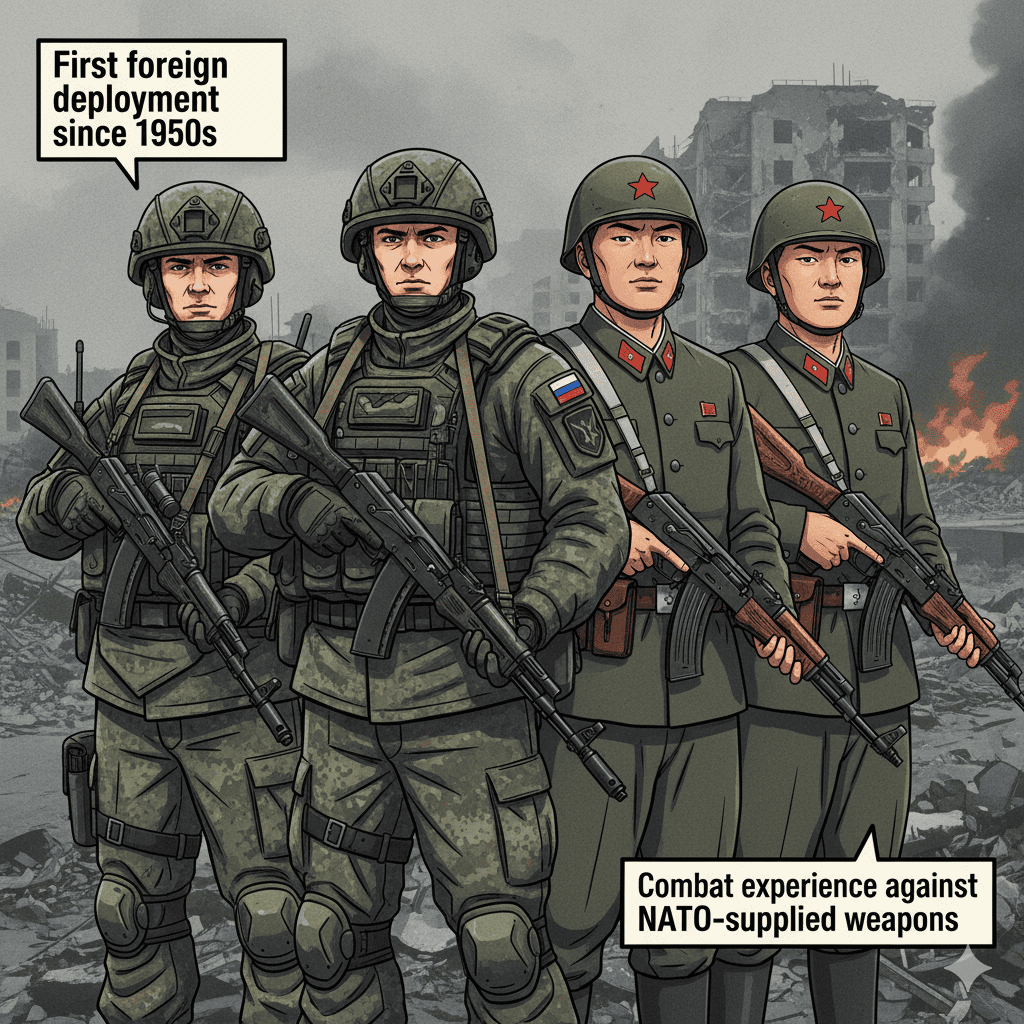
Russia’s full-scale war exposed a brutal truth: modern wars hinge on industrial capacity. By 2023, Russia was firing ~10,000 artillery shells/day while producing far fewer. North Korea possessed exactly what Moscow needed—Soviet-caliber stockpiles and mass-production lines. Initial support (UN votes, recognition of breakaway territories) escalated into munitions shipments and, eventually, manpower.
III. The Treaty That Changes Everything
In June 2024, Putin and Kim signed the Comprehensive Strategic Partnership Treaty (23 articles). It effectively resurrected Cold War-style commitments for a 21st-century struggle: mutual defense (“assistance with all means… without delay”), technology cooperation (civil nuclear & space—dual-use by design), and a rejection of “unilateral coercive measures” (sanctions).
| Treaty | Mutual Defense | Tech Cooperation | Sanctions Stance | Context |
|---|---|---|---|---|
| 1961: Friendship & Mutual Assistance | Automatic aid | Limited (economic) | N/A | Cold War bloc politics |
| 2000: Good-Neighborliness | None | General science ties | None | Post-Cold War pragmatism |
| 2024: Strategic Partnership | Automatic aid restored | Explicit: nuclear & space | Rejects unilateral sanctions | Ukraine war; anti-Western axis |
Results came quickly: a DPRK reconnaissance satellite (late 2023) with Russian help; by mid-2024, testing of potential MIRV-capable systems; and reported cooperation on air defense and early-warning—qualitative leaps for Pyongyang.
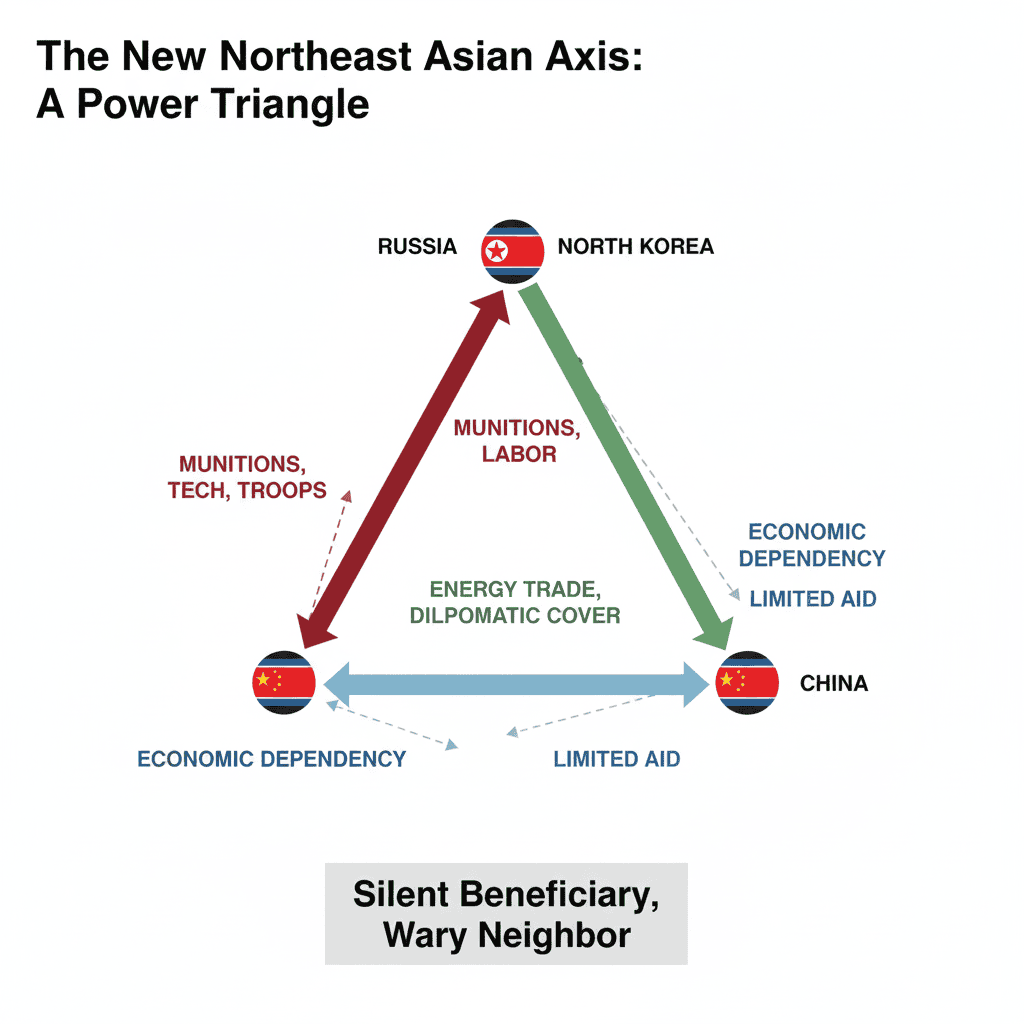
IV. China: Silent Partner, Nervous Neighbor
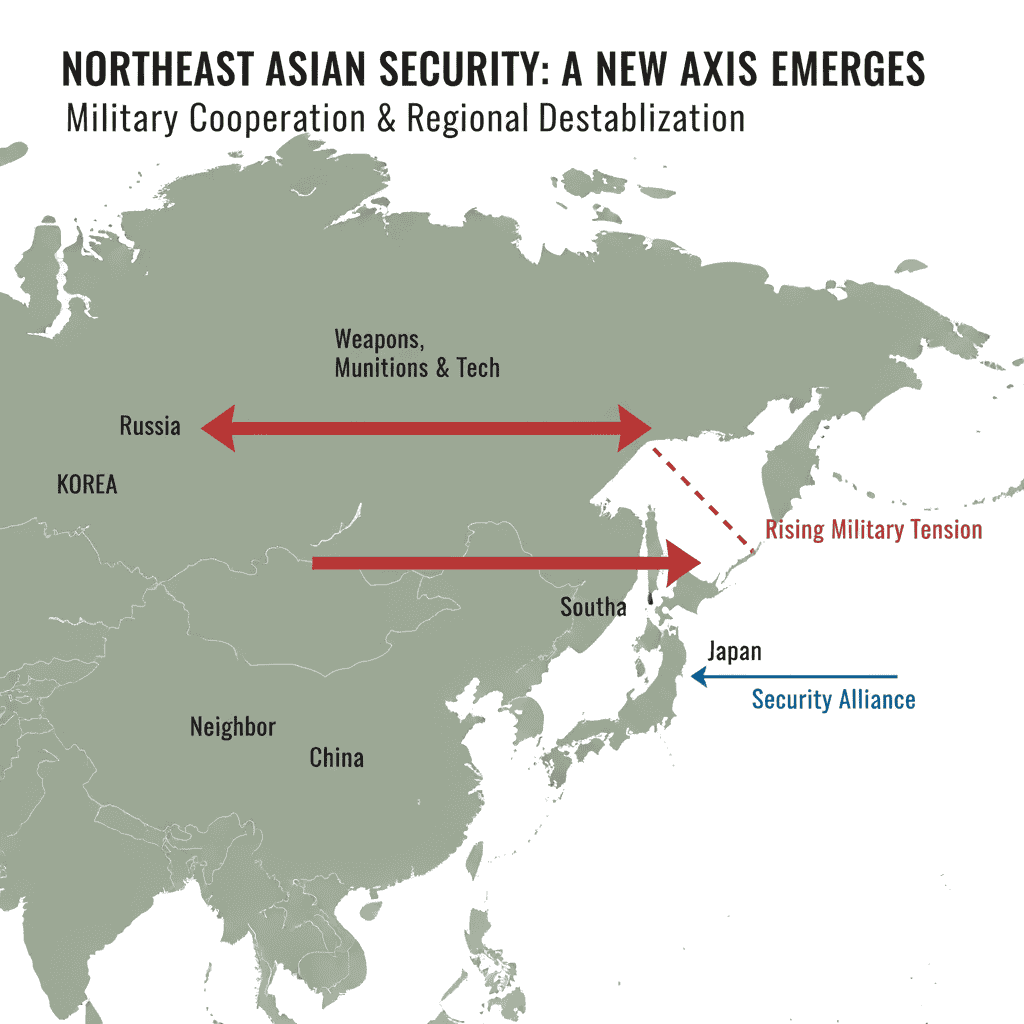
Beijing benefits from U.S. distraction and burden-sharing, but Russia’s embrace of Pyongyang erodes China’s leverage and risks border instability. The result is deliberate ambiguity—supportive but non-allied; a functional alliance without a name.
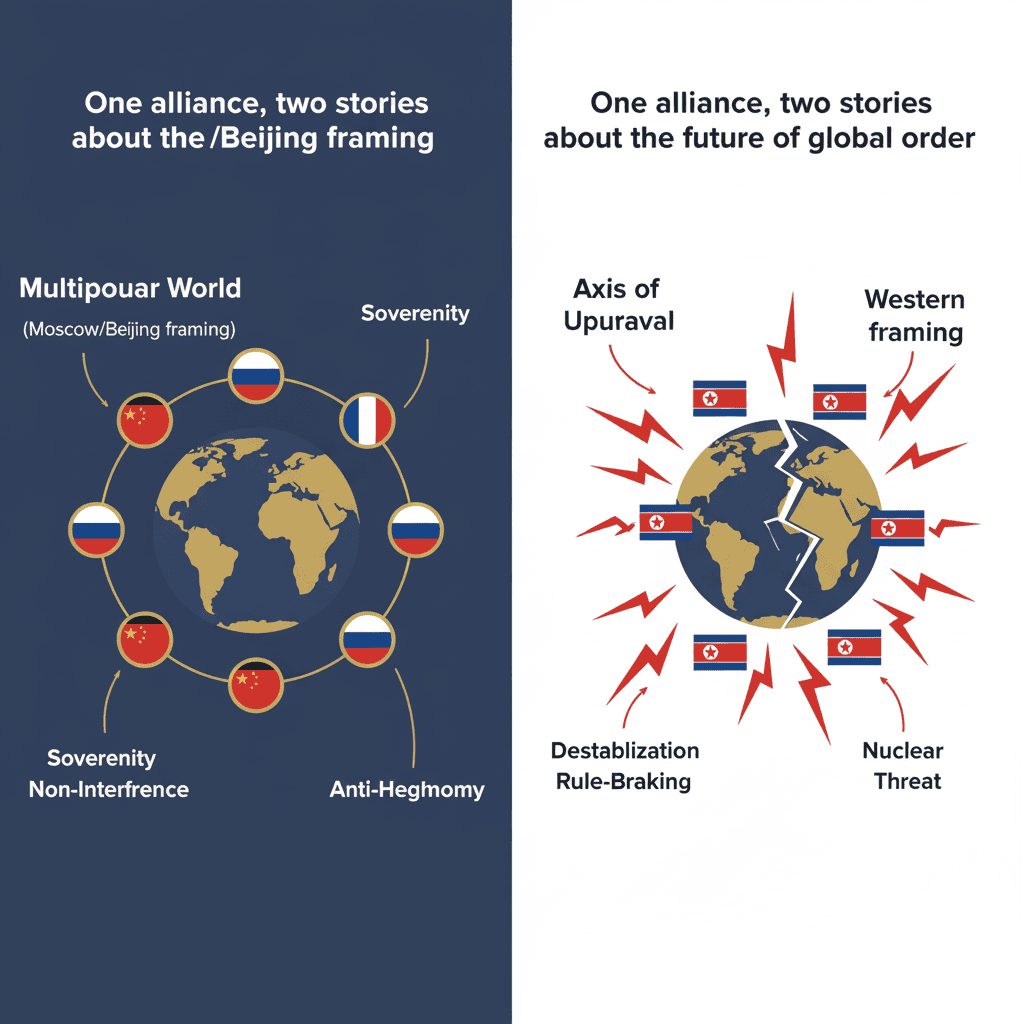
V. Global Implications: A New Axis of Upheaval
Non-proliferation peril: A UNSC P5 power aiding a sanctioned nuclear state undermines the NPT and signals that pariah status can be offset by patronage.
Balance shift: Russian tech + DPRK combat experience raise Pyongyang’s qualitative edge—inviting risk-taking and miscalculation.
| Actor | Gains | Risks |
|---|---|---|
| Russia | Shells, troops, sanctions relief, prolonged capacity | Dependence on DPRK, deeper isolation |
| North Korea | Food, oil, advanced weapons, combat data, legitimacy | Battlefield losses, escalation risk |
| China | U.S. distraction, burden-sharing, cheap Russian energy | Loss of leverage, border instability |
VI. The West Responds
U.S.–ROK–Japan coordination has tightened: larger exercises, real-time missile-defense data, ad-hoc sanctions monitoring replacing the UN panel Russia ended. Seoul weighs lethal aid to Kyiv as a direct counter to DPRK involvement, weaving Europe and Asia into a single deterrence fabric. Tokyo deepens ties with allies and even NATO, recognizing linked theaters. In Washington, policy uncertainty incentivizes Moscow and Pyongyang to lock in gains now.
VII. What Comes Next?
Entrenched axis (likely): deeper tech transfers, expanded DPRK deployments, quiet Chinese cover. A persistent two-front challenge for the U.S. and allies.
Transactional cooling (less likely): if Russia’s needs decline, cooperation slows—but DPRK’s tech gains endure.
China-driven restraint (possible): Beijing moderates escalation to avoid chaos; axis persists but contained.
Western strategy: integrated deterrence, strict interdictions, sanctions enforcement, and credible diplomatic off-ramps to prevent runaway escalation.
Optional: Key Events Timeline
(If your WordPress blocks scripts, skip this or embed via a trusted plugin.)
Conclusion: A Fait Accompli?
The Russia–North Korea alliance is dangerous not only for its military utility but for its symbolism. It shows sanctions can be sidestepped, pariahs can find patrons, and enforcement institutions can be hollowed out. This is about more than Ukraine or the Korean Peninsula—it’s about the future of global order.
If the post-Cold War era rested on U.S. primacy and non-proliferation consensus, the emerging era may be a tougher multipolarity—one where authoritarian poles rewrite rules. For now, Putin and Kim stand together—an axis born of desperation, sustained by conviction. Whether it stays a managed crisis or ignites the next upheaval is the question facing the world.
Similar Posts
An Anthem of Allegiance: Alberta’s Vigils for Charlie Kirk and the Forging of a Transnational Conservative Identity
An Anthem of Allegiance – NebulaReports The Truth Beyond The Fog Feature • Analysis • September 2025
The Riyadh–Islamabad Axis: Anatomy and Implications of the 2025 Strategic Mutual Defense Agreement
The Riyadh–Islamabad Axis – The Truth Beyond The Fog NebulaReports Feature • Analysis • September 2025
America First, Israel Exception: Aid, Strategy, and Hypocrisy in the Trump Era
America First, Israel Exception – The Truth Beyond The Fog NebulaReports Feature • Analysis • September 2025
The Caribbean Crucible: U.S. Military Posturing, Narco-Terrorism Narratives, and the Specter of Intervention in Venezuela
The Caribbean Crucible – The Truth Beyond The Fog NebulaReports Feature • Analysis • September 2025