
An Anthem of Allegiance: Alberta’s Vigils for Charlie Kirk and the Forging of a Transnational Conservative Identity
Feature • Analysis • September 2025
Introduction
On September 10, 2025, a single gunshot at Utah Valley University ended the life of Charlie Kirk—one of the most polarizing figures in American conservative politics. The assassination of Kirk, co-founder of Turning Point USA, rippled far beyond the United States. Condemnations, tributes, and political spin poured in from Washington to Warsaw. But it was in the Canadian province of Alberta that the response took on an especially revealing form.
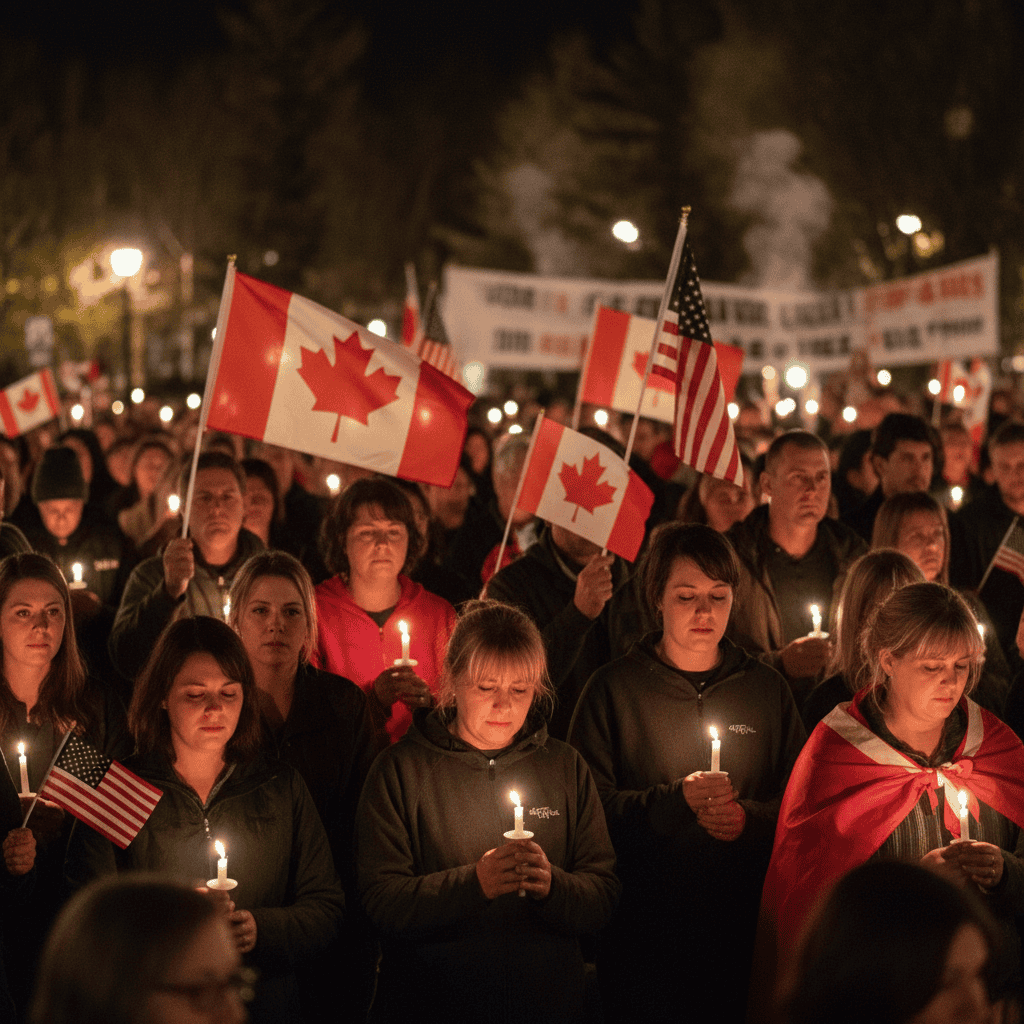
Hundreds of Canadians gathered in Calgary, Edmonton, Red Deer, and Cochrane to mourn Kirk. They prayed, sang hymns, waved both Canadian and American flags—and, in a striking moment that captured global headlines, sang “The Star-Spangled Banner” instead of their own national anthem. What might have seemed like a simple act of solidarity was, in fact, a declaration of allegiance: to a movement, to an ideology, and to a transnational identity that increasingly blurs the border between American and Canadian conservatism.
This essay explores the Alberta vigils as more than commemorations. They were moments where grief, politics, religion, and history converged—showing how a province long steeped in western alienation and American influence could become fertile ground for a movement that sees itself less as Canadian and more as part of a continental conservative crusade.
The Catalyst: The Assassination and Canonization of Charlie Kirk
Profile of a Conservative Influencer
Charlie Kirk was only 18 when he founded Turning Point USA (TPUSA) in his parents’ garage in 2012. What began as a campus activism group ballooned into a multimillion-dollar machine, shaping youth conservatism across the U.S. through slick social media campaigns, donor networks, and viral “Prove Me Wrong” debates.
Initially, Kirk championed free markets and small government, but by the mid-2010s, he pivoted toward Christian nationalism. He rejected the separation of church and state as a “fabrication” and argued America was a Christian nation whose laws must reflect biblical values. This ideological evolution aligned him with Donald Trump and the MAGA movement. After Kirk’s assassination, Trump awarded him the Presidential Medal of Freedom and ordered flags flown at half-mast, cementing his status as a martyr-figure for the right.
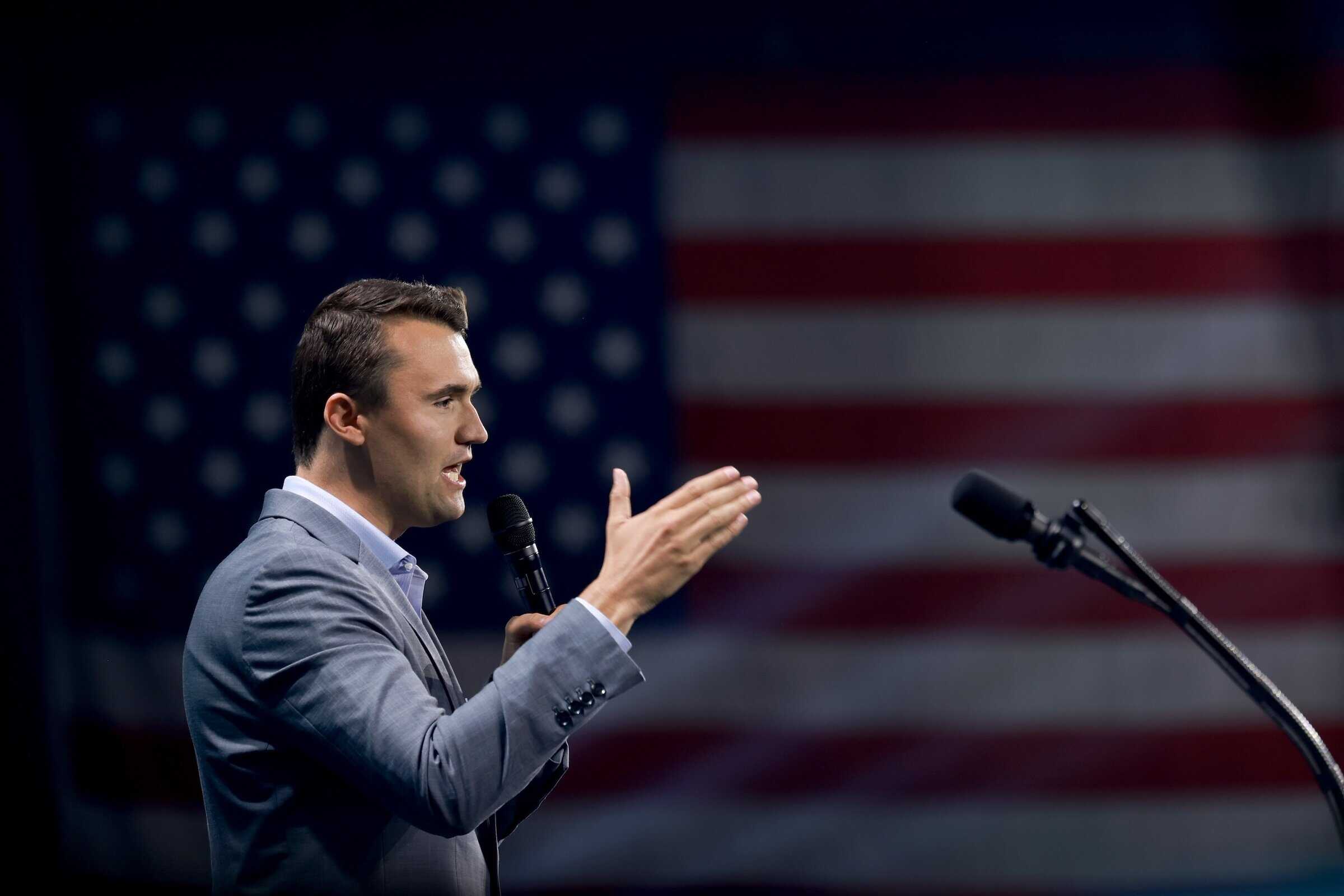
On September 10, 2025, during a TPUSA event in Orem, Utah, Kirk was shot in the neck by 22-year-old Tyler Robinson. The public assassination was filmed and instantly circulated online, making it a digital spectacle of political violence. Ammunition engraved with anti-fascist slogans fed a narrative that Kirk’s murder was a left-wing assassination—a framing conservative media amplified relentlessly.

Conservative leaders from Europe to the Americas issued statements portraying Kirk as a victim of leftist violence. Advisers urged allies not to be “ashamed” of politicizing his death. This reaction wasn’t spontaneous grief—it was a ready-made narrative template: a conservative is killed, blame the left, canonize the victim, and mobilize the movement. The Alberta vigils were not isolated acts of mourning; they were plugged into this global script, transforming personal grief into collective political performance.

The Canadian Echo: Anatomy of the Alberta Vigils
Gatherings of Grief and Grievance
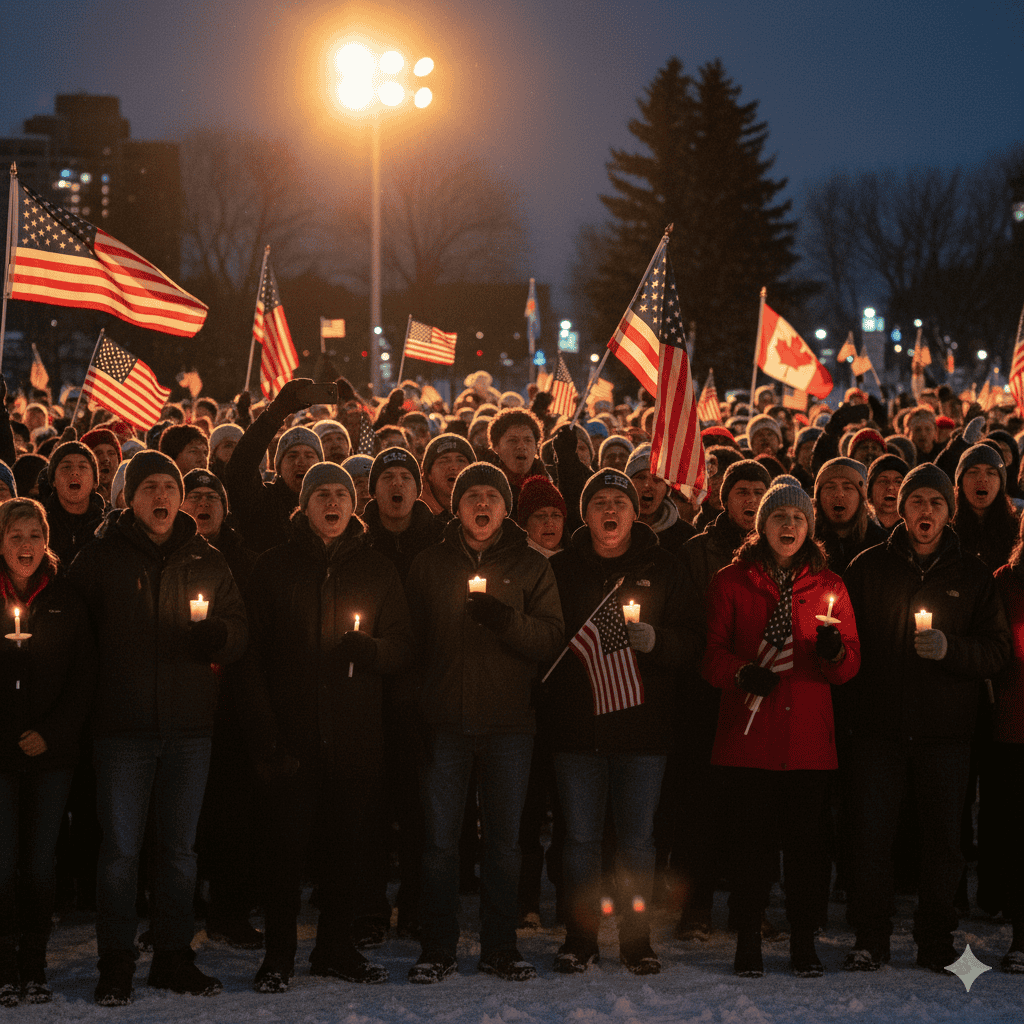
On September 15, vigils were staged in Calgary, Edmonton, Red Deer, and Cochrane. In Edmonton, nearly 1,000 people gathered outside the legislature. The atmosphere was part religious revival, part political rally. Prayers and hymns like “Amazing Grace” mixed with fiery speeches likening Kirk’s sacrifice to that of Jesus Christ. The crowd’s chant—“We are Charlie Kirk”—signified not just grief but identification. Elected officials attended, urging supporters to “pick up the torch.”
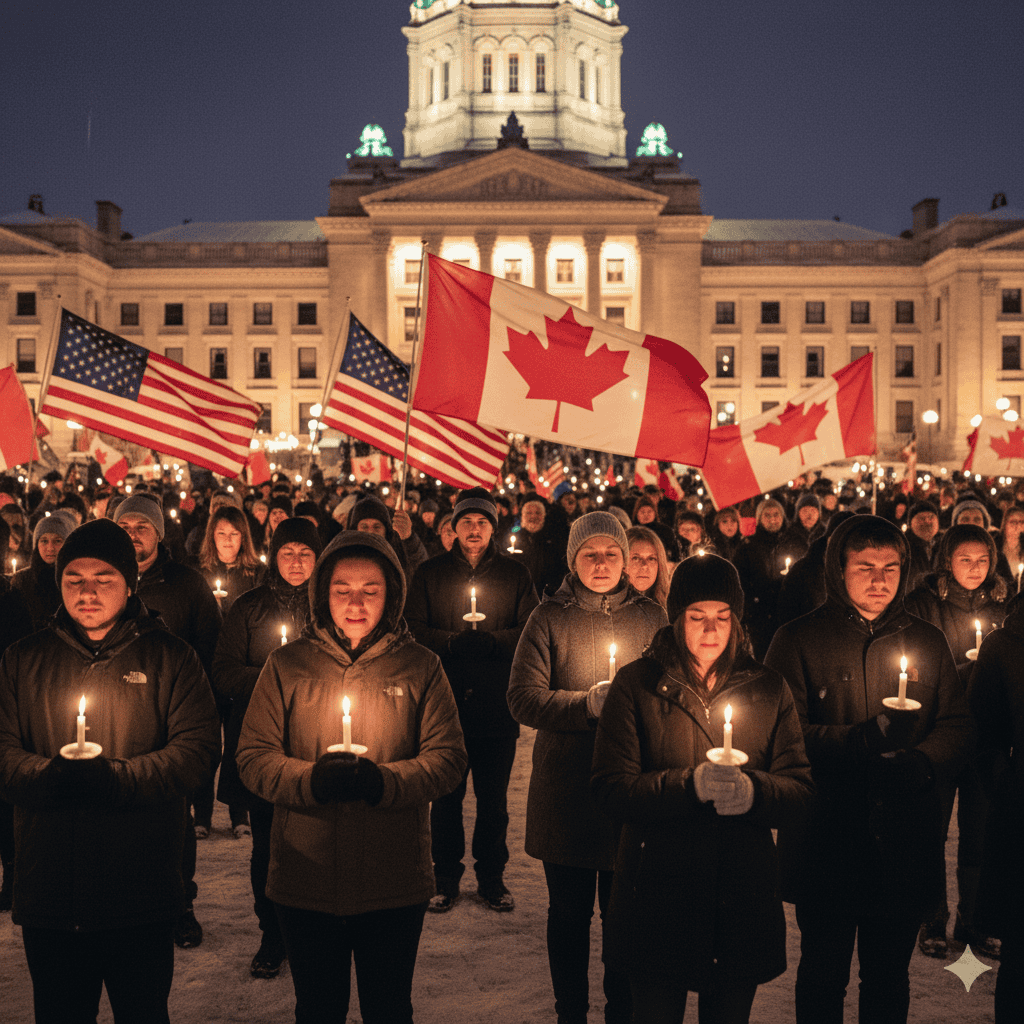
The vigils were visually saturated with meaning: Canadian and American flags flew side by side, MAGA hats dotted the crowd, and signs read “This is our turning point.” But the defining moment came when mourners in Calgary spontaneously sang the U.S. national anthem—a gesture that transcended mourning and performed allegiance.
At the Edmonton vigil, organizers launched Turning Point Alberta, recruiting members at sign-up tables. This was a pivotal moment. A previous national offshoot had kept a cautious distance from some TPUSA tactics. The new provincial vehicle signaled a different project—populist, culturally aggressive, and aligned with the American movement, tailored to Alberta’s political climate.

The Albertan Context: A Province Primed for Populism
The Enduring Doctrine of Western Alienation
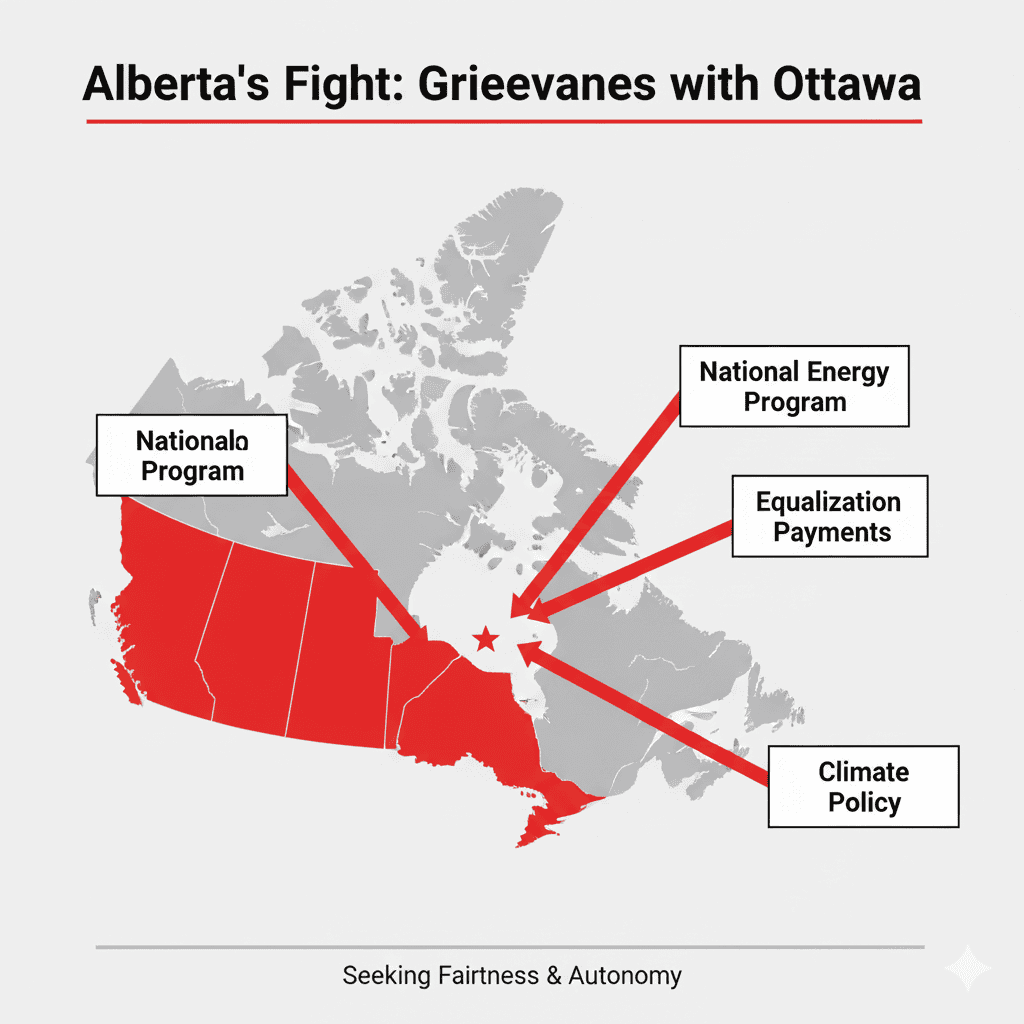
Alberta has long seen itself as exploited by Ottawa. From the 19th‑century National Policy that favored eastern manufacturers, to the 1980 National Energy Program, Albertans have felt their resources and wealth siphoned away. Today, equalization payments and climate policies deepen this resentment, sustaining movements that cast the federal government as adversarial.
Waves of U.S. settlers shaped Alberta’s culture of rugged individualism and skepticism of centralized power. The oil patch tied Alberta to Texas, and a shared cowboy culture took root. Political scientists have long noted Alberta’s distinct receptivity to American political ideas and movements.

Alberta’s leadership has tapped this tradition, confronting Ottawa while adopting policies with separatist undertones. Kirk’s harsh critique of Canada resonated where many view federal governance as hostile to free speech, gun rights, and the energy sector.
A Borderless Ideology: Transnational Conservatism and Christian Nationalism
The Ideological Bridge
For many in Alberta, Kirk wasn’t a foreign activist—he was a fellow combatant in the same war. Both American and Albertan conservatism foreground populist struggle, cultural grievance, and defense of fossil fuels.
The Faith Factor
The most potent glue is Christian nationalism, which casts politics as a spiritual battle. At the vigils, speakers drew explicit parallels between Kirk and Christ, locating the event in a borderless community of faith and ideology.
An Anthem of Allegiance
When Canadians sang the U.S. national anthem, they performed a collective speech act—declaring belonging. Choosing “The Star‑Spangled Banner” over “O Canada” signaled a loyalty to a transnational conservative identity, redefining citizenship from vertical allegiance to horizontal solidarity.

Optional: Key Events Timeline
Conclusion: Implications for Canada and Beyond
The Alberta vigils for Charlie Kirk reveal a profound truth about 21st‑century politics: in an age of polarization and digital connectivity, identity and allegiance are no longer bound by national borders.
What unfolded in Alberta was not simply mourning but the formalization of a transnational conservative identity. Turning Point Alberta’s launch marks an attempt to institutionalize this shift. And the singing of the American anthem was the purest expression of it: a choice, in that moment, to see America—not Canada—as the political and spiritual homeland.
For Canadian federalism, this poses a stark challenge. When ideology trumps nationality, when allegiance to a cause outweighs allegiance to a country, the foundations of national unity are at risk. The vigils were a glimpse of a future where borders matter less than movements, and belonging is defined by shared grievances, faith, and political identity.
Similar Posts
The Riyadh–Islamabad Axis: Anatomy and Implications of the 2025 Strategic Mutual Defense Agreement
The Riyadh–Islamabad Axis – The Truth Beyond The Fog NebulaReports Feature • Analysis • September 2025
The Caribbean Crucible: U.S. Military Posturing, Narco-Terrorism Narratives, and the Specter of Intervention in Venezuela
The Caribbean Crucible – The Truth Beyond The Fog NebulaReports Feature • Analysis • September 2025
An Axis of Convenience and Conviction: The Russia–North Korea Strategic Partnership and the Future of Global Order
An Axis of Convenience – The Truth Beyond The Fog NebulaReports Feature • Analysis • September 2025
America First, Israel Exception: Aid, Strategy, and Hypocrisy in the Trump Era
America First, Israel Exception – The Truth Beyond The Fog NebulaReports Feature • Analysis • September 2025